

Sports Equipment Manufacturer

EN 14904:2006 sets performance requirements for indoor multi-sports floor systems. Learn how to read its main test values, Annex B types and supplier reports.
EN 14904:2006 is a performance specification for indoor floors used for multiple sports. It evaluates the floor system including its supporting and upper layers, through measured properties such as friction, shock absorption, vertical deformation, ball rebound, and resistance to rolling loads. Its main clauses set requirements; Annex B gives informative typical performance types for elastic floors. A type label is not a substitute for the test results for the exact system being specified.
For anyone comparing the EN 14904 sports floor standard with a supplier’s submittal, the key is to match every value to the assembly, method, and test conditions in the report.
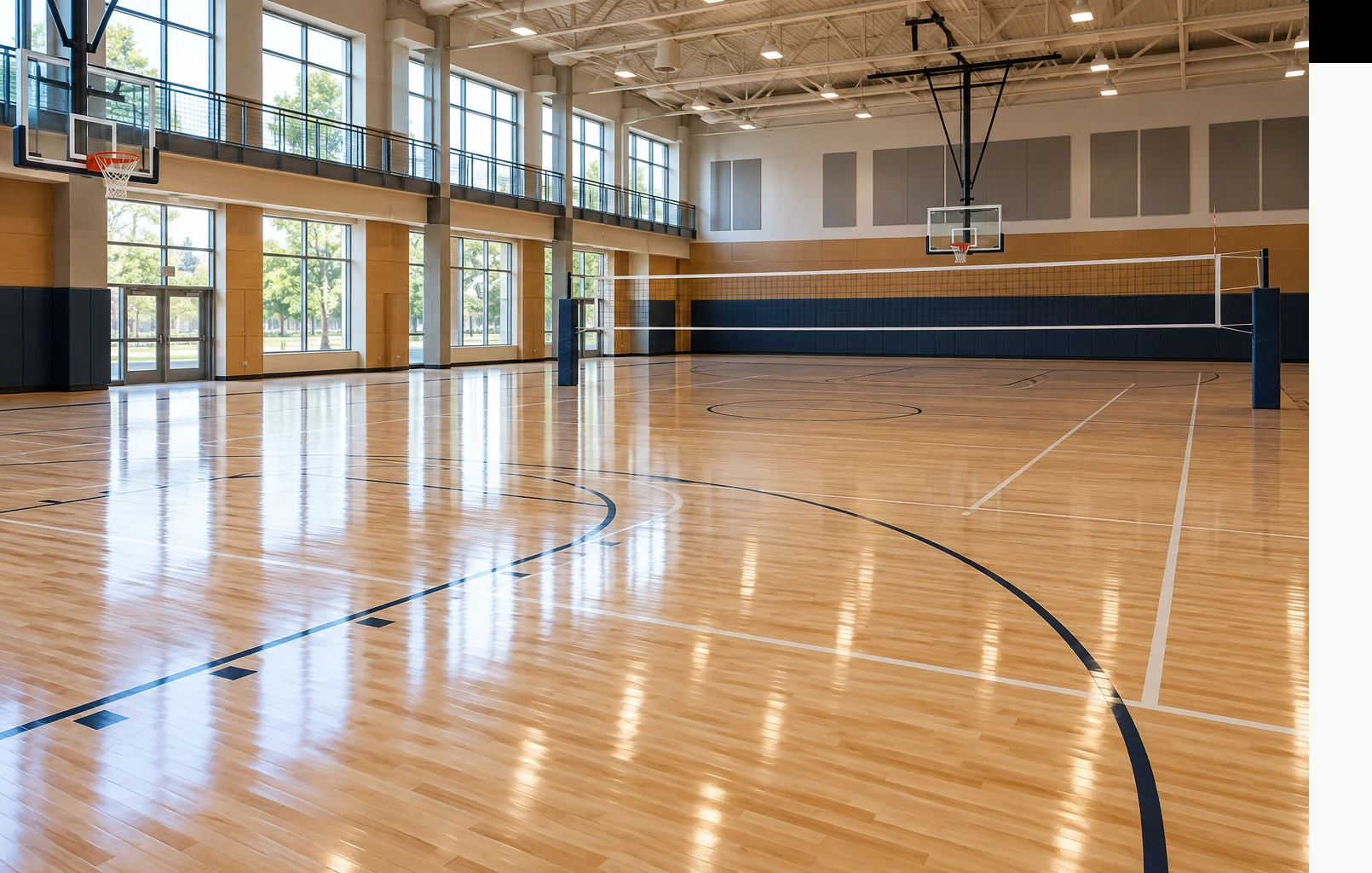
AI-generated concept illustration.
EN 14904:2006 specifies indoor surfaces for multi-sports use. Its scope covers the installed sports-floor system rather than only the visible wood or synthetic surface. Indoor tennis halls are excluded. That distinction matters when comparing proposals: a top-layer sample cannot by itself describe the performance of a complete floor assembly.
The standard referenced here is EN 14904:2006. On 2026-10-25, NEN’s catalogue listed that edition as current in its national register; this does not decide which edition applies in another market. Specify the national adoption and edition required by the project contract. In the European Union, harmonised technical specifications sit within a changing Construction Products Regulation framework; the European Commission distinguishes the CPR-2011 and CPR-2024 definitions.
The requirements below are from the visible normative clauses in the EN 14904:2006 English preview; the preview is not the complete standard. Each result belongs to the tested assembly and method. Use the complete standard and laboratory report when preparing a contract specification.
| Property | EN 14904:2006 requirement | Test method and buyer check |
|---|---|---|
| Friction | Mean Pendulum Test Value (PTV) from 80 to 110; each individual result within 4 units of the mean. | EN 13036-4, CEN rubber, dry surface, (23 ± 2) °C. |
| Shock absorption / force reduction | Mean from 25% to 75%; each individual result within ±5 percentage points of the mean. | EN 14808; at least four tests plus one for every 500 m². |
| Vertical deformation | No more than 5.0 mm. | EN 14809. |
| Basketball rebound | Mean rebound height at least 90% of the rebound height on concrete; each result within ±3 percentage points of the mean. | EN 12235 using a basketball; at least four tests plus one for every 500 m². |
| Rolling-load resistance | Minimum resistance of 1,500 N; maximum indentation of 0.5 mm under a 300 mm straight edge, with no perceivable damage. | EN 1569. Buyer consideration: include it where equipment or seating will move over the playing surface. |
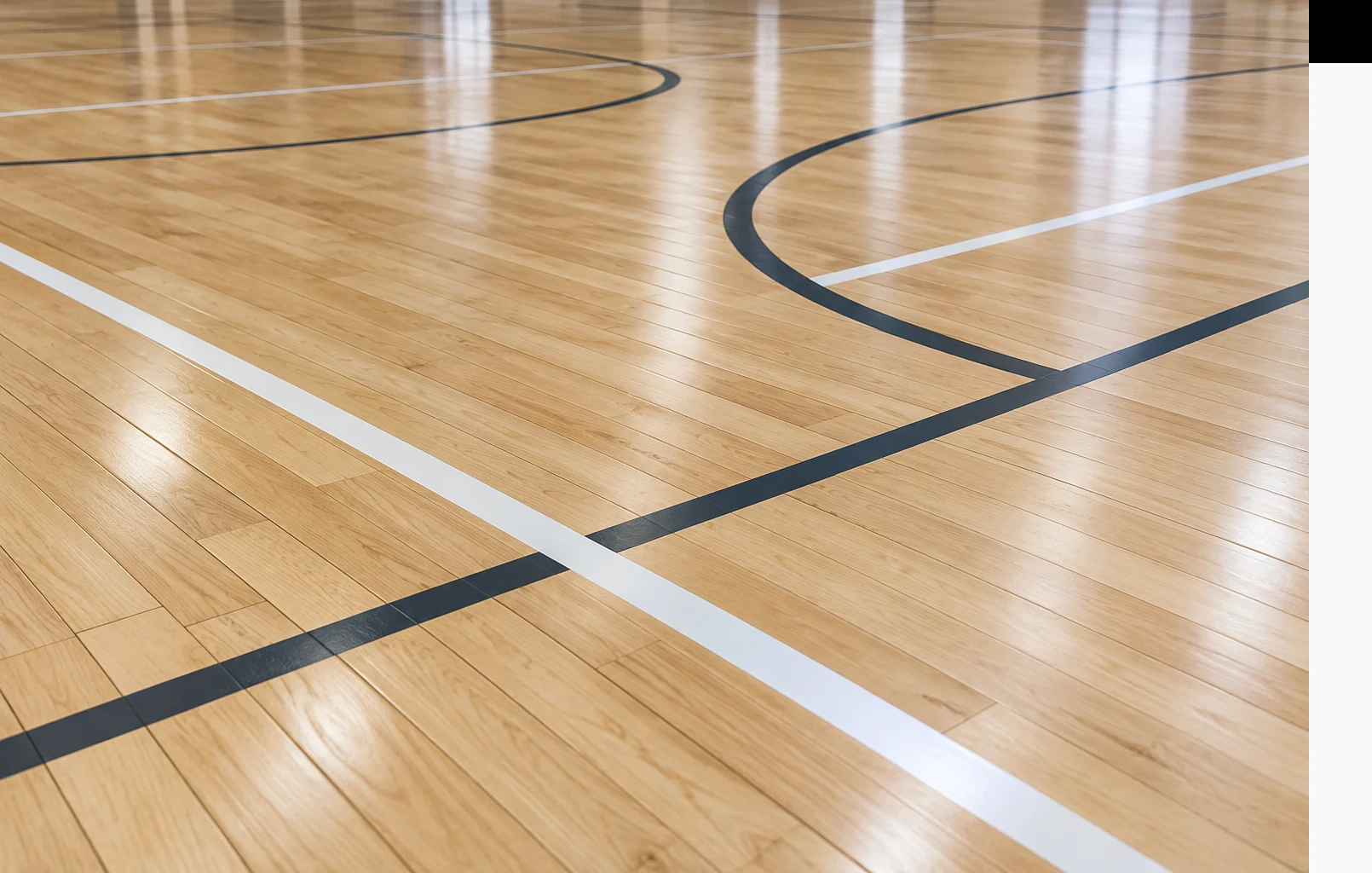
AI-generated concept illustration. The standard gives laboratory values for force reduction and vertical deformation. If on-site measurements are taken at different temperatures and humidity, it says the report should record surface temperature and relative humidity.
Read the five results as different measurements: friction is the Pendulum Test Value (PTV); force reduction is reported as a percentage; vertical deformation is the measured displacement in millimetres; basketball rebound compares rebound height with concrete; and rolling-load resistance reports the applied load, indentation, and observed damage. These outputs describe different properties, so one cannot stand in for another. Compare each with the project criteria and confirm that the test report identifies the same assembly. For a basketball event, match each measured property to the event criteria before using the competition basketball flooringcompetition basketball flooring plan.
The normative clauses establish the measurable requirements. Annex B is informative and presents typical shock-absorption and vertical-deformation values organized by elastic floor family and performance property. The accessible standard preview does not include the complete Annex B tables, so a type number should be read from the full table together with its floor family, performance property, and measured result. The four elastic system families describe how the floor construction responds to impact:
| Family | Label | Practical meaning |
|---|---|---|
| Point-elastic | P | The playing surface deflects locally around the impact point. |
| Mixed-elastic | M | Deflection falls between point-elastic and area-elastic behavior. |
| Area-elastic | A | A wider floor area moves under impact; ASET describes wood playing surfaces in this family. |
| Combined-elastic | C | A point-elastic surface sits over an area-elastic subfloor. |
These are system-family descriptions, not a ranking from poor to good. ASET’s explainer maps optional type numbers separately for different families and for force reduction or vertical deformation. Use it as explanatory context; confirm acceptance criteria against the full standard and project specification.
When a proposal cites an Annex B type, record its family and performance property beside the reported measurement. This lets reviewers interpret labels consistently across bids.
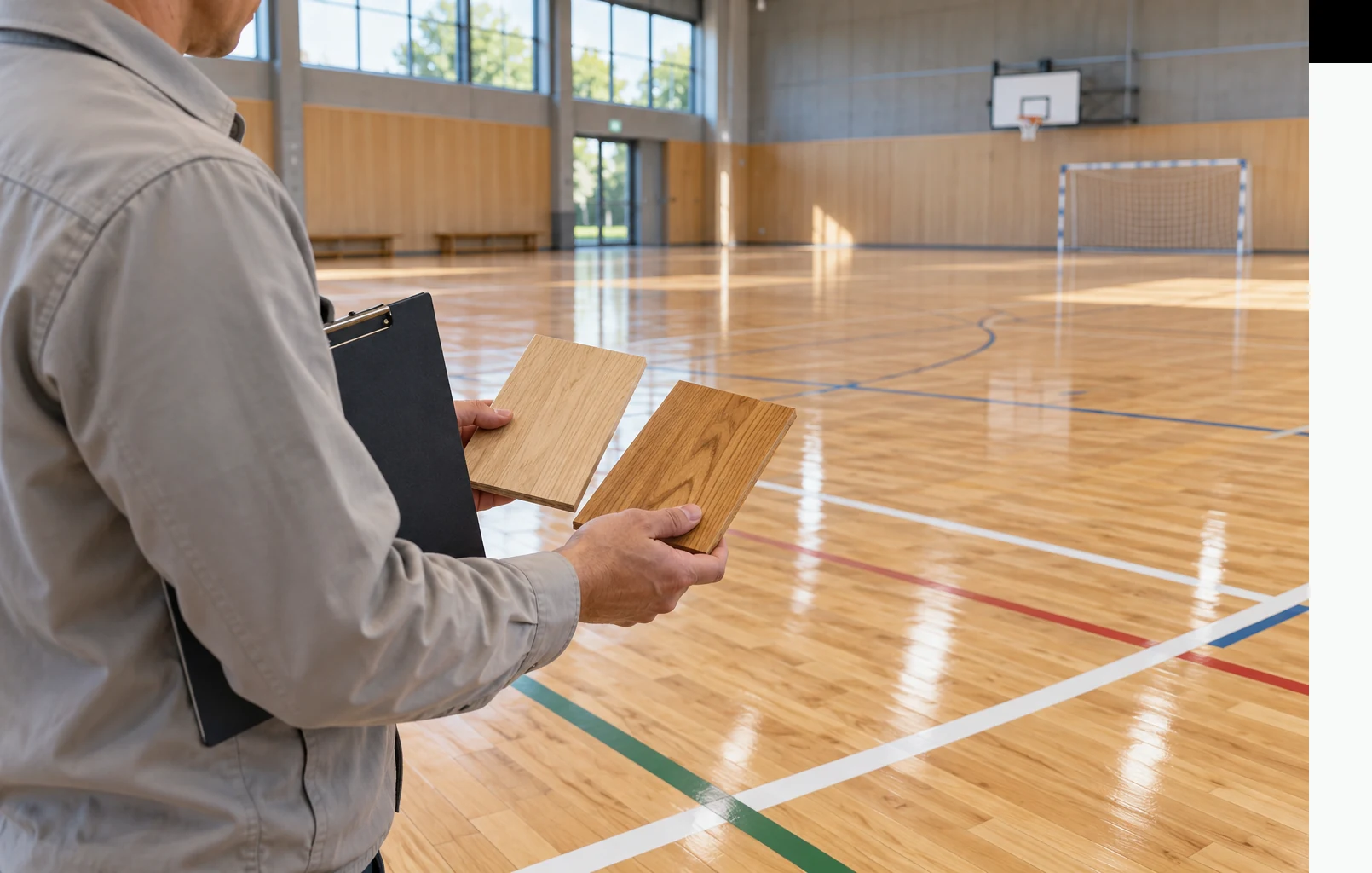
Start with the product identity. The report should make it possible to connect the tested construction to the proposed floor: surface layer, resilient or support layers, assembly details, and the model or configuration name. If a proposal changes the build-up, thickness, or materials, ask whether the report still represents that configuration.
Then check how the measurements were produced:
AI-generated concept illustration.
Before comparing bids, put these items in the specification or submittal checklist:
Before requesting a proposal, prepare three items:
For a project-specific comparison, review the proposed indoor wooden basketball floor system against the required test report and assembly details. Use a report for the exact proposed construction to support performance claims. Competition approval is a separate check: FIBA’s Venue Guide says Level 1 competitions must use a FIBA Approved wooden or glass surface. Budget planning can begin with this basketball floor cost guide; for a project discussion, contact LDK.
Keep three items together in the procurement record:
The visible performance clauses discussed here do not give one thickness for every assembly. Check the complete standard and project specification for any dimensional requirements, and identify the tested build-up in the supplier’s report. The measured properties describe separate performance questions; the sports flooring technical resourcessports flooring technical resources can support a report-by-report review.
It is an indoor floor system for multi-sports use, including the supporting and upper layers that make up the tested construction. Indoor tennis halls are excluded from the standard’s stated scope.
Under EN 14904:2006, the mean Pendulum Test Value must be 80–110, with each individual result within 4 units of the mean. The specified test uses EN 13036-4, CEN rubber, dry conditions, and a temperature of (23 ± 2) °C.
