

Sports Equipment Manufacturer

A facility-ready schedule for cleaning and inspecting wooden athletic floors, with a reusable log and source-attributed care guidance.
A gym wood floor maintenance checklist pairs daily dry-mopping and spill response with periodic damp cleaning, planned inspections, and an annual condition review. Specific cleaners, wet methods, equipment, and environmental targets depend on the installed floor and finish, so keep that system’s instructions with the staff checklist.
| Frequency | Task | Record or escalation point |
|---|---|---|
| Daily and after use | Dust-mop the court; remove spills and visible marks promptly; keep entry mats clean and the court footwear policy in effect. | Note recurring spills, scuffs, or areas that need attention. |
| Weekly starting point | Damp-mop with a pH-neutral cleaner intended for the installed finish. Wring the mop nearly dry and leave no standing water. | Log the date and method. |
| Monthly planning checkpoint | Inspect boards, finish, entry mats, equipment contact points, cleaning supplies, and indoor-condition readings. | Record changes and assign a follow-up owner. |
| Before and after non-sport events | Use floor covers or runners where needed; use protective pads or covers when moving heavy equipment. | Inspect the floor after cover removal and record visible marks. |
| After high-use periods | Arrange a deeper clean when needed using products and equipment approved for the installed floor. | Record the method and date; do not substitute an unapproved machine or cleaner. |
| Annual facility-planning review | Review inspection records, cleaning methods, recurring issues, and responsibilities for the next year. | Assign an owner and follow-up date to unresolved concerns. |
| Annual professional inspection | Assess floor condition and plan maintenance; Junckers recommends this annual inspection. | Record findings and route routine-care concerns. |
| As needed | Clean spills promptly and report leaks, lifted edges, chips, or other damage. | Record the location, date, and action taken. |
Supplier schedules differ: WAXIE describes weekly cleaning for wood floors, Junckers says cleaning frequency depends on floor use, and Robbins recommends monthly cleaning for its maple floor. For construction context, compare solid and engineered sports-flooring systems. 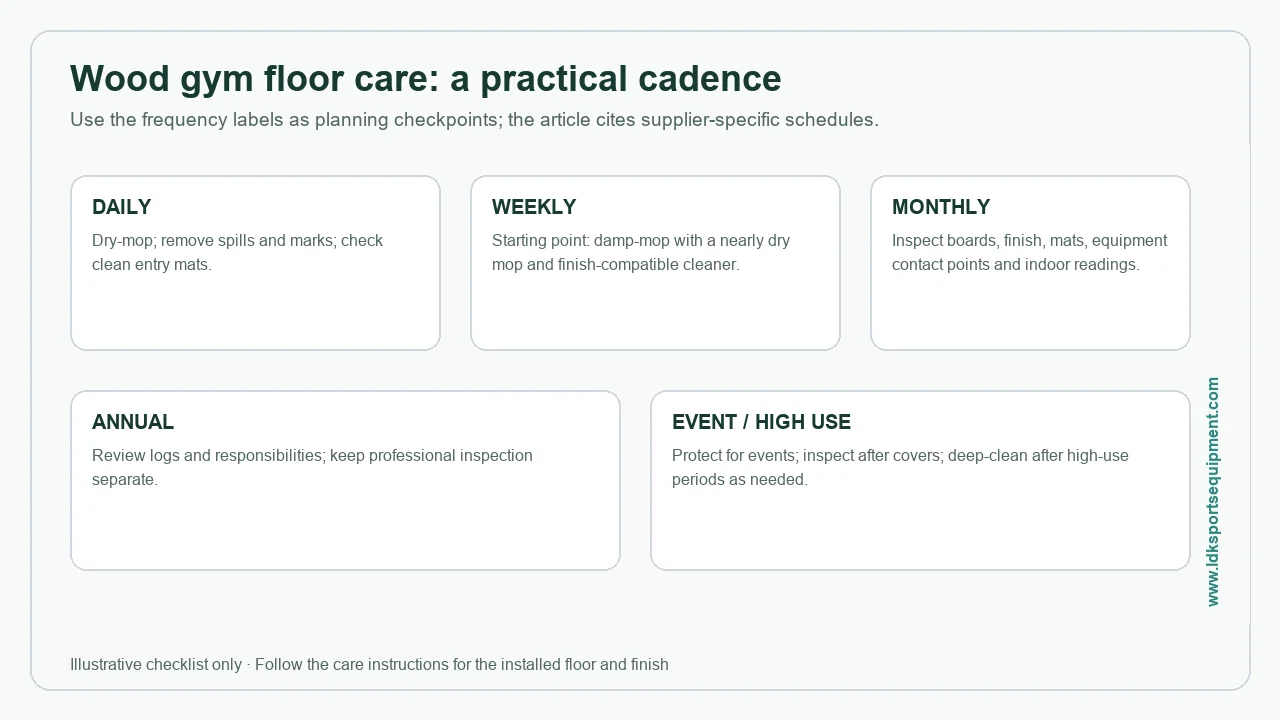
Diagram: A visual summary of the facility checklist cadence; specific cleaning schedules vary by floor system and use.
Use this start-of-shift and after-use routine:
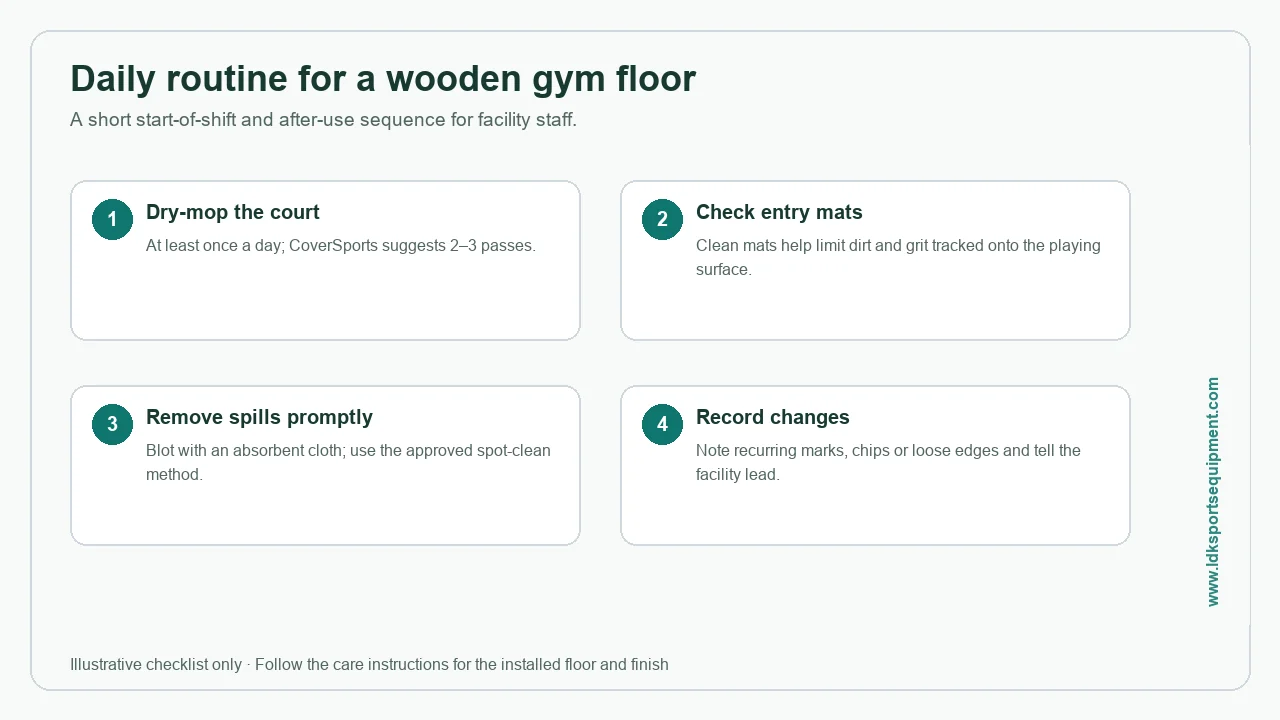
Diagram: Daily start-of-shift and after-use tasks from the article checklist.
Use a clean dust mop or another dry tool approved for the surface. While cleaning, look for spills, stains, scuffs, gum, or other marks that remain after dry dusting. Wipe up liquids promptly with an absorbent cloth and note recurring issues so staff can address their cause.
For a spot that remains after dry cleaning, use a spot-cleaning method compatible with the installed finish. Robbins directs hardwood-floor owners to identify the finish and contact its manufacturer for detailed products and procedures. Keep court products separate from supplies used in other rooms.
Many supplier guides describe a weekly damp clean. A typical routine uses this three-step method:
WAXIE describes either a neutral-cleaner method or a waterless tacking cleaner, and Junckers specifies its own products and cleaning procedures for its sports floors.
Approved machines and pads vary by floor system; train new custodial staff on the method selected for the facility.
Walk the court and record specific changes instead of writing only “floor checked.” Look for cupping or gaps, which Bona identifies as possible changes associated with indoor moisture conditions, along with chips, lifted edges, visible finish wear, and debris or moisture around bleachers and storage areas, which OxMaint includes in its inspection checklist. Make sure entrance mats are clean and that tables, chairs, and movable equipment have functioning glides, which Robbins recommends for its hardwood floors. A monthly record can include these six items: Track coating product, application date, and reopening conditions so future work can follow the sports floor finishsports floor finish requirements.
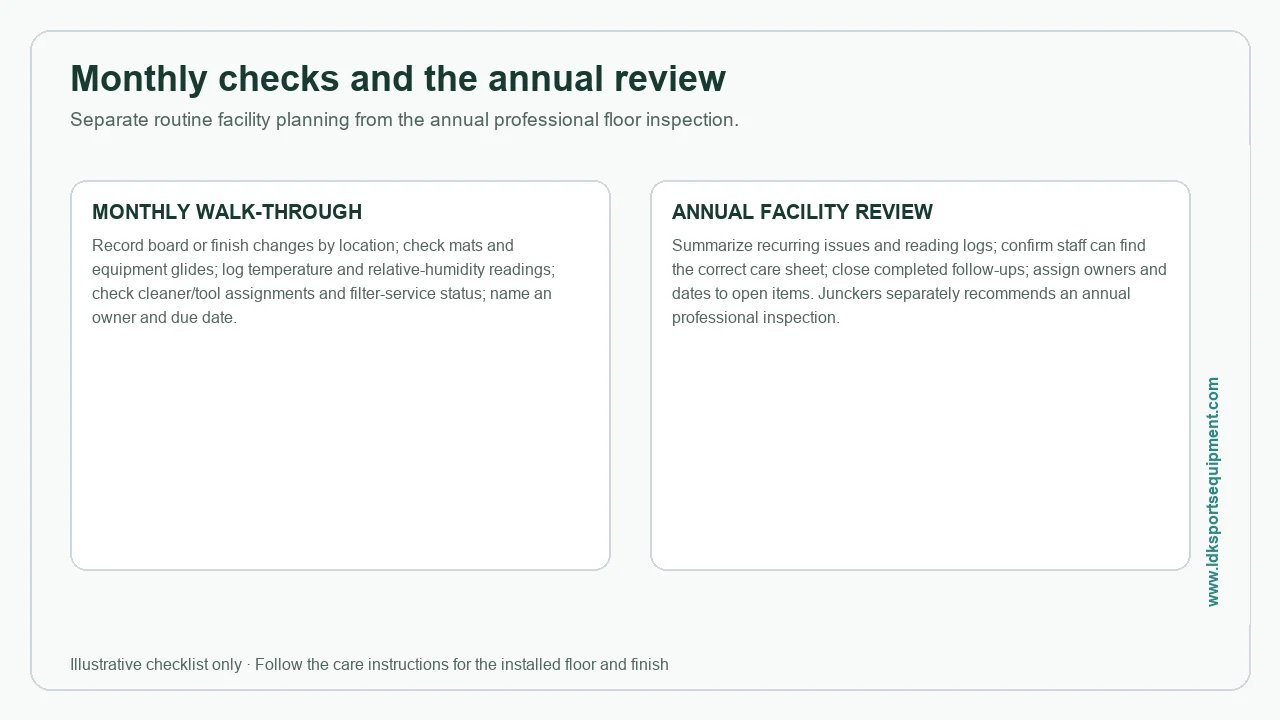
Diagram: The monthly facility walk-through and annual planning review are distinct from Junckers’ recommended annual professional inspection.
Label court supplies clearly, train staff on the designated cleaning method, and keep separate tools if that helps prevent cross-use. Bona recommends dedicated gym tools to reduce cleaner cross-contamination.
Log indoor readings beside the care target for the installed floor and report unusual swings through the facility’s maintenance process. Manufacturers publish different ranges for different systems. Robbins specifies 35–50% relative humidity and 55–80°F for its hardwood guidance. Junckers specifies 35–65% relative humidity and 16–22°C (about 61–72°F) for its lacquered hardwood sports floors. When monthly humidity readings move outside the maker’s range, log the change beside the installed floor’s care target before planning gym floor refinishinggym floor refinishing.
A facility’s own annual review is separate from a professional floor inspection. Use it to:
Keep this record focused on observed condition and routine care. Any separate surface-treatment decision requires an assessment of the installed floor and finish.
Store the summary with the current care sheet and inspection log. Note which issues recurred, which were closed, and which need an outside assessment so the next staff lead can distinguish repeat patterns from one-time marks. Give every open item an owner and a follow-up date.
| Avoid | Safer staff rule |
|---|---|
| Leaving water or cleaning solution on the boards | Wipe spills promptly and use only the approved damp-clean method. |
| Using an unapproved cleaner, including bleach or ammonia named in a supplier guide | Use a floor-cleaning product specified for the installed finish. Bona warns that household cleaners may leave a slippery residue; CoverSports names ammonia or bleach. |
| Using an abrasive pad, brush, or tool without approval | Check the floor and equipment instructions before using a pad or powered machine. |
| Applying ordinary adhesive tape directly to the finish | Avoid tape on the playing surface unless the installed system’s written care instructions allow it; Bona warns that pulling tape up can damage its finish. |
| Moving a cleaner or tool from another room onto the court | Keep court products clearly identified and staff trained on the approved method. |
Keep the care sheet for the installed floor with a simple log. A useful entry records the date, court area, task, product or method used, issue found, person responsible, and follow-up date. Daily entries can be brief; monthly inspections and annual reviews should capture the condition changes and open actions.
| Date / area | Task or condition | Product / method | Action owner | Follow-up |
|---|---|---|---|---|
Dry-mop daily, clean spills promptly, and use a pH-neutral cleaner for periodic damp cleaning. WAXIE describes weekly cleaning as one supplier schedule.
For an athletic floor, remove dry grit daily, respond to spills as they occur, complete periodic damp cleaning, and keep a written inspection and care record. Add facility-planned monthly checks and an annual condition review.
Keep entry mats clean, follow the facility’s court footwear policy, and inspect the feet or glides on tables, chairs, and movable equipment. Robbins recommends functioning glides for tables, chairs, and movable equipment on its hardwood floors.
The LDK solid-wood system reference lists maple, oak, and birch as species categories; Robbins also describes a maple floor in its hardwood guidance. For a specific gym, confirm the species with the installer or product supplier.
For questions about an LDK sports wood flooring system, contact LDK with the floor type, finish if known, cleaning equipment, and the issue you are addressing. Include the project or product details and ask what documentation is available for that system; the indoor basketball court flooring guide provides related selection context. When reporting floor type, finish, and cleaning issues, include class and event schedules for school gym wood flooringschool gym wood flooring guidance.
