Sports Equipment Manufacturer

What is the length and width of a football field? Explore official FIFA 11-a-side benchmarks, IFAB rules, and FA small-sided dimensions in meters and feet.
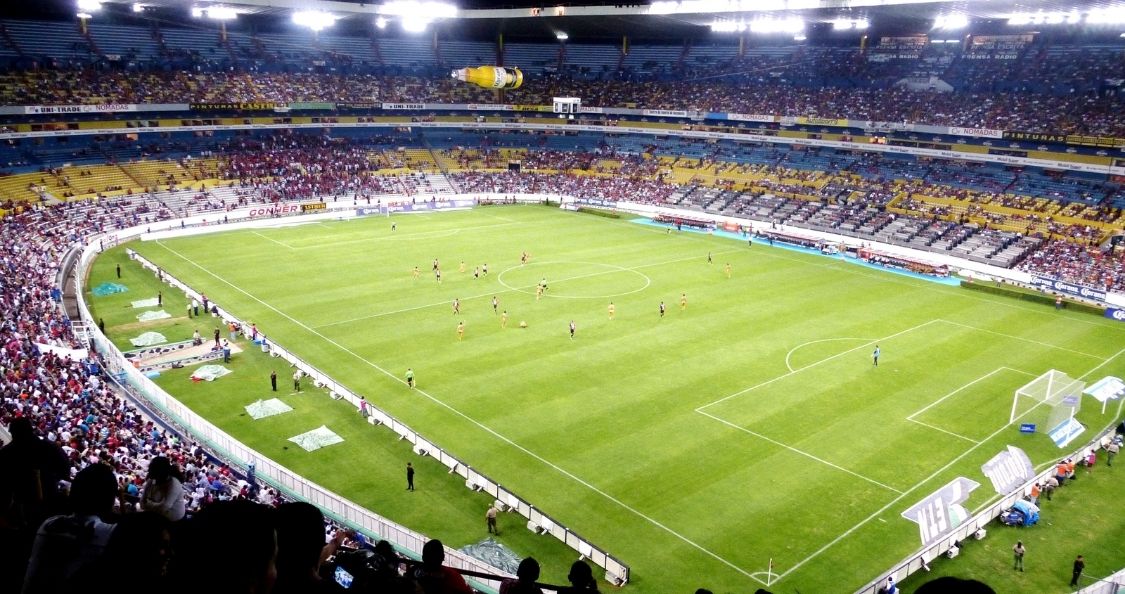
The standard benchmark recommended by FIFA for professional 11-a-side football fields (soccer pitches) and major international stadiums is 105 meters (115 yards / 344.5 feet) in length by 68 meters (74.4 yards / 223.1 feet) in width. Under the regulatory framework established by the International Football Association Board (IFAB) Law 01: The Field of Play, regulatory football pitch dimensions are permitted within an overall domestic length range of 90 to 120 meters (100 to 130 yards) and a width range of 45 to 90 meters (50 to 100 yards). For senior international matches, IFAB Law 01 defines a narrower allowable range of 100 to 110 meters in length and 64 to 75 meters in width, with 105 m x 68 m established as the widely adopted recommendation by governing bodies such as FIFA for World Cup tournaments and modern stadium construction.
Understanding these dimensions is essential for architects, sports facility planners, school athletic directors, and club managers. In this guide, we examine official football pitch dimensions across regulatory 11-a-side and small-sided formats, review regulatory line markings and goalpost specifications, clarify the distinction between association football and American gridiron football, and summarize key facility planning guidelines such as safety run-offs and pitch construction baselines.
To quickly compare regulatory pitch specifications across major competition formats, review the standardized dimensions summarized below based on governing bodies including IFAB, FIFA, and The Football Association (The FA):
| Competition Format | Length (Meters / Yards) | Width (Meters / Yards) | Total Playing Area (sq m / sq ft) | Goal Dimensions (W x H) | Governing Authority & Status |
|---|---|---|---|---|---|
| FIFA-Recommended Benchmark (11v11) | 105 m / 115 yd | 68 m / 74.4 yd | 7,140 sq m / 76,854 sq ft | 7.32 m x 2.44 m (24 ft x 8 ft) | Recommended benchmark for premier international competitions |
| IFAB Domestic Allowable Boundaries | 90 – 120 m / 100 – 130 yd | 45 – 90 m / 50 – 100 yd | 4,050 – 10,800 sq m | 7.32 m x 2.44 m (24 ft x 8 ft) | Regulatory adult domestic competition allowable boundaries |
| IFAB International Fixture Range | 100 – 110 m / 110 – 120 yd | 64 – 75 m / 70 – 80 yd | 6,400 – 8,250 sq m | 7.32 m x 2.44 m (24 ft x 8 ft) | Official senior international match boundaries |
| American Football (Gridiron Disambiguation) | 109.73 m / 120 yd (with endzones) | 48.77 m / 53.33 yd | 5,351 sq m / 57,600 sq ft | 5.64 m (18.5 ft) upright spacing / 3.05 m (10 ft) crossbar height | NFL / NCAA official rule specifications |
Clarification on Scope: While 11-a-side dimensions are governed globally by IFAB Law 01, small-sided parameters represent national association recommended frameworks (such as The FA Small-Sided Guidelines) and sports construction facility baselines (such as SAPCA):
| Format / Level | Length Range | Width Range | Area Range | Goal Dimensions | Applicable Baseline Reference |
|---|---|---|---|---|---|
| 7-a-Side (The FA Small-Sided Guidelines) | 50 – 60 m (55 – 65 yd) | 30 – 40 m (33 – 44 yd) | 1,500 – 2,400 sq m | 3.66 m x 1.83 m (12 ft x 6 ft) | The FA Law 1 recommended boundaries |
| 5-a-Side (The FA Small-Sided Guidelines) | 25 – 50 m (27 – 55 yd) | 16 – 35 m (17.5 – 38 yd) | 400 – 1,750 sq m | Flexible (3-5m width x 1.2-2m height) | The FA Law 1 recommended guidelines |
| Commercial 5-a-Side Mini-Pitch | 30 – 36 m (33 – 39 yd) | 18 – 25 m (20 – 27.3 yd) | 540 – 900 sq m | 3.66 m x 1.22 m (12 ft x 4 ft) | Illustrative commercial turf planning heuristic |
| Futsal Court (International Match) | 38 – 42 m (41.5 – 46 yd) | 20 – 25 m (22 – 27.3 yd) | 760 – 1,050 sq m | 3.00 m x 2.00 m (9.84 ft x 6.56 ft) | Official FA / international futsal court rules |
| 9-a-Side (Youth Transitional Example) | ~73 m (80 yd) | ~46 m (50 yd) | ~3,358 sq m (~36,145 sq ft) | 4.88 m x 2.13 m (16 ft x 7 ft) | Illustrative youth developmental guideline (U11-U12 9v9 format) |
| Panna / 3-a-Side Street Cage | 20 – 35 m (22 – 38 yd) | 12 – 21 m (13 – 23 yd) | 240 – 735 sq m | 1.80 m x 1.20 m (Mini cage goals) | Illustrative urban multi-use games area (MUGA) design baseline |
Before examining detailed line markings, it is helpful to clarify a common question regarding terminology: the difference between Association Football (Soccer) and American Football (Gridiron).
While both sports are commonly called “football” depending on the region, their field dimensions and layouts differ substantially:
Because a standard 105m x 68m soccer pitch is wider than an American football field, multi-sport athletic complexes often accommodate both sports on synthetic turf. In these shared venues, facility planners frequently incorporate dual-color painted or inlaid boundary markings (for instance, white for soccer and yellow or blue for gridiron) as an illustrative practical design convention.
The 11-a-side football field represents the primary competitive standard of the sport. IFAB Law 01 dictates that the field of play must be rectangular and clearly marked with continuous boundary lines. The two longer boundary lines are termed touchlines (sidelines), and the two shorter lines are termed goal lines. The touchline must always be longer than the goal line.
The rules of the game recognize that stadium footprints vary. Consequently, IFAB defines both general allowable boundaries and international competition guidelines:
A regulation football field requires defined technical zones. According to IFAB Law 01, all lines must not exceed 12 centimeters (5 inches) in width and must be clearly distinguishable, conventionally marked in white. The boundary lines themselves are legally part of the areas they enclose.
The halfway line divides the field into two identical halves. At the exact midpoint of this line lies the center mark (kick-off spot). Surrounding the center mark is the center circle, which has a radius of 9.15 meters (10 yards). During kick-offs, defending players must remain outside this circle until the ball is kicked and clearly moves.
The penalty area is the large rectangular zone in front of each goal where goalkeepers may handle the ball and where fouls result in penalty kicks. It is marked by two perpendicular lines starting 16.5 meters (18 yards) from the inner edge of each goalpost, extending 16.5 meters into the field of play, joined by a connecting line. The total dimensions of the penalty area are 40.32 meters wide by 16.5 meters deep (44 yards by 18 yards).
Nested inside the penalty area is the goal area. Two perpendicular lines are drawn starting 5.5 meters (6 yards) from the inner edge of each goalpost, extending 5.5 meters into the field of play, connected by a parallel line. The goal area measures 18.32 meters wide by 5.5 meters deep (20 yards by 6 yards). Goal kicks may be taken from anywhere within this zone.
The penalty spot (penalty mark) is located 11 meters (12 yards) from the midpoint between the goalposts. Outside the penalty area, an arc of a circle with a radius of 9.15 meters (10 yards) is marked using the penalty spot as its center. This penalty arc ensures that non-kicking players remain at least 9.15 meters (10 yards) away from the penalty mark during spot kicks.
At each corner of the pitch, a quarter-circle with a radius of 1 meter (1 yard) is drawn inside the field from the intersection of the touchline and goal line. The ball is placed within or touching this arc during corner kicks. A non-pointed flagpost of at least 1.5 meters (5 feet) in height must be placed at each corner.
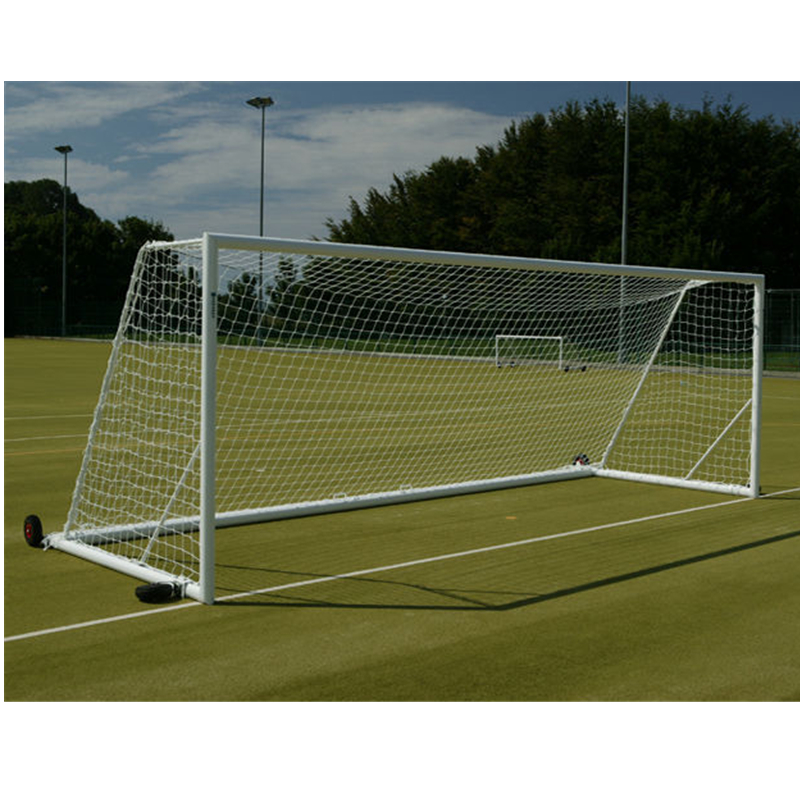
According to IFAB Law 01, goals must be placed on the center of each goal line:
Facility Equipment Guidance: When specifying match equipment, facility operators often utilize regulation aluminum soccer goals engineered to meet official IFAB dimensional tolerances while incorporating integrated net attachment channels and tested ground anchoring methods.
Design Heuristic Note: While 11-a-side boundaries are governed strictly by IFAB Law 01 and 7-a-side youth pitches by national associations like The FA, supplementary dimensions for training formats (such as 9v9 youth transitional sizing, municipal cage arenas, and civil engineering gradients) represent adaptable design heuristics and facility planning baselines rather than single worldwide statutory mandates.
Small-sided soccer formats are popular for youth development, recreational leagues, and training centers. These pitches adapt field dimensions to player numbers and physical developmental stages.
Seven-a-side soccer is commonly utilized for youth play (such as U9 to U10 age groups) and adult recreational leagues. According to recommended small-sided pitch guidelines published in The Football Association (The FA) Small-Sided Law 1:
Five-a-side and futsal represent distinct small-sided disciplines with different spatial requirements:
For transitional youth leagues, such as U11 to U12 9-a-side play, common football association youth guidelines recommend pitches approximately 73 meters (80 yards) long by 46 meters (50 yards) wide with 4.88 m x 2.13 m (16 ft x 7 ft) goals as an illustrative developmental standard bridging small-sided play to full adult pitches.
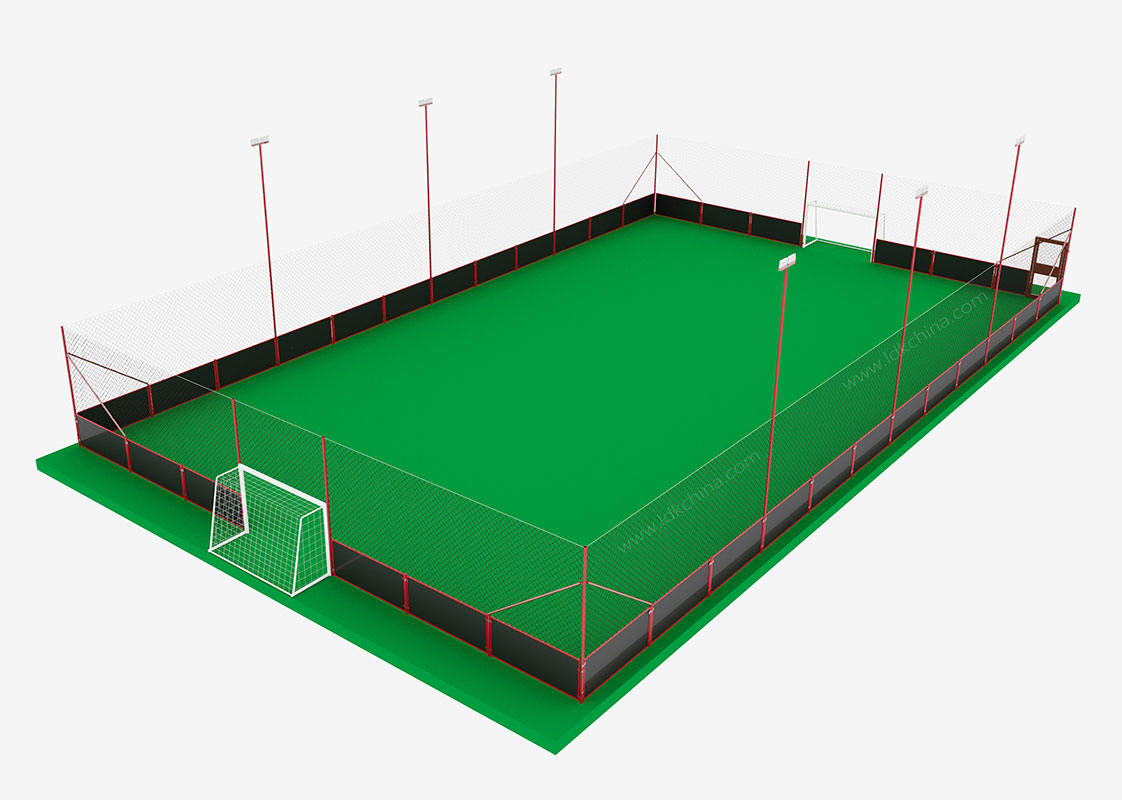
Urban cage soccer focuses on close control and 1v1 to 3v3 contests:
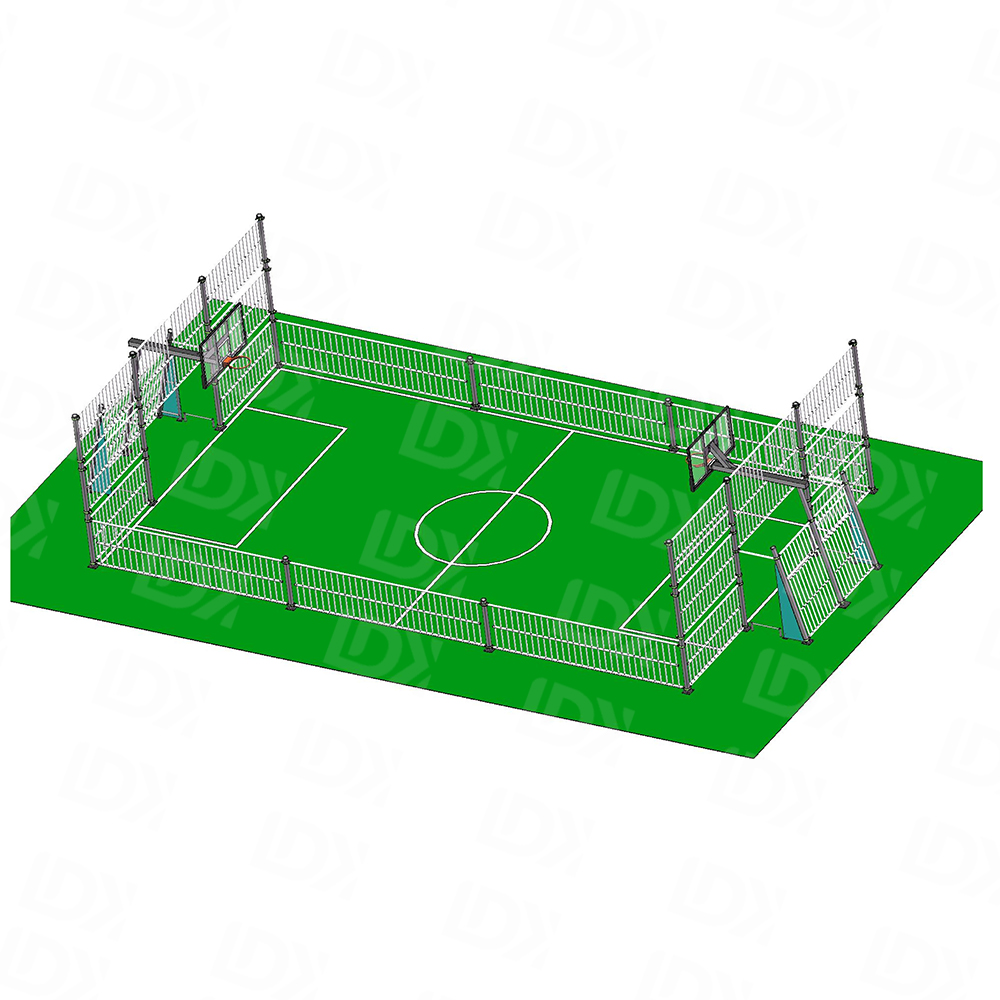
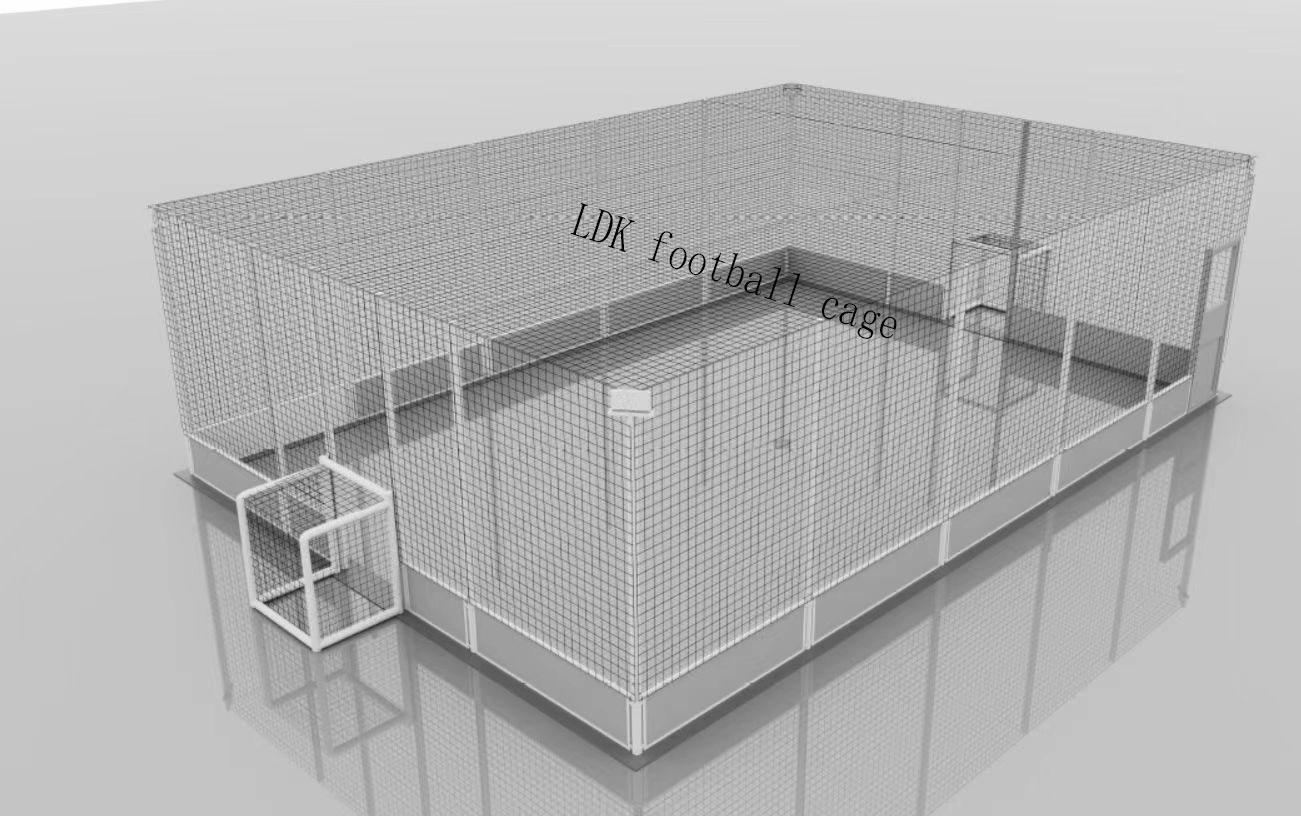
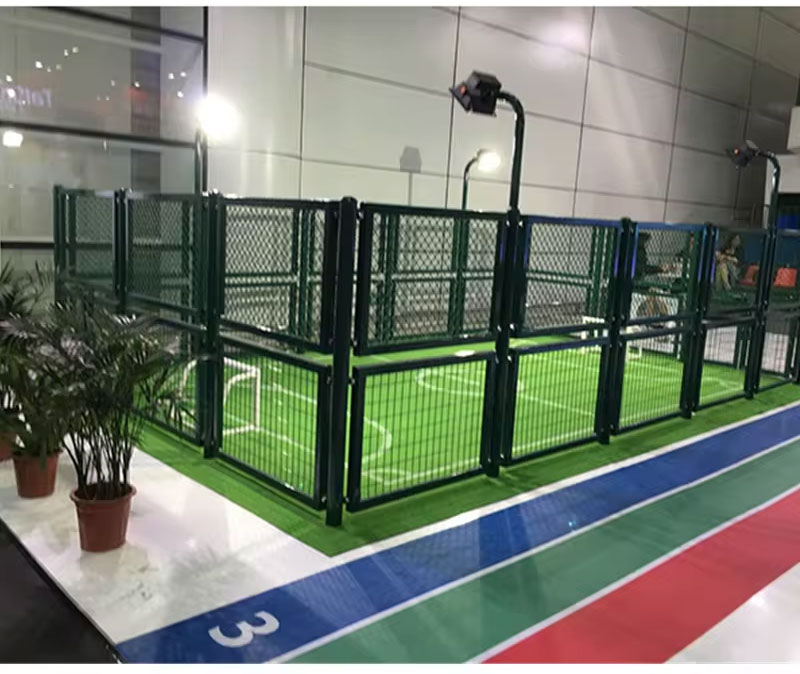
For community facilities, modular football cage soccer fields illustrate structural enclosure systems that translate small-sided spatial layouts into self-contained play spaces.
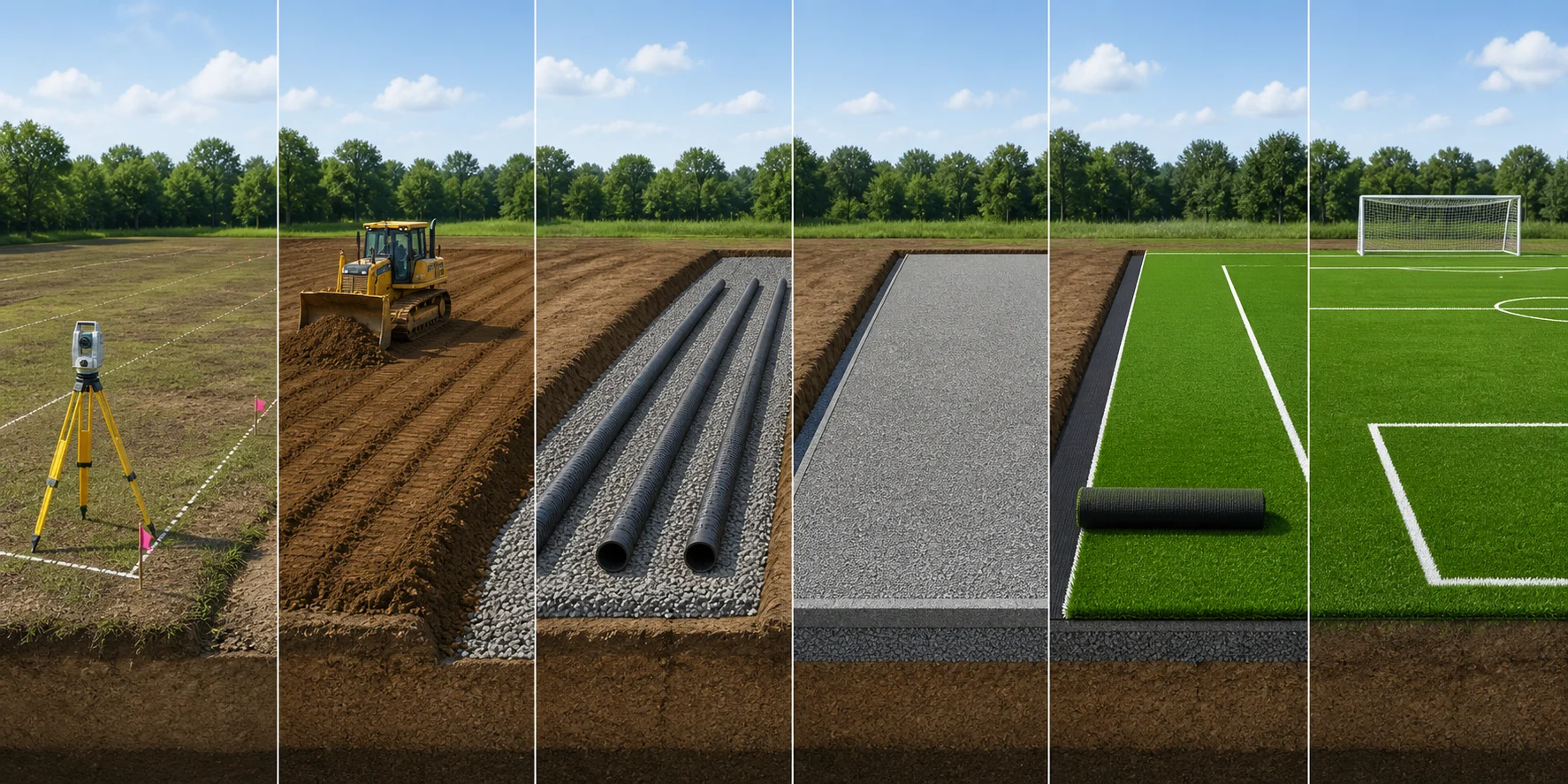
Advisory Planning Note: Guidance published by industry bodies represents recommended design practice rather than universal contract specifications. Technical facility design guidelines from the Football Foundation & The FA and FIFA Stadium Guidelines provide helpful baselines, but subbase layer depths and drainage falls should always be validated against project-specific geotechnical engineering advice.
Planning a football pitch requires accounting for athlete safety, water drainage, and durable surface engineering.
Athletes often sprint out of bounds during play. According to FIFA Stadium Guidelines and national governing recommendations:
In sports architectural planning guidelines outlined by the Football Foundation & The FA, orienting outdoor pitches along a general North-South axis (specifically recommended within approximately 15 degrees of true north / North-Northwest to South-Southeast) is an established design heuristic to prevent direct low-angle solar glare into goalkeepers’ and outfielders’ sightlines during late-afternoon fixtures.
According to synthetic sports pitch design principles from the Football Foundation & The FA and SAPCA:
The FIFA-recommended benchmark for major international competitions and modern stadiums is 105 meters long by 68 meters wide. In imperial units, this converts to approximately 114.8 yards (344.5 feet) in length and 74.4 yards (223.1 feet) in width, providing a total playing surface area of 7,140 sq m (76,854 square feet / 1.76 acres). Under IFAB Law 01, overall allowable domestic boundaries can range from 90 to 120 meters in length and 45 to 90 meters in width.
Yes. Under IFAB Law 01, regulatory domestic fields can range between 90 m and 120 m in length, and 45 m and 90 m in width. This historic flexibility allows older grounds to operate legally even if their pitches are slightly narrower than the modern 105m x 68m recommendation.
An American football field is narrower but slightly longer in total boundary structure. A gridiron field measures 120 yards (360 feet / 109.73 meters) long, including both 10-yard endzones, and 53.33 yards (160 feet / 48.77 meters) wide, totaling 57,600 square feet (1.32 acres). A standard soccer pitch is 344.5 feet long and 223.1 feet wide, covering 76,854 square feet (1.76 acres), making the soccer pitch approximately 33% larger in total area.
Under The FA small-sided recommended guidelines, a standard 7-a-side football field typically measures between 50 to 60 meters (55 to 65 yards) in length and 30 to 40 meters (33 to 44 yards) in width. Common benchmark sizes for recreational adult leagues and youth play are 55 meters by 35 meters or 60 meters by 40 meters, equipped with 3.66 m x 1.83 m (12 ft x 6 ft) goals.
The center circle has a radius of 9.15 meters (10 yards) originating from the kick-off mark. Its regulatory purpose is to enforce the defensive distance rule during kick-offs at the start of each half and after goals are scored, ensuring defending players cannot encroach within 9.15 meters of the ball until it has been touched and clearly moved.
According to IFAB Law 01, all line markings on a football field must not exceed 12 centimeters (5 inches) in width and must be clearly distinguishable, conventionally marked in white. Crucially, the lines are considered part of the area they delimit; for example, a ball touching any part of the 12 cm goal line or touchline is legally still in play.
Governing guidelines recommend providing an unobstructed safety run-off zone. FIFA guidelines recommend a minimum level surface of 2 meters, with larger stadium benchmarks reaching 4 meters along touchlines and 5 meters behind goal lines. For community and smaller grounds, a buffer perimeter of approximately 3 meters on touchlines and 3 to 4 meters behind goals is recommended under Football Foundation facility guidance.
Whether planning a full-scale 105m x 68m stadium pitch, installing a community 7-a-side artificial turf field, or building a small-sided cage soccer facility, adhering to recognized dimensional guidelines ensures fair play, player safety, and efficient spatial utilization.
Key facility planning recommendations include:
For technical planning questions or customized pitch equipment inquiries, contact the LDK sports engineering team for detailed specifications.