

Sports Equipment Manufacturer

Choose multipurpose sports hall flooring for basketball, volleyball and events. Compare sport performance, rolling loads, furniture and floor protection.
A multipurpose sports hall floor has to support its main sports and the equipment brought in for assemblies, exhibitions, and community events. Start with a complete indoor sports-floor system tested for the sports the hall will host, then check the EN 14904 rolling-load result against the venue’s actual carts and seating plan. Use the test as a comparison point, then review event equipment against the tested floor system and the venue equipment plan.
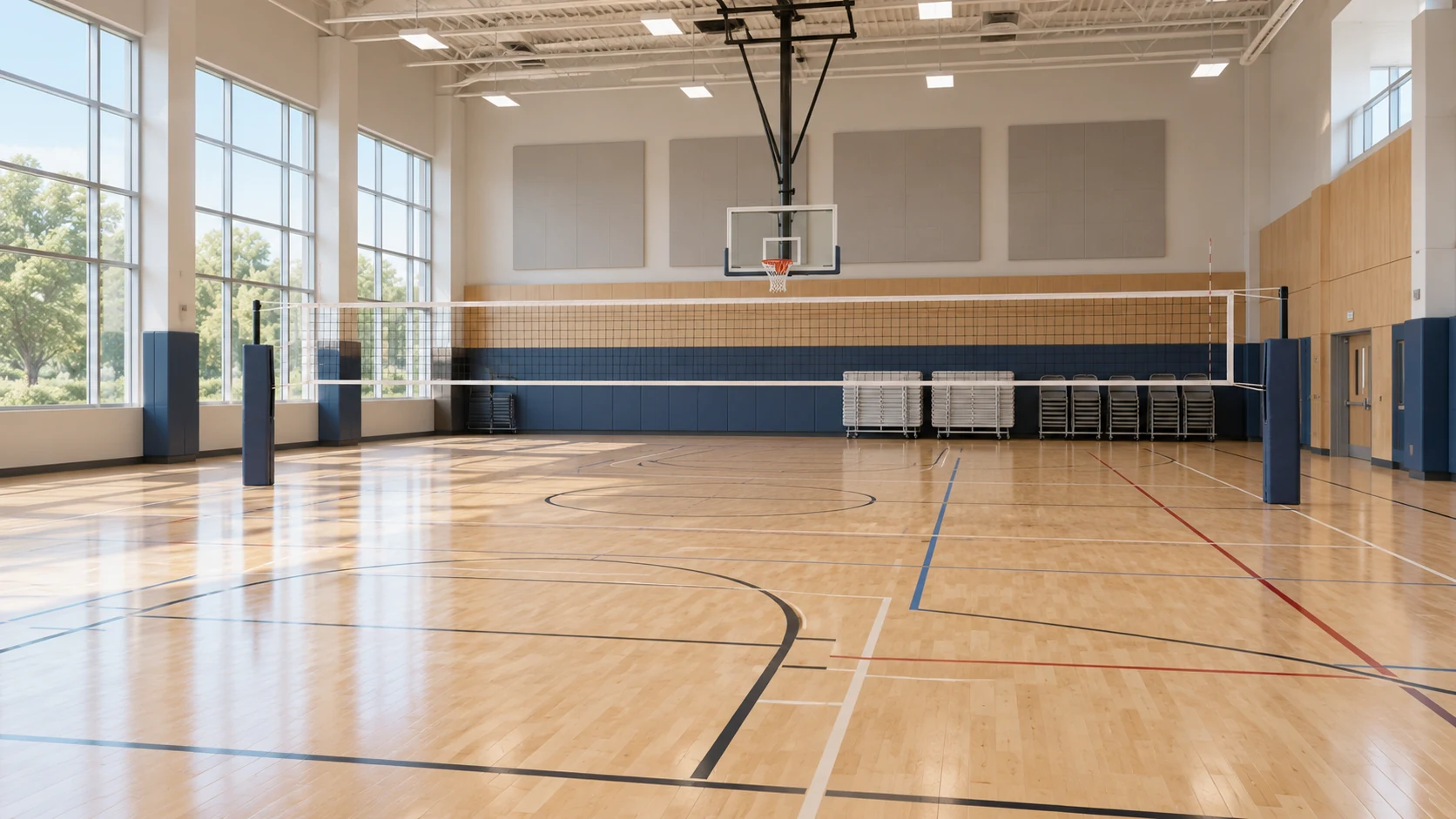
Concept illustration: a shared sports hall with court lines and stored event equipment.
The floor must give athletes consistent footing and ball response while standing up to routine facility use. When the same room also hosts non-sport events, the planning brief has to account for chairs, tables, staging, carts, temporary covers, and the routes used to move them.
EN 14904:2006 covers indoor surfaces for multi-sports use. It evaluates the floor system, including the supporting and upper layers, against requirements such as shock absorption, vertical deformation, ball behavior, rolling-load resistance, wear, and indentation. The standard is a useful starting point for a basketball-and-volleyball hall, but event planning still needs a separate equipment schedule.
A sprung wood floor can suit a venue where court sports are the priority. The system’s response comes from its full assembly, including the surface and support structure. A synthetic sports floor may suit a different use pattern or maintenance plan. For either option, compare test evidence for the complete system against the sports the venue will host.
EN 14904:2006 specifies a minimum rolling-load resistance of 1,500 N when the sports floor is tested under EN 1569. It also sets a maximum indentation of 0.5 mm under a 300 mm straightedge and requires no perceivable damage after the test. DIN Media lists EN 14904:2006 as current, and NEN describes EN 1569:2020 as the method for determining sports-surface behavior under rolling load.
Those values come from a defined test on a specified sports-floor system. Compare the report setup with the event equipment, wheel or foot contact, load distribution, movement, turning, and exact floor build-up. Use the result as one procurement input alongside the venue equipment plan.
Ask for the test report or declaration for the offered system, and check that the reported construction matches the proposed surface, support layers, and resilient components. Compare the test conditions with the event inventory. The report supports the construction and method it identifies, so document any difference between the tested and proposed system.
A rolling load comes from a wheel moving across the surface. It is relevant to carts, mobile seating, portable stages, and maintenance equipment. A point load comes through a small stationary contact area, such as a furniture foot or support. An impact is a short force from a dropped or struck object. These can affect a floor differently, so one rolling-load value cannot answer all three questions.
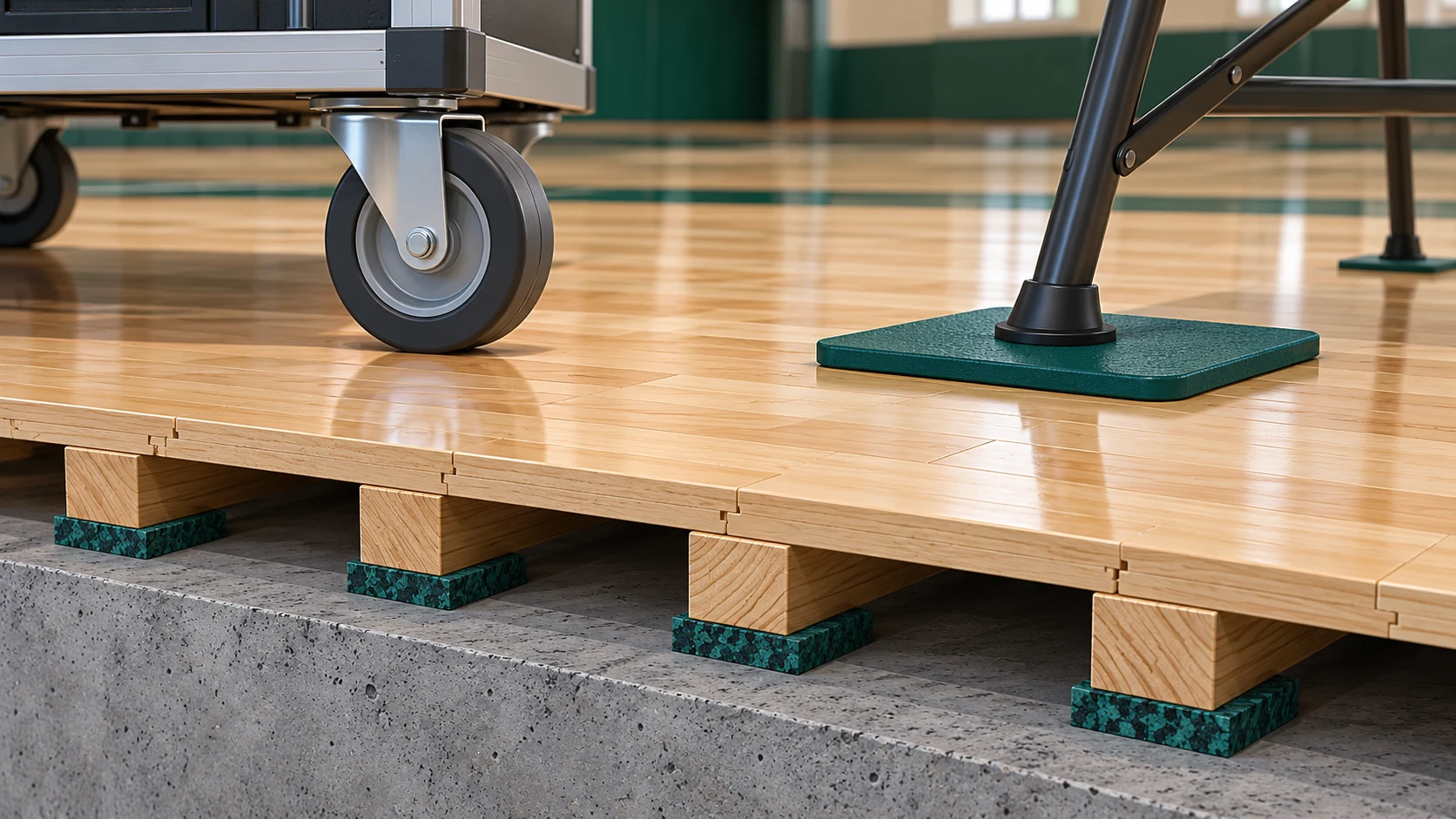
Concept diagram: rolling contact and furniture-foot contact affect different areas of a floor.
For furniture and temporary structures, record the item’s total weight, number and type of feet, approximate contact dimensions, and whether the item stays still or moves. For carts, record the wheel material and width, load carried, route, turns, thresholds, and how often the route is used. These details let the flooring supplier and facility engineer review the actual use rather than guess from a generic equipment category.
A simple load schedule is more useful than a statement such as “event use required.” It should include:
For concentrated contacts, screen contact pressure by dividing the load carried by a foot or wheel by its contact area. Use the calculation to flag small, hard contact points for system-specific review. Have a qualified flooring or structural professional review unusual loads, mobile bleachers, lift equipment, temporary stages, and narrow-wheel routes against the tested system and the building design before these items are approved for use.
Choose the system around the venue’s dominant activities, then check what the non-sport calendar adds. A hall used mainly for basketball and volleyball may prioritize a tested sports-floor response; a facility that regularly hosts exhibitions may place more weight on rolling routes, floor protection, setup time, and maintenance. Compare each candidate against the main sports, event schedule, and maintenance plan.
| Floor approach | May suit | Questions to resolve for a shared hall |
|---|---|---|
| Sprung wood sports floor | Halls where court-sport performance is central | Is the full floor system documented for the planned sports? What rolling-load test evidence and event-use instructions apply to this build-up? |
| Synthetic sports surface | Facilities with a use or maintenance plan suited to that system | Which sports tests apply to the exact product and installation? How will furniture and carts be protected during events? |
| General-purpose gym or rubber flooring | Fitness, training, or support areas with different demands | Does the surface provide the ball behavior and sport-specific performance the main court needs, or is it better kept to a separate zone? |
For a wood-floor project, compare solid and engineered constructions as complete sports systems, not just as surface boards. See the solid versus engineered sports flooring guide. If the planning question is broader—such as indoor wood versus outdoor acrylic or modular tiles—use the basketball court material guide for that separate comparison.
Plan court markings before the floor is installed. Select one visually dominant set for the primary sport and use clearly distinguishable but restrained line colors for secondary courts. Keep markings legible under the venue lighting and avoid letting several equally prominent layouts compete across the playing area. Confirm the final line plan with the sports governing requirements and the facility’s operator.
Include event use in the flooring brief before suppliers price or specify the floor. Tarkett’s sports-hall guidance, for example, distinguishes multi-sport requirements from the additional indentation and load resistance needed when heavy chairs and tables are brought in for non-sport events. That distinction is a practical reminder to document both modes of use, not to assume the word “multipurpose” covers every event load.
Use this sequence during procurement:
Procurement documents should identify the exact floor build-up covered by the test report, the test method and load, the stated result, and the applicable use limitations. They should also say who approves new event equipment or changes to the hall’s event plan.
Protection works best when it is planned into the room layout. Store approved covers near the event access route, define a clean path for carts, and keep turning and staging zones away from exposed playing areas where practical. Use only covers, boards, and pads compatible with the floor manufacturer’s instructions; a protective layer that traps grit, slips, or blocks movement can introduce a different problem.
Before setup, remove grit and check the cover path and floor for debris. Move equipment without dragging it, use the designated route, and avoid pivoting loaded carts in place. After the event, remove covers as instructed, clean the surface with the approved method, and record any dents, scratches, open joints, or movement in the finish. These steps help staff catch damage early and keep the sports surface ready for its next use.
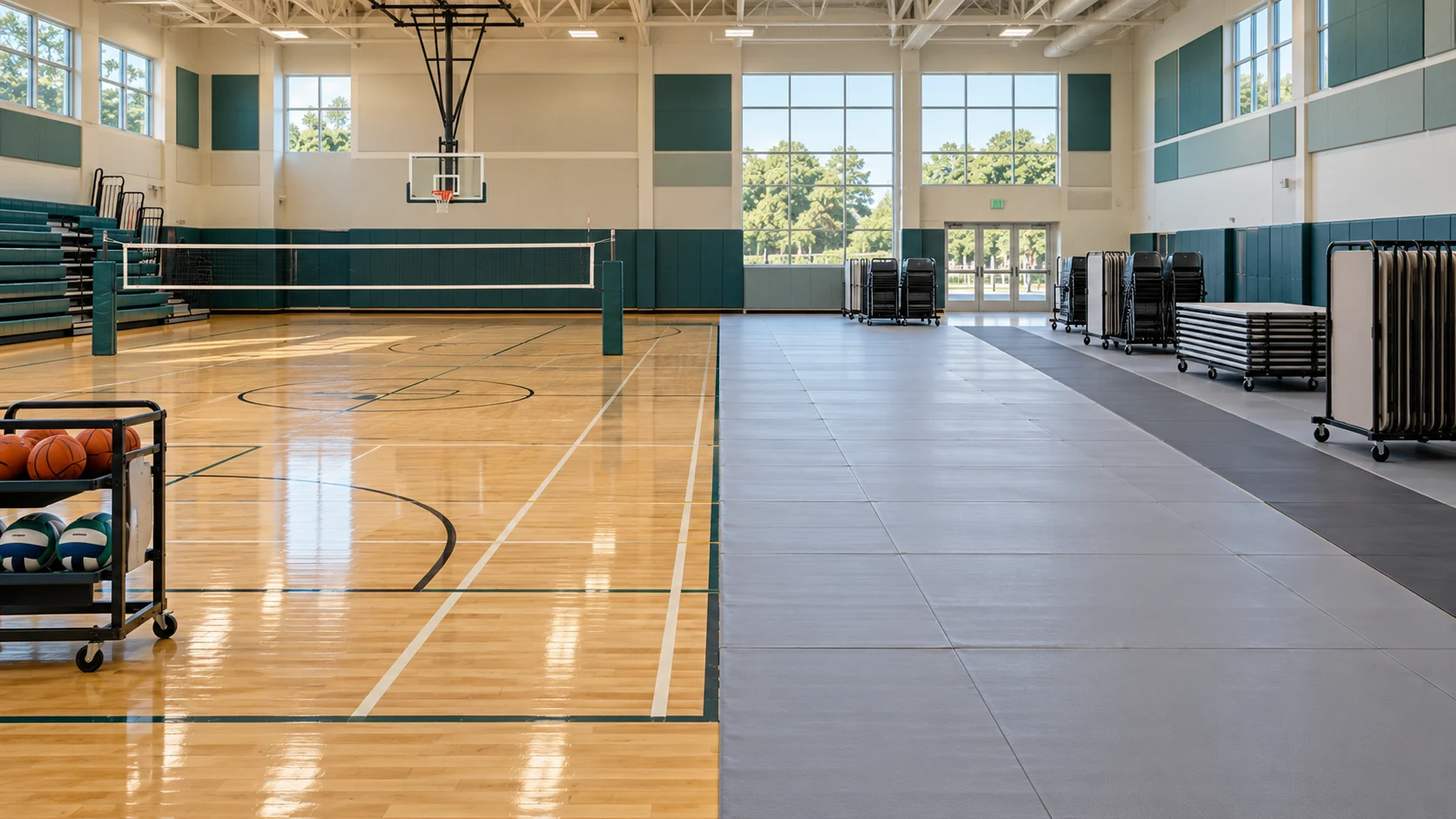
Concept illustration: a protected event route and equipment staging area beside the playing surface.
Before approving a multipurpose sports hall flooring package, confirm that:
If the project includes a competition-specific wood floor, review the evidence requirements in the basketball flooring certification guide. A page title or product name is not a substitute for checking the exact system and its documentation.
Sports halls use complete wood or synthetic sports-floor systems selected for the activities and facility requirements. For a multi-use hall, the selection also needs to account for event equipment, movement routes, and protection.
Choose a tested system that fits the main sports, then check event loads, maintenance, and protection against the venue use plan.
Share the sports schedule, event calendar, hall layout, and equipment list with the flooring team before finalizing the specification. Contact LDK to discuss the sports-flooring requirements for your project.
