

Sports Equipment Manufacturer

A practical guide to FIBA Level 1 and Level 2 flooring, the approval process, and the documents buyers should match to a proposed basketball floor system.
People searching for FIBA certified basketball flooring are usually trying to answer two questions: what does “FIBA approved” actually mean, and how can a buyer confirm that a proposed court is covered? Match the exact product entry in FIBA’s current equipment catalogue and its Certificate of Approval to the model and assembly in the project quotation.
FIBA’s wooden-floor catalogue identifies the manufacturer, product name, installation type, wood/material information, license number, and competition level. Match those fields to the quoted floor system and the documents supplied for your project before specifying it.
“FIBA certified” is a common search and sales phrase. FIBA’s programme uses the designation FIBA Approved Equipment and issues a Certificate of Approval for approved equipment. Its regulations include wooden flooring as a distinct equipment category. The official wooden flooring catalogue lists each approved entry by manufacturer, product, type, material, license number, and competition level.
The catalogue entry identifies which listed product and level to check. Use the product name and license number to cross-check the quotation, then pair the Certificate of Approval and any laboratory report with the complete assembly documents for the proposed system.
The current FIBA Approval Programme Regulations 2024–2027 define Approval as being granted upon receipt of a Certificate of Approval. A laboratory report records testing of a sample; use it alongside the certificate and current catalogue entry when checking a proposed system.
FIBA’s regulations define the levels by competition scope. Level 1 covers FIBA national-team and club competitions, along with other elite national and international competitions. Level 2 covers other basketball competitions that do not fall under Level 1. For Level 2, the regulations say FIBA Approved equipment is strongly recommended; Level 1 equipment is required for the relevant categories in FIBA competitions.
| FIBA level | Competition scope in the regulations | What a flooring buyer should check |
|---|---|---|
| Level 1 | FIBA national-team and club competitions and other elite national and international competitions | Confirm the event’s requirements, then match the exact flooring product and level in FIBA’s current catalogue. |
| Level 2 | Other basketball competitions outside Level 1 | Check the facility owner’s and competition organizer’s specifications; FIBA Approved equipment is strongly recommended by the regulations. |
Since October 1, 2022, FIBA has also allowed approved glass flooring at Level 1 competitions, alongside approved wooden flooring. For a wooden court, use the wooden-floor category and match the listed product and level. For a specific event, confirm the current rules with its organizer and applicable national federation.
FIBA says approved products must meet technical requirements and undergo testing conducted independently by a FIBA Accredited Test Institute. The test procedures and criteria are set out in FIBA’s Handbook of Test Methods and Technical Requirements. FIBA’s published approval page says the handbook is available through its Approval Management System after the handling fee is received.
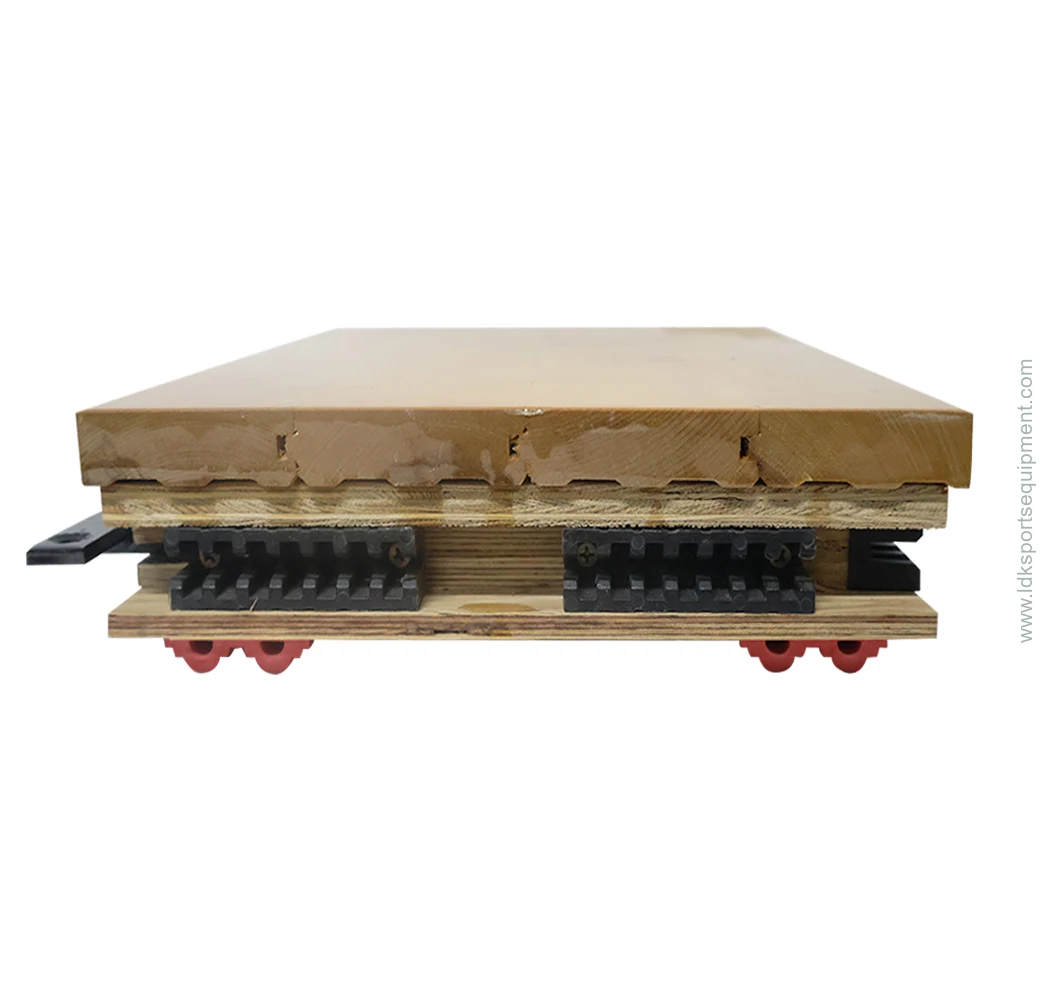
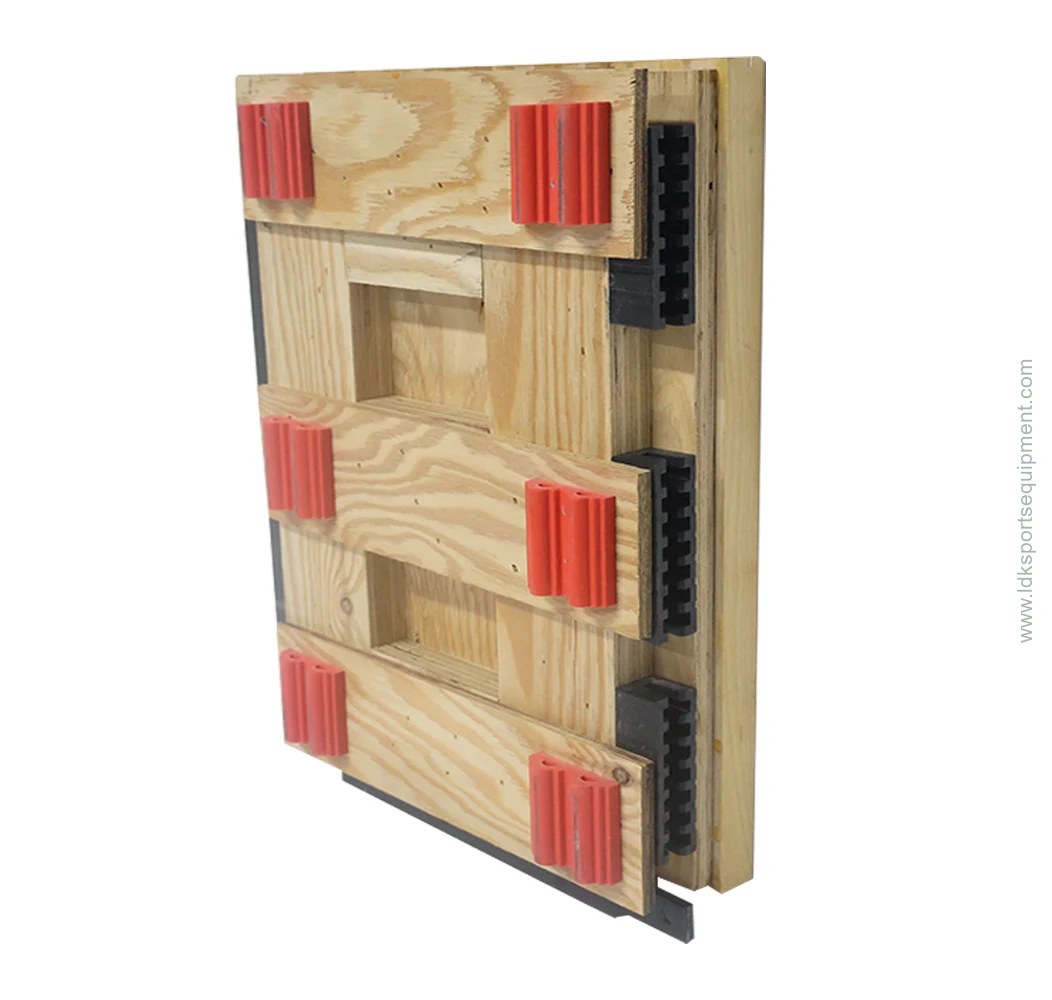
Request documentation for the exact submitted floor system and use it to check the model in the project quotation. A report should identify the product or sample it covers; compare its construction with the quoted assembly. Ask the supplier to explain any difference in the panel, support layers, pads, or installation method before applying that report to the project.
Start with the public catalogue, then review the floor drawings and bill of materials alongside the certificate and test documentation so the delivered build matches the product that was approved.
FIBA’s current published application steps follow this sequence:
Read FIBA’s How to Get Approved page for the current process and links to the regulations, handbook access, and accredited institutes. The regulations cited here cover January 1, 2024 through December 31, 2027, so check FIBA’s current programme before a later procurement.
Use this checklist when reviewing a supplier quotation or technical submittal:
| Check | What to match | Why it matters |
|---|---|---|
| Current FIBA entry | Manufacturer and exact product name in the wooden-floor catalogue | A general brand claim does not identify the approved product. |
| License number | Number shown beside that catalogue entry | It gives you a specific reference to compare with the supplied certificate. |
| Competition level | Level 1 or Level 2 as listed for that product | A listing at one level should not be presented as approval at another. |
| Floor type and material | Fixed, fixed-floating, or portable type and the material information shown | These catalogue fields help distinguish products from the same manufacturer. |
| Certificate | Certificate of Approval for the quoted product and category | The regulations define approval by issuance of this certificate. |
| Test documentation | Report identifies the tested product or sample and its configuration | This lets the project team check whether the report covers the proposed floor. |
| Assembly documents | Drawing and bill of materials for the top layer, supporting layers, and installation method | The delivered assembly should correspond to the product and evidence being submitted. |
| Equipment interface | Written coordination for portable backstops or other heavy equipment installed on the floor | Confirm the actual equipment and floor build are compatible in the project design. |
If a quotation uses “FIBA certified” but does not provide a product name, license number, certificate, and matching construction documents, request those items before comparing bids. If a system has been changed from the tested or approved configuration, ask the manufacturer to state in writing whether the approval and test evidence still apply.
Start with the competition requirement, not the wood species in a brochure. Then decide whether the project needs a fixed floor, a floating installation, or a portable floor; the FIBA catalogue separates those types and lists multiple wood/material options. Match a specific listed system to the event level and facility design rather than assuming that every maple or birch floor has the same approval.
The public LDK indoor basketball floor product page is a place to review the product description. For a FIBA-level project, request the current FIBA catalogue entry, Certificate of Approval, test report, and complete system build-up for the exact model in your quotation. Do not approve a substitution based only on a similar name or surface material.
For project budgeting, see the basketball floor cost guide. To request the documents for your facility, contact LDK with the competition level, floor type, and proposed model.
It is a specific flooring product listed in FIBA’s equipment catalogue at a stated competition level and covered by a FIBA Certificate of Approval. Check the manufacturer, product name, type, material, license number, and level against the floor proposed for your project.
The right type depends on the competition level and whether your venue needs a fixed, floating, or portable floor. For FIBA competition, match the proposed product to the current FIBA catalogue and event requirements; for other facilities, use the owner’s and competition organizer’s specifications.
FIBA requires independent testing by a FIBA Accredited Test Institute against its technical requirements. The category-specific methods and criteria are in FIBA’s Handbook of Test Methods and Technical Requirements, available through the FIBA Approval Management System. Use FIBA’s current institute list to check the flooring category and location.
FIBA’s published process includes an online handling fee. Ask FIBA and the selected accredited test institute for the current charges that apply to your product and test plan.
