

Sports Equipment Manufacturer

When facility owners compare wood species for sports floors, northern hard maple is the clearest U.S. sports-floor reference. Choose among maple, oak, and birch by matching the surface to the complete floor assembly: its subfloor, finish, installation conditions, and measured athletic performance.
Start with the sport and applicable performance requirements, then ask each supplier to identify the exact wood species and grade in the proposed system. LDK25W01 documentation lists North American maple and Russian birch surface-panel options; compare any oak proposal using its exact model specification.
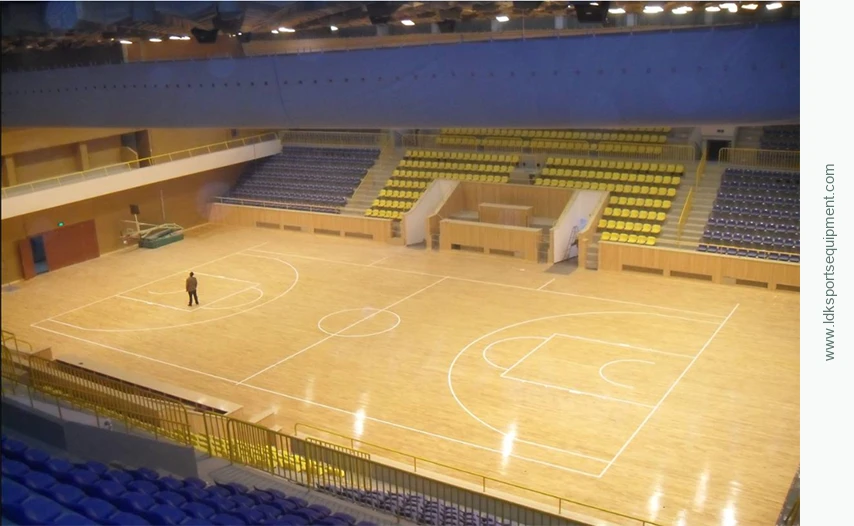
A wood-floor court example; the photograph does not identify the wood species.
The surface wood is only one part of a sports floor. A complete system also includes the supporting structure, resilient components, moisture control, finish, and installation details. The wood defines the playing surface, while the supporting system shapes how the installed floor responds under athletes and equipment.
The Maple Flooring Manufacturers Association (MFMA) evaluates sports-floor performance through characteristics such as shock absorption, vertical deflection, area deflection, ball rebound, and surface friction. Those measures describe a complete floor system. Use a report that identifies and tests the proposed assembly when reviewing its athletic performance.
When comparing solid-wood surfaces with engineered or layered panels, record the exposed wear-surface material and thickness, the supporting layers, and the test report for the quoted model.
Northern hard maple is the strongest documented starting point for a U.S. gym or basketball-floor discussion. MFMA identifies northern hard maple as a preferred sports surface and explains that its sports-floor systems pair the maple surface with engineered subfloor systems. The association also notes that the subfloor helps enhance shock absorption and area elasticity.
Maple floors vary with grade, milling, moisture conditions, finish, subfloor construction, installation, and maintenance. MFMA’s grading rules and sports-floor guidance are useful when a project specifies MFMA maple; a supplier should still identify the floor system and the applicable test documentation.
The U.S. Forest Products Laboratory also cautions that wood properties vary with growing conditions, growth features, and manufacturing or service environments. Pair a species label with the product specification and test data.
The name “oak” covers different species and commercial grades. A buyer should ask which oak is proposed, how the surface is graded, and whether the supplier has sports-floor test data for the complete assembly. Compare athletic systems using sports-floor evidence.
Some online comparisons rank oak above or below maple by hardness or durability. That ranking does not answer whether the quoted system delivers the required ball rebound, shock absorption, deformation, or traction. Compare the same system-level criteria and test methods for each proposal. If visual appearance matters to the venue, review finished samples with the proposed line colors and lighting.
If a specification names oak, request the exact trade or botanical species, surface thickness, grade, subfloor section, and finish. Make sure the report names the same model or construction that appears in the quotation.
Birch is a documented surface-panel option in LDK’s LDK25W01 single-keel sports-floor product card. The card lists a 22 mm North American maple or Russian birch surface panel. The product card identifies this as a model-specific material option. In LDK25W01, the surface panel sits above a 12 mm high-strength plywood layer, 24 mm LVL joists, and 12 mm sports-floor resilient pads. Compare the complete assembly and its applicable test report.
When comparing a birch system with a maple or oak proposal, request the same information for each: the surface species and grade, panel construction, subfloor build-up, finish, and applicable system test report. This lets a facility compare what is actually being supplied rather than relying on the wood name alone.
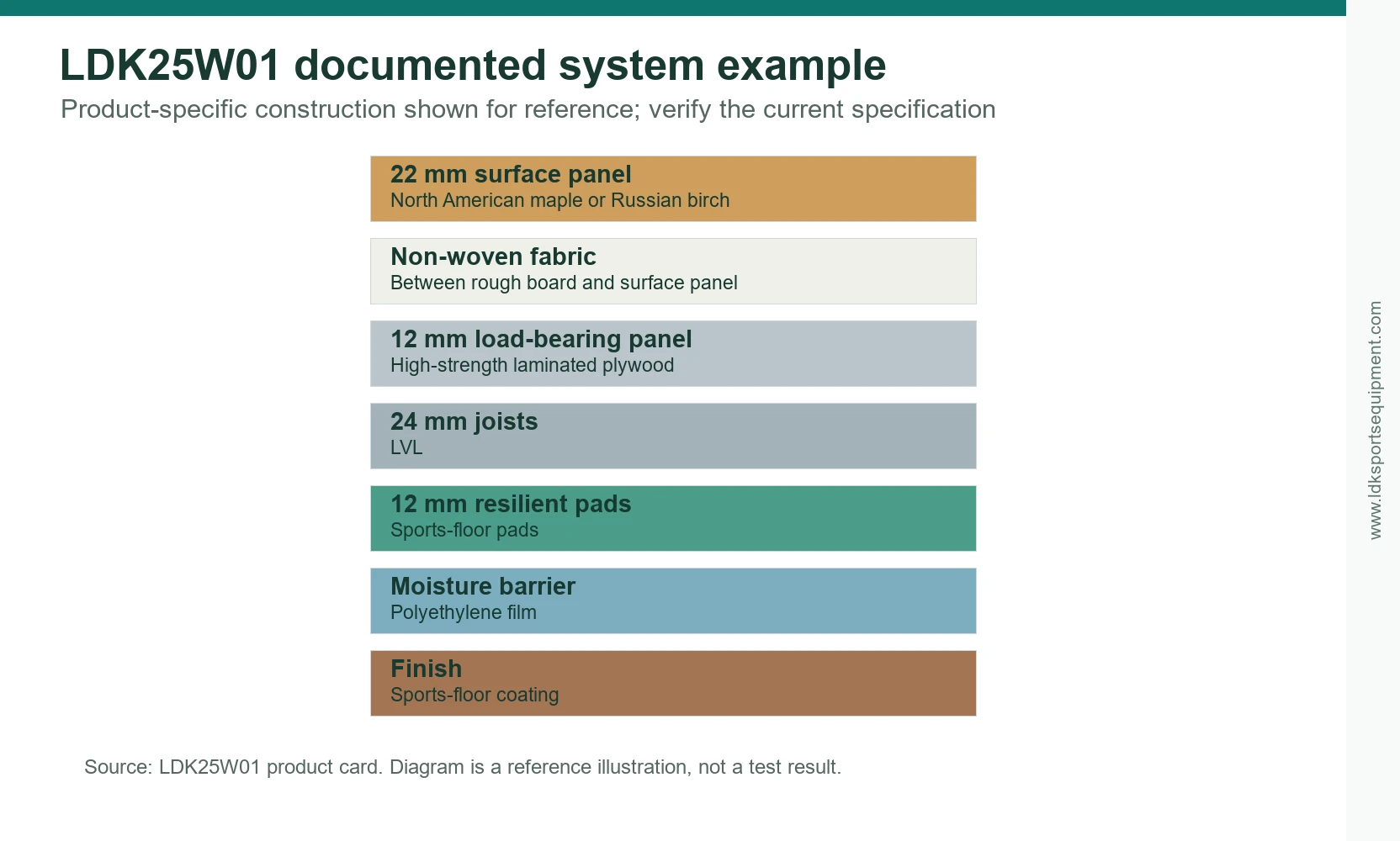
Illustration based on the LDK25W01 product card. It describes that model-specific example and is not a performance test result.
For a product-specific example of a basketball wood floor, see LDK’s basketball stadium wooden floor system. For the broader question of whether wood, plastic, or other surfaces fit a venue, see the site’s basketball court surface-material overview.
| Wood label | What the sports-floor evidence supports | What to verify in a proposal | Practical decision cue |
|---|---|---|---|
| Northern hard maple | MFMA identifies it as a preferred sports-floor surface in the United States and publishes maple grading and system guidance. | Exact grade, system section, finish, installation conditions, and report for the quoted assembly. | A clear reference when a project specifies MFMA maple or a maple gym floor. |
| Oak | General wood-property data can describe oak, but it does not establish the performance of a sports-floor assembly. | Exact oak species and grade, exposed wear layer, full subfloor system, and matching system test data. | Consider it when the supplier can document the exact material and system against the project requirements. |
| Russian birch | LDK documents a 22 mm Russian birch panel option for model LDK25W01. | Confirm the model, panel construction, finish, complete floor system, and applicable test report. | A documented option to evaluate in a model-specific sports-floor proposal. |
Use the table as a specification checklist. Pair each species name with the exact grade, panel construction, and whole-system performance data.
Use the same questions for every supplier so that the proposals are comparable:
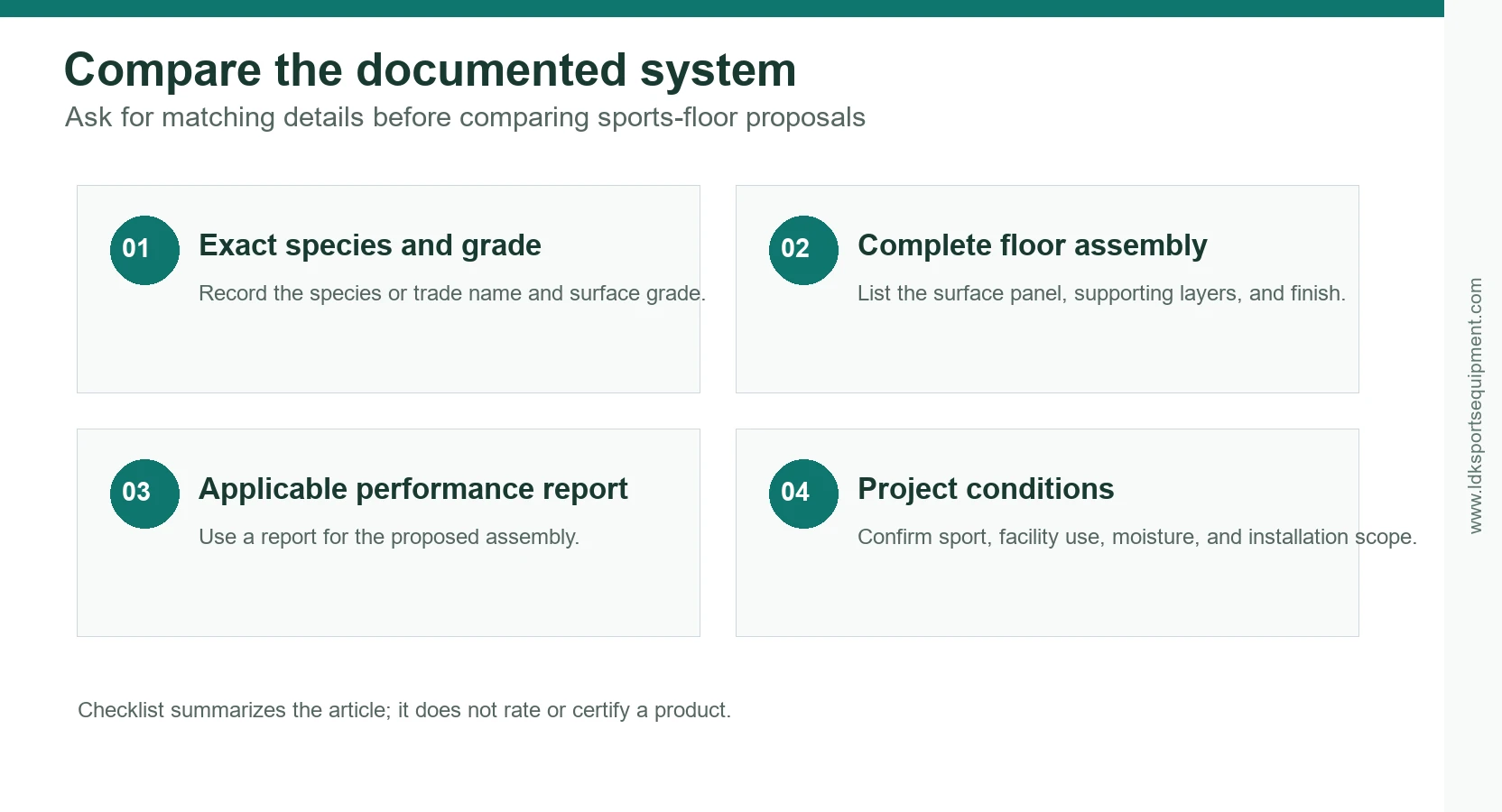
A summary checklist from the article; it does not rate or certify a product.
Before choosing among maple, oak, and birch, ask the supplier to include these items in the submittal:
If you are planning a sports wood floor project, contact LDK about the venue, sports, and required system documents.
Northern hard maple is a well-established basketball and gym-floor surface in the United States, and MFMA publishes standards and guidance for it. Other wood options may be available in specific systems, so compare the exact panel and the complete system documentation.
Many U.S. gym floors use northern hard maple, while some product systems document other wood panels such as birch. The species name does not describe the subfloor or the tested performance of the installed floor.
For a sports floor, northern hard maple is the clearest U.S. sports-specific reference in the sources reviewed. The right choice for a project still depends on the sport, venue conditions, system construction, and performance requirements.
Sports halls can use different surfaces, including wood and synthetic systems. For an indoor wood floor, compare the surface species and the complete floor system against the sports and facility requirements.
