Sports Equipment Manufacturer

This article focuses on wall mounted basketball hoop, basketball hoop pro adjustable and basketball hoop outdoor, and analyzes the new trend of global circulation of sports equipment through the current situation of hot sales overseas through cross-border e-commerce.
Updated: September 8, 2026 | Written by the LDK Sports Equipment content team | Technical review: procurement and equipment checklist review pending publication approval
Choosing basketball stands for an overseas project is not simply a matter of finding a hoop with an attractive price. The right specification depends on the court layout, mounting surface, users, weather exposure, installation method, local safety requirements and the support you will need after delivery.
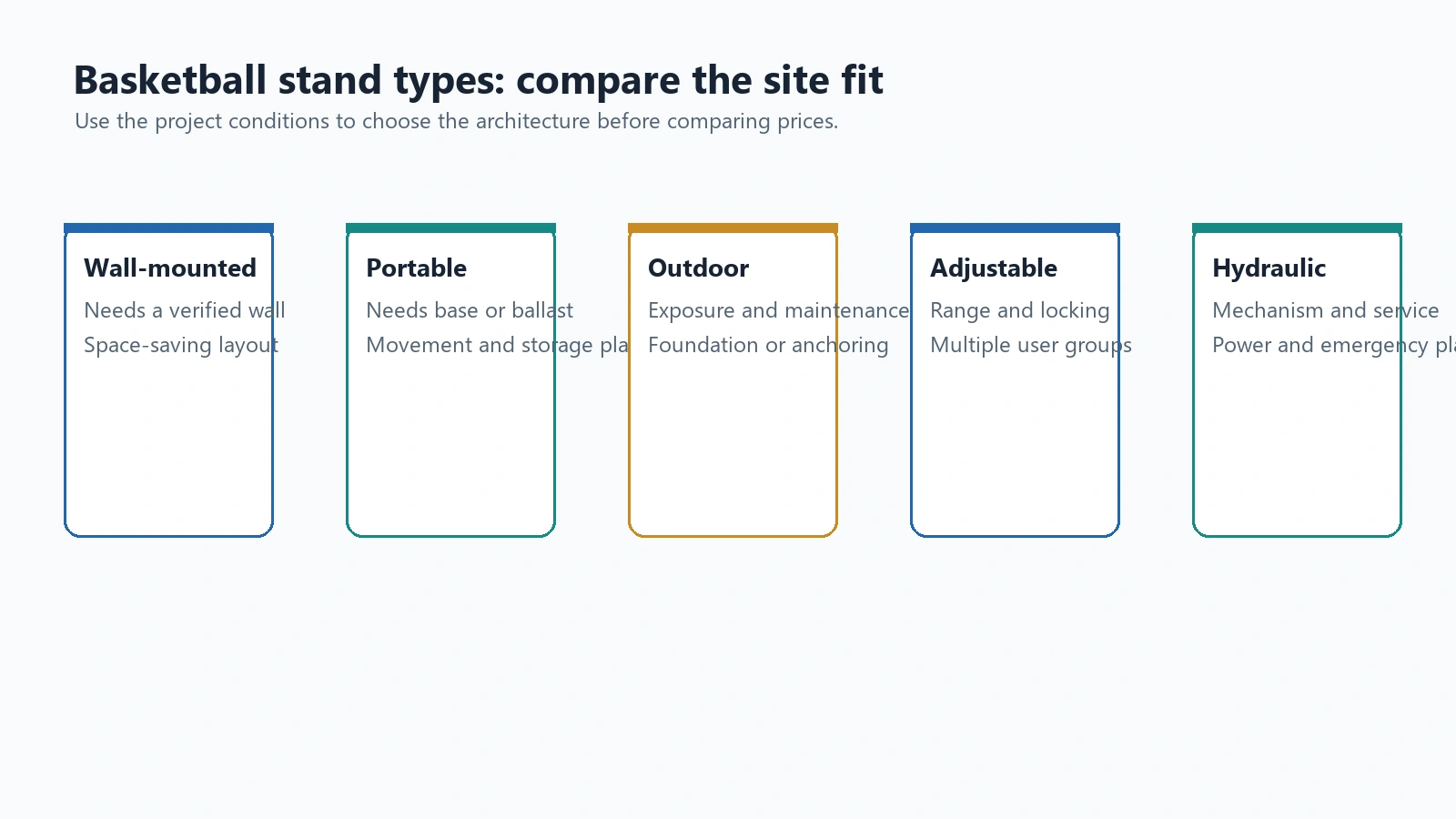
The earlier version of this article introduced wall-mounted, adjustable and outdoor basketball products through a cross-border e-commerce lens. This upgraded guide keeps that useful product context but turns it into a sourcing workflow. You will learn how to compare wall-mounted, portable, outdoor, adjustable and hydraulic basketball stands, what to place in an RFQ, and which supplier answers should be confirmed in writing before you approve an order.
Before asking a basketball hoop supplier for a price, record the project conditions:
These questions prevent a common sourcing mistake: comparing two products as if they were interchangeable when one requires a structural wall and the other requires a foundation or ballast plan. They also help you separate the equipment specification from local building, electrical and public-safety approvals. A supplier can provide drawings and product data, but the project owner and local professionals remain responsible for site compliance.
A wall mounted basketball hoop can save floor space and may work well in a gym, training room or compact court. Its main constraint is the wall, not the backboard. The RFQ should identify the wall construction, anchor pattern, extension from the wall, target rim height, folded position if applicable, and the clear area behind and below the backboard.
Ask for a structural drawing showing the mounting plate, anchor locations, loads and installation sequence. Do not assume that a masonry wall, steel frame or sandwich panel can accept the same fixing method. The installer should confirm the substrate and use anchors approved for that substrate.
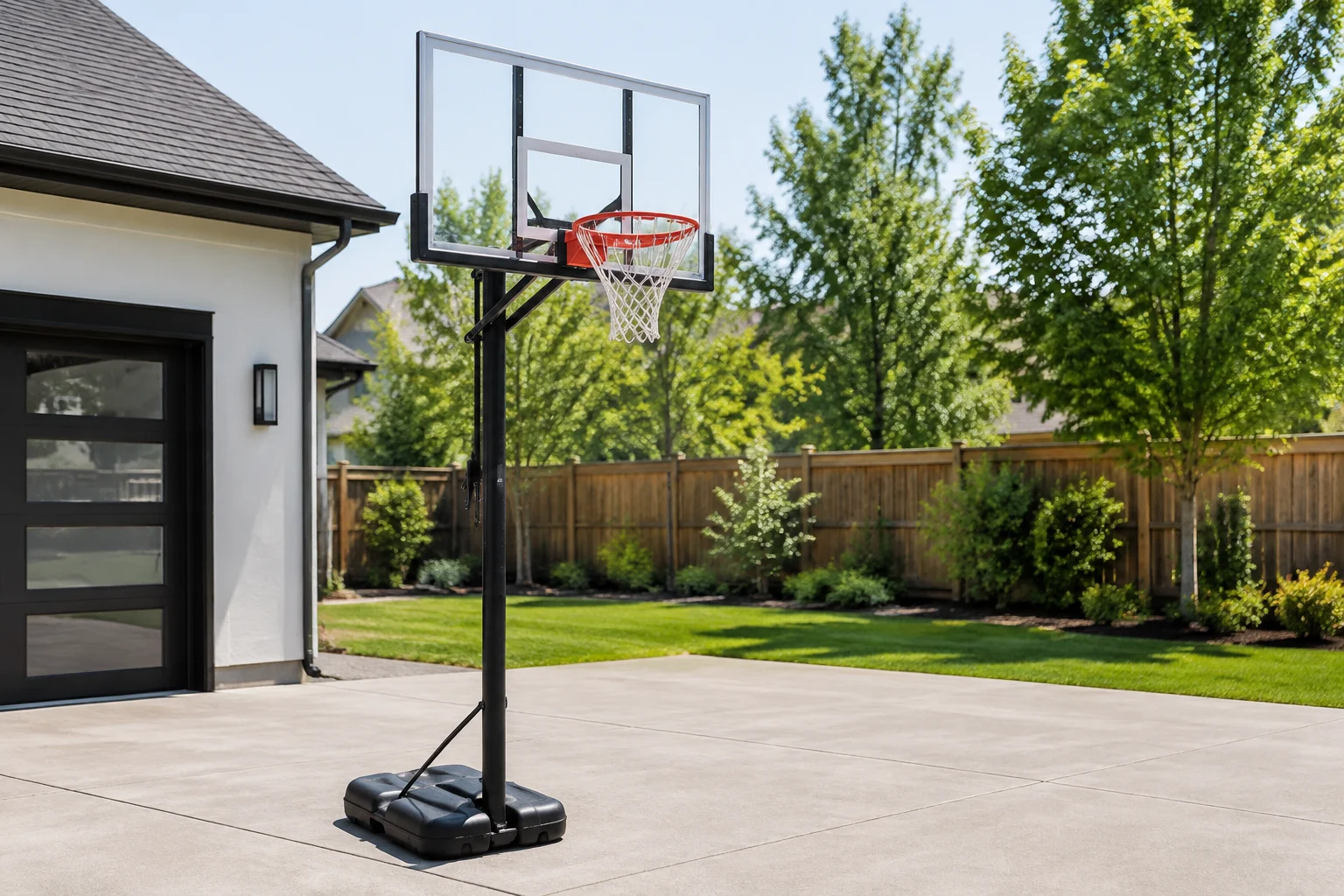
A portable basketball hoop is useful when a facility needs flexibility, temporary layouts or storage. The trade-off is stability and handling. Request the base dimensions, empty and filled base weight, ballast method, caster or wheel details, storage position and inspection instructions. For an outdoor site, ask how the supplier expects the unit to be secured during use and high winds.
“Portable” should describe the intended movement process, not imply that one person can safely move a heavy unit. Include unloading, assembly and movement responsibilities in the purchase scope.
An outdoor basketball stand must be specified for its actual environment. Ask about the steel or aluminium components, surface treatment, fasteners, drainage, exposed edges, replacement parts and maintenance schedule. Avoid treating phrases such as “weather resistant” or “anti-corrosion” as a service-life guarantee. The relevant exposure class, inspection routine and warranty exclusions should be written into the quote or contract.
Outdoor projects also need a foundation or anchoring decision. A fixed post, wall-mounted frame and portable base transfer loads differently. A local engineer or qualified installer should review the foundation, anchor design and clearances before fabrication.
An adjustable basketball hoop can support different age groups, teaching drills or multipurpose facilities. Compare the adjustment range, operating position, locking method, pinch points, access for maintenance and whether the selected height can be held securely during play.
The buyer should request a dimensioned drawing at the lowest, intermediate and highest positions. If the specification says “competition height,” ask which competition rulebook is being referenced and whether the height is measured to the top of the rim.
A hydraulic basketball hoop is a mechanism choice, not automatically a quality grade. Ask whether the system is manual, electric or hydraulic; what power is required; how the unit is locked; what happens during power loss; and which seals, cylinders, pumps or control parts are service items. A school or public facility should also ask who can troubleshoot the system locally and how quickly replacement parts can be supplied.
If the project does not need frequent adjustment, a simpler mechanism may reduce maintenance points. If adjustment is central to the use case, document the operating cycle, training, guarding and emergency procedure before comparing prices.
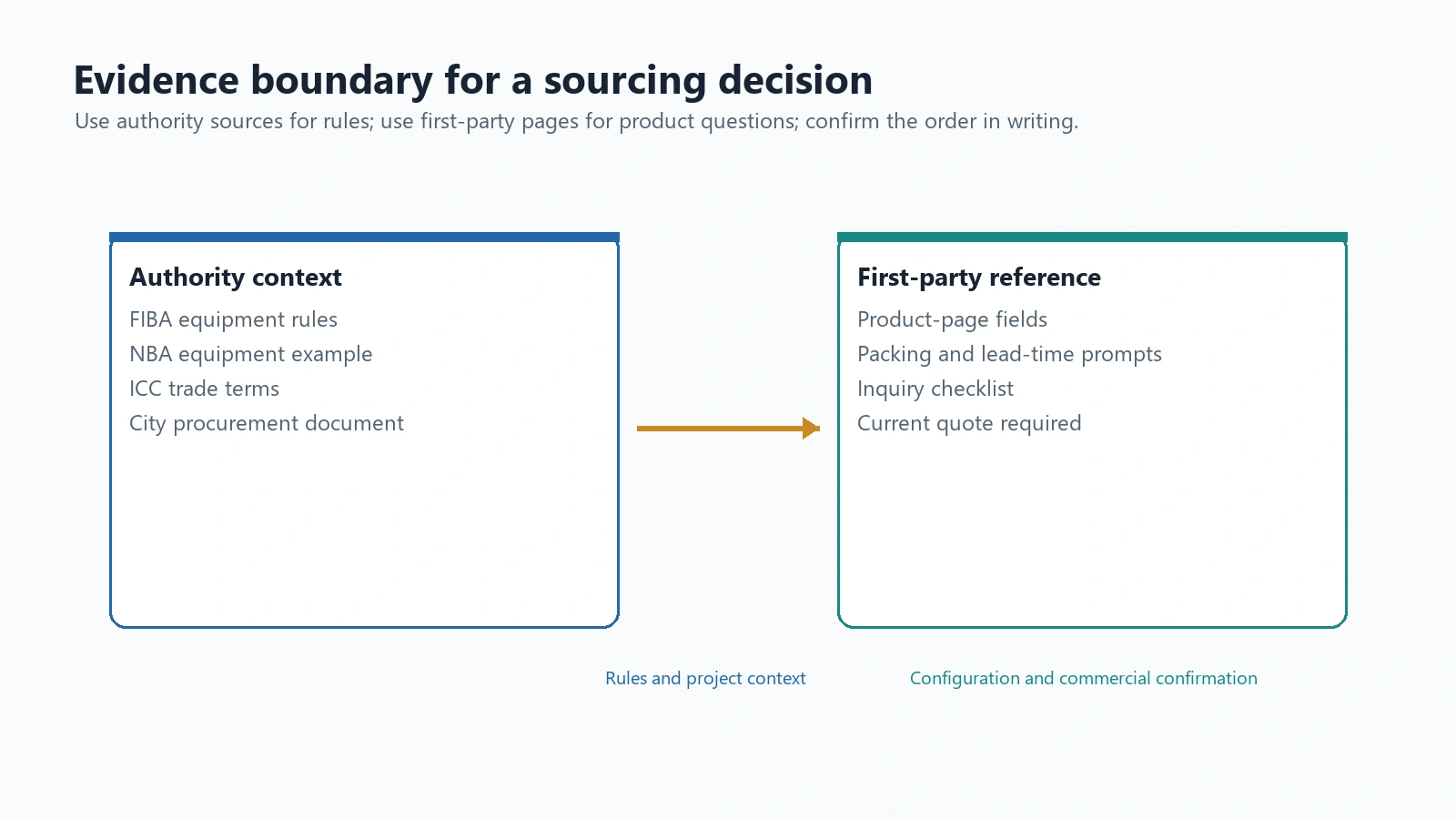
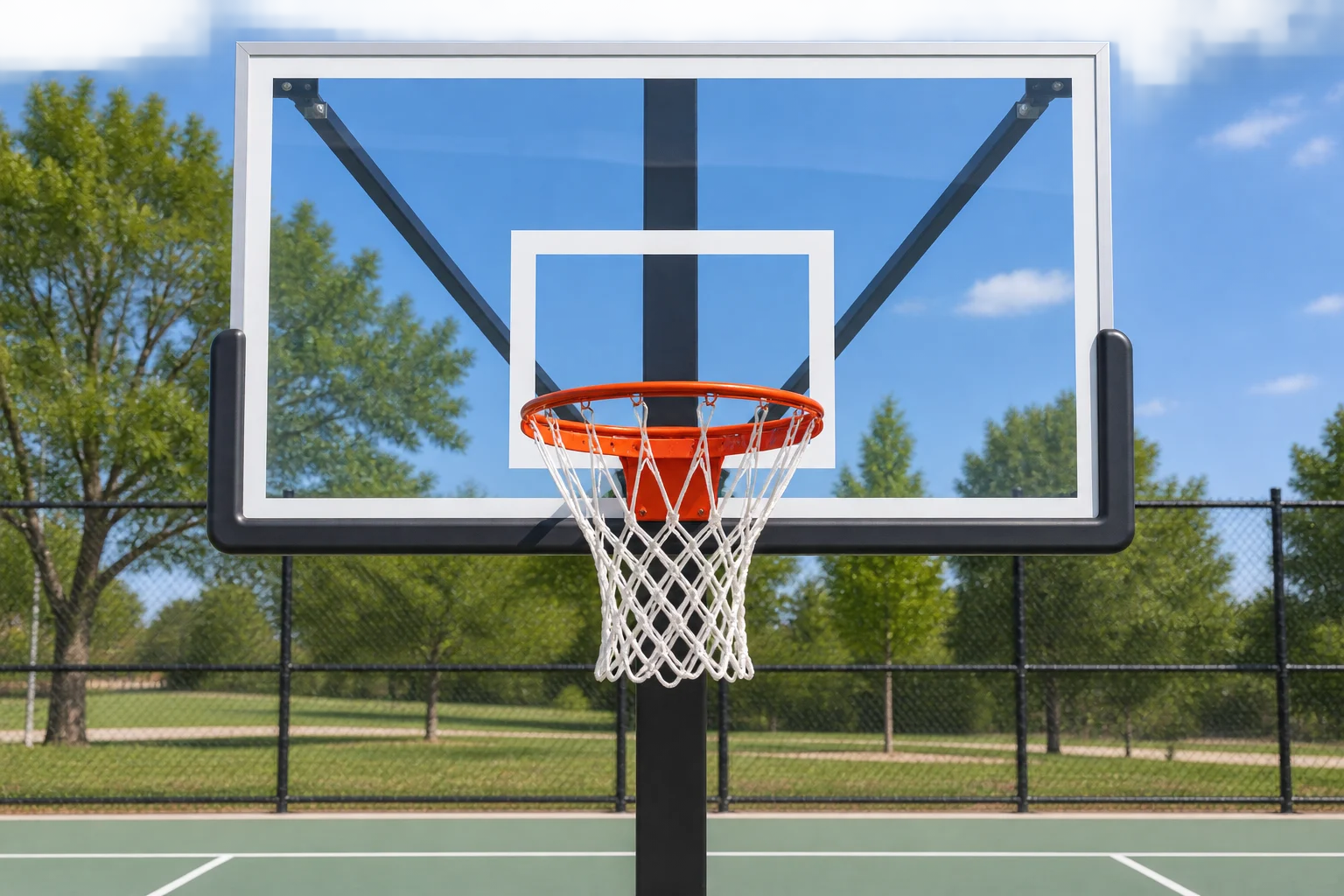
Use recognized competition rules as a reference point, not as a substitute for a site review. FIBA’s official equipment rules cover the backboard, basket ring, support structure and padding. They also address securing the unit to the floor or using sufficient ballast where floor anchoring is not possible, along with rigidity and vibration considerations. That makes the FIBA document useful for building a question list even when the project is not a FIBA competition. See the FIBA Official Basketball Rules 2026 — Basketball Equipment.
The NBA’s official equipment page gives one competition context: a 6-foot by 3.5-foot backboard and a ring whose upper edge is 10 feet above the floor. These are useful reference dimensions, but NBA arena rules should not be presented as universal requirements for every school, park, club or residential project. See NBA Rule No. 1: Court Dimensions — Equipment.
Your project specification should therefore separate “required,” “preferred” and “to be confirmed locally.” At minimum, record:
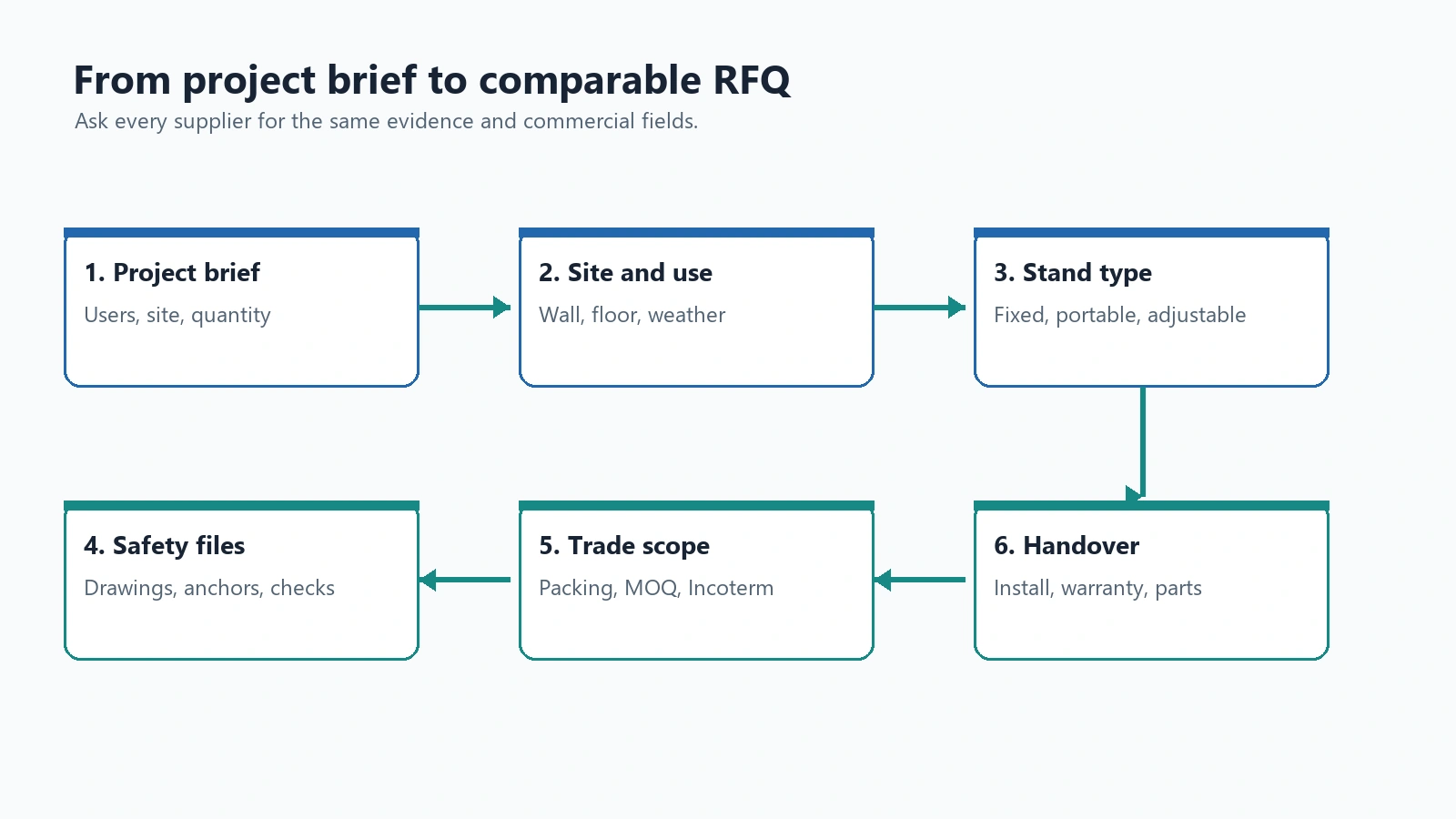
A useful RFQ gives suppliers the same information so their replies can be compared. Include the project country and city, site type, quantity, delivery destination, required date, use case, drawings or photos of the site, preferred stand type and any local standard or tender requirement.
Ask each supplier to return the following as separate line items:
LDK’s first-party pages illustrate the kind of fields a supplier may publish, such as board size, rim size, surface treatment, packaging and lead-time information. Treat those pages as a starting point for a specification conversation, not as a substitute for a current project quotation. You can review the adjustable wall-mounted basketball stand and the wall-mounted portable adjustable basketball backboard hoop, then request the current drawing and documents for your site.
For a project quote, send the supplier the target height, stand type, quantity, destination, installation conditions and required documents in one message so the reply can be checked against the same brief.
Basketball stands can contain long steel members, glass or composite boards, padding, hardware and mechanisms. Packaging is therefore part of the technical scope. Request a packing list, package dimensions, gross weight, lifting points, moisture protection, fragile-component protection and spare-hardware list. Confirm whether the quote includes export packing and whether the packaging is suitable for the planned transport mode.
MOQ is not a universal product fact. It may vary by model, finish, customization, board material, packaging method and production schedule. Ask whether the MOQ applies to one model or a mixed order, whether a sample counts toward the production quantity, and what happens if the project quantity changes.
For transport, define the destination and the delivery point before comparing prices. The International Chamber of Commerce describes Incoterms® as standardized three-letter terms for business-to-business sale and purchase contracts. Choose the named term and named place deliberately, then confirm who handles export clearance, main carriage, insurance, import clearance, duties, unloading and final delivery. Read the ICC Incoterms® 2020 explanation and have the commercial parties confirm the contract wording.
Installation should be divided into clear work packages: foundation or wall preparation, unloading, assembly, anchoring, electrical connection if applicable, height calibration, padding inspection and handover training. A low equipment price can become an expensive project if the quote leaves these interfaces undefined.
The City of Arcata Greenview Park renovation contract documents provide a useful example of procurement context. The 2017 public-works package included basketball-court resurfacing within a broader park renovation and set out bid, site, contractor, material, insurance and documentation requirements.
This is not evidence that one product is suitable for every public project, and it is not current evidence of overseas market demand. Its value is procedural: a public buyer must connect the equipment to the site, the wider construction scope, responsible contractors, required documents and acceptance process. Overseas buyers can apply the same discipline when preparing a basketball equipment sourcing brief.
Score replies in this order:
Return any answer that uses a broad adjective without a measurable definition. “Heavy duty,” “professional,” “weather resistant,” “hydraulic” and “certified” are prompts for follow-up questions, not acceptance criteria by themselves.
Neither is universally better. A wall-mounted model may save space but needs a suitable structural wall and accurate anchoring. A portable model offers movement but needs a verified base, ballast and storage plan. Choose from the site and operating model.
Check exposure, foundation or ballast, surface treatment, fasteners, drainage, inspection, replacement parts and warranty exclusions. Ask the supplier to identify which claims are tested, which are design descriptions and which depend on local maintenance.
Only if the project benefits from frequent or controlled height adjustment and can support the mechanism’s power, maintenance and service needs. Compare it with a manual or simpler adjustable design using the same operating and after-sales requirements.
MOQ means minimum order quantity. It is a commercial condition that may change with model, customization and packaging. Request the MOQ for the exact configuration and ask whether samples or mixed models are treated differently.
No. FIBA rules describe equipment for FIBA contexts. They are a useful reference for dimensions, support, stability and padding questions, but local codes, project specifications and the intended level of play may impose different requirements.
Send the destination, quantity, stand type, target height, site photos or drawings, mounting or foundation information, use case, required documents, delivery target and installation scope. For an LDK quotation, use the LDK inquiry page and include detailed product, MOQ and unit-price questions.
The reliable way to source basketball stands is to define the project first, compare the stand architecture second, and rank supplier replies only after safety, documentation, delivery and after-sales responsibilities are visible. Wall-mounted, portable, outdoor, adjustable and hydraulic systems can all be appropriate in the right setting; none should be selected from a product name alone.
For a practical next step, prepare the RFQ checklist in this guide and send it to the suppliers you are comparing. LDK Sports Equipment can be contacted through its basketball product pages and inquiry form. Ask for the current configuration, drawings, packing data and written commercial terms before treating any specification as final.
LDK can help turn a project brief into a basketball-stand quotation, but the final configuration should be confirmed against the destination site’s drawings and requirements.
When requesting a quote, ask for the current model revision, packing data, installation scope, warranty terms and spare-parts process together with the unit price.
If you are comparing wall-mounted, portable or adjustable basketball stands, the clearest comparison starts with the same site conditions and the same documentation checklist.
Use the LDK inquiry form to submit the project details and request a written response for the exact configuration rather than relying on a generic product description.