Sports Equipment Manufacturer

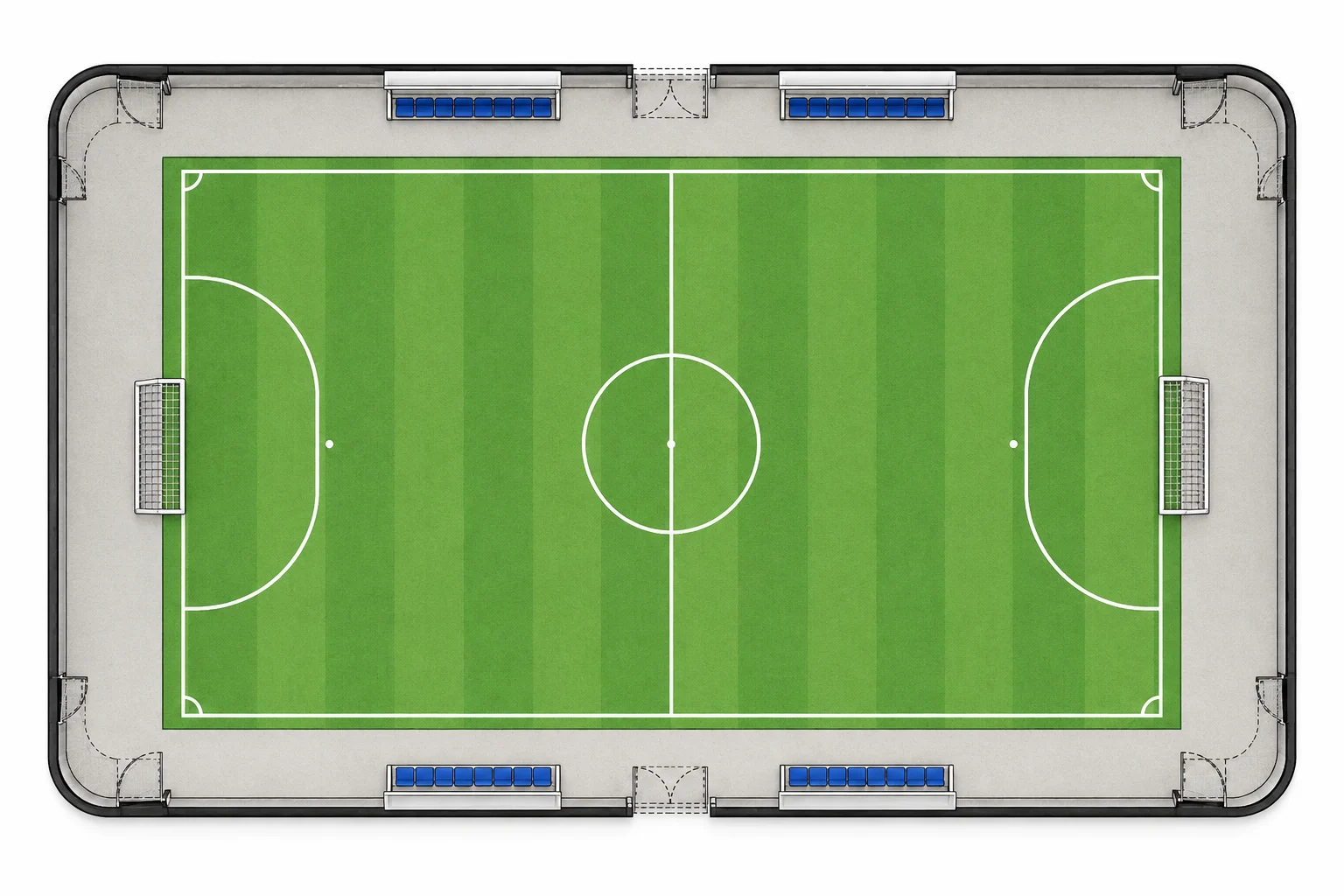
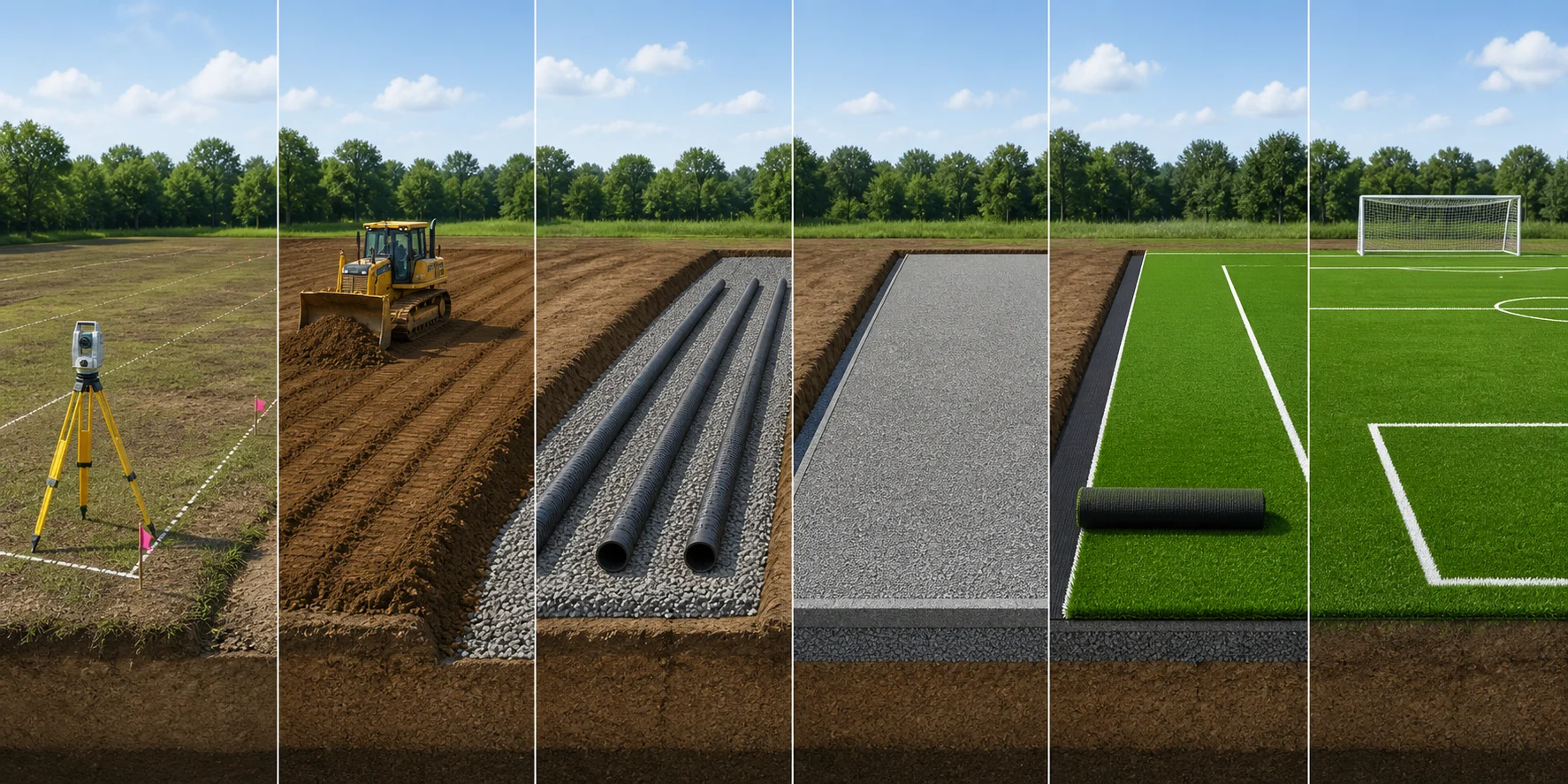
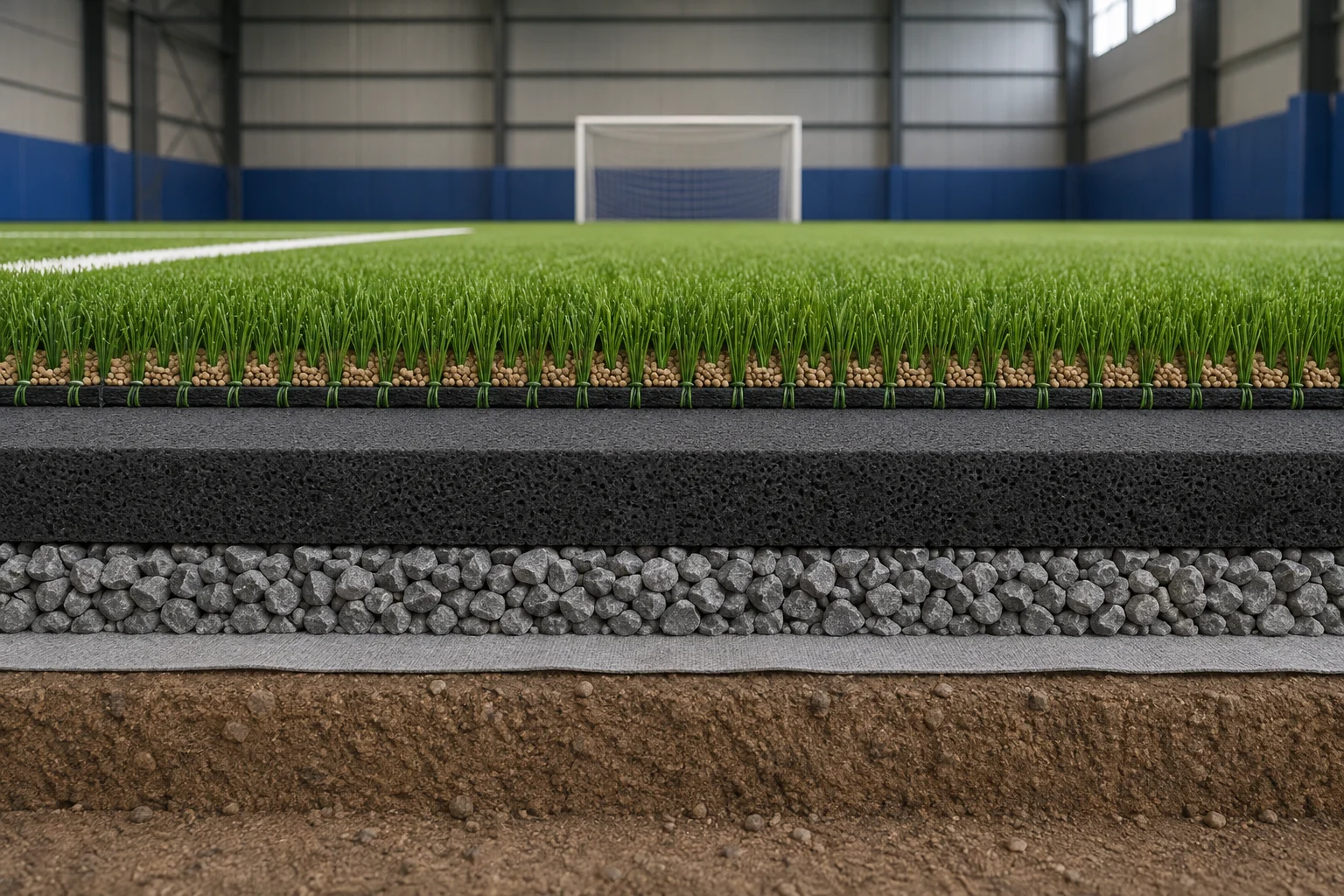
How to create an indoor soccer pitch~Basic part:Including drainage ditches, gravel layers, concrete surface layers, etc., to ensure the firmness, smoothness and water isolation of the golf course.
Creating an indoor soccer pitch starts with the playing format—not with an order for turf. A futsal court, small-sided soccer pitch, football cage and full-size indoor field have different space, equipment, safety and operating requirements. Write the format, users, expected traffic and local code requirements into the brief, then design the building, floor system, enclosure and equipment as one project.
The work follows a straightforward sequence: plan the site, prepare the base, install the playing surface and supporting equipment, complete the details, test the facility, and maintain it after opening. Separate verified standards from design choices that must be confirmed by the local authority, sports governing body, and contractor.
“Indoor soccer” is a broad commercial term. Your first decision should be one of these:
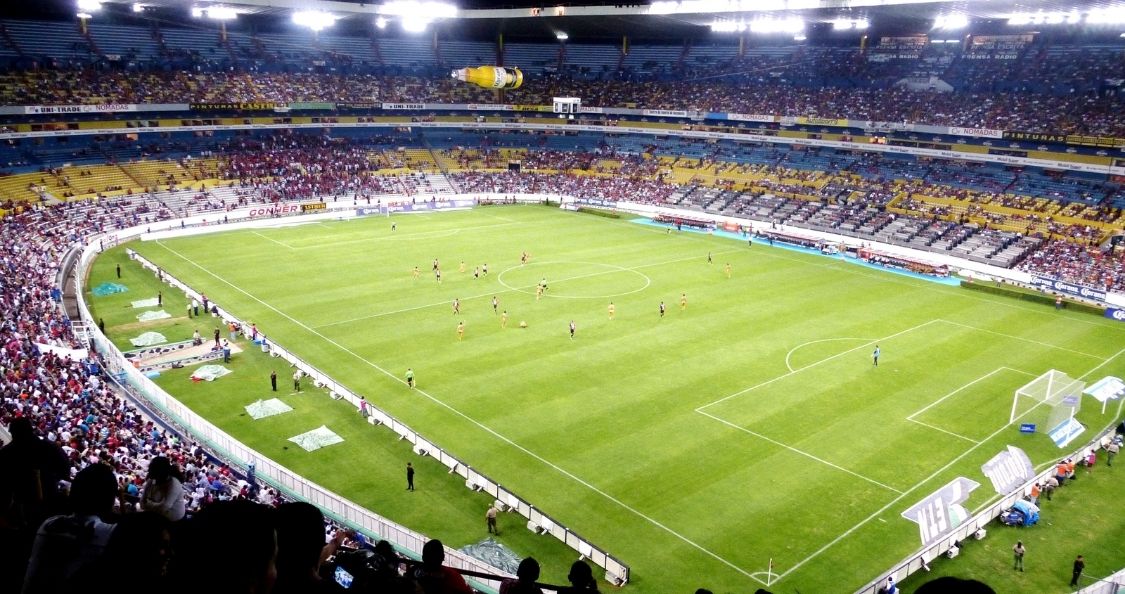
Do not copy a full-size outdoor pitch into a warehouse without checking the building envelope. FIFA’s stadium guidance gives 105 m by 68 m as a field-of-play benchmark and recommends at least 2 m of level surface beyond each touchline and goal line in that stadium context. That is a planning reference, not a universal size for every indoor recreational pitch. Futsal and other formats should be checked against the applicable competition or venue rules before you freeze the layout; FIFA’s futsal rules overview explains why the format-specific laws matter.
Before a designer draws the pitch, record:
This step protects the budget. A low-cost pitch with inadequate clear height, poor ventilation or blocked egress is not a usable facility; correcting those issues after installation is usually more disruptive than including them in the first design.
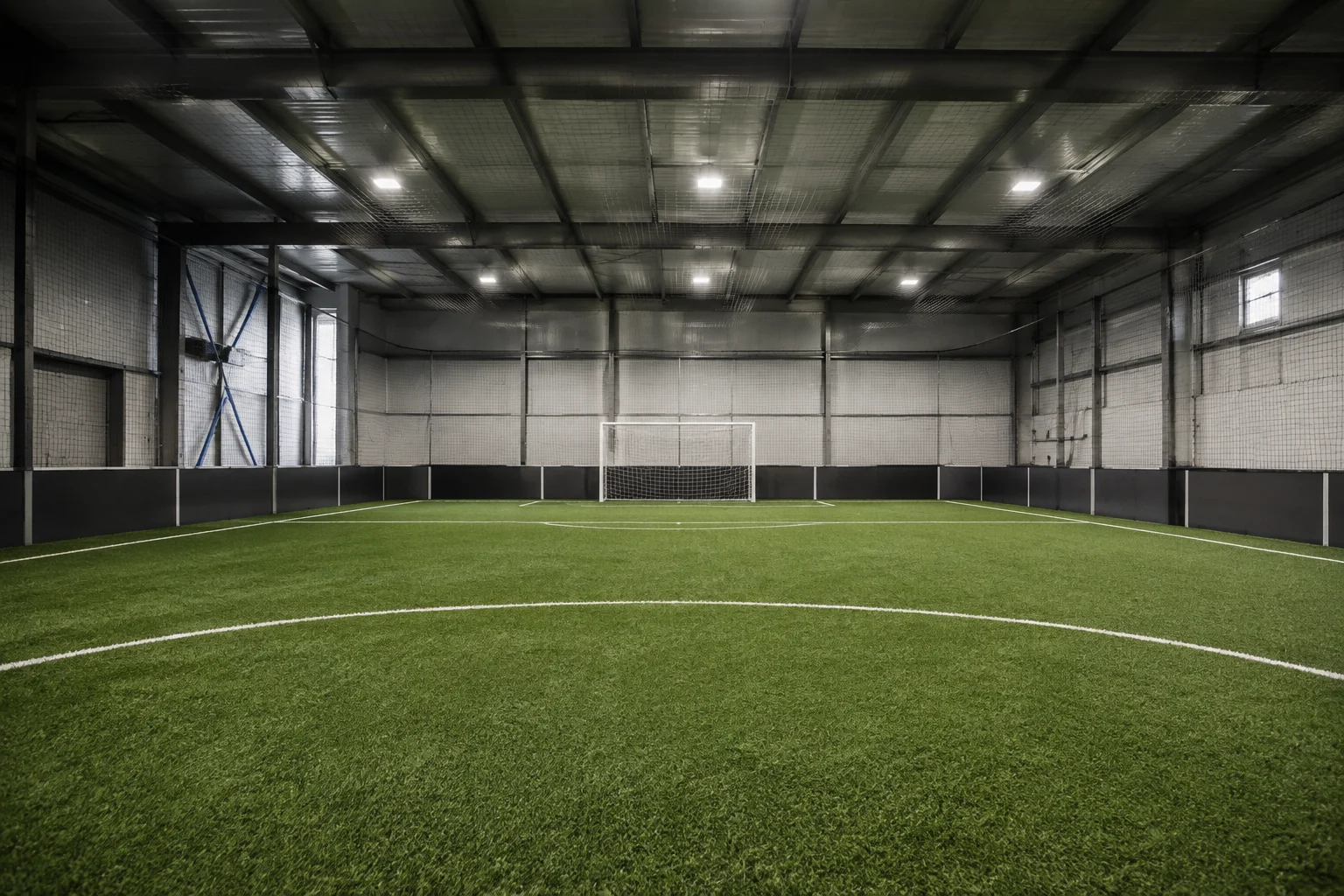
Site preparation and drainage belong near the start of the process. For an indoor project, the survey should cover both the indoor slab and the building around it.
Check the slab for levelness, cracks, joints, moisture and load capacity. Identify low points, existing drains, water entry, condensation risks and the route for cleaning water. If the selected sports floor does not use a drained base, do not add drainage details by habit; instead, design spill control, cleaning procedures and moisture protection for the actual floor system.
Review the roof and wall structure for suspended lighting, protective netting, acoustic treatment and ventilation equipment. Map columns and obstructions before marking the pitch. Keep the playing area, run-off or safety zones, team circulation, equipment storage, toilets, first-aid access and emergency exits in the same drawing set.
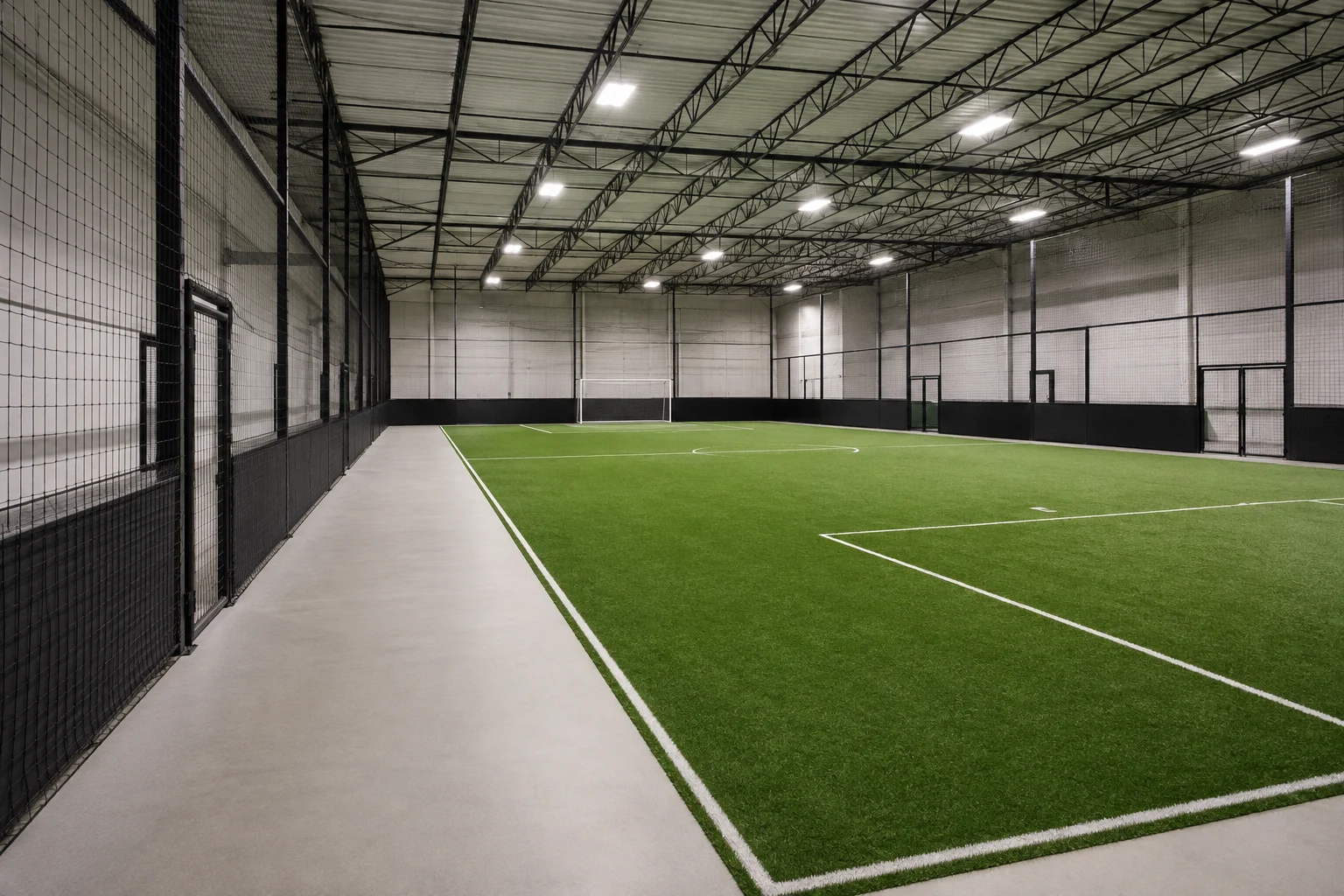
For a new shell or major conversion, the sequence is normally survey, design, permits, demolition or clearance, subgrade and base preparation, services, sports floor, enclosure, equipment, markings, testing and handover. The exact order may change when mechanical, electrical or fire work has to be installed above the playing surface.
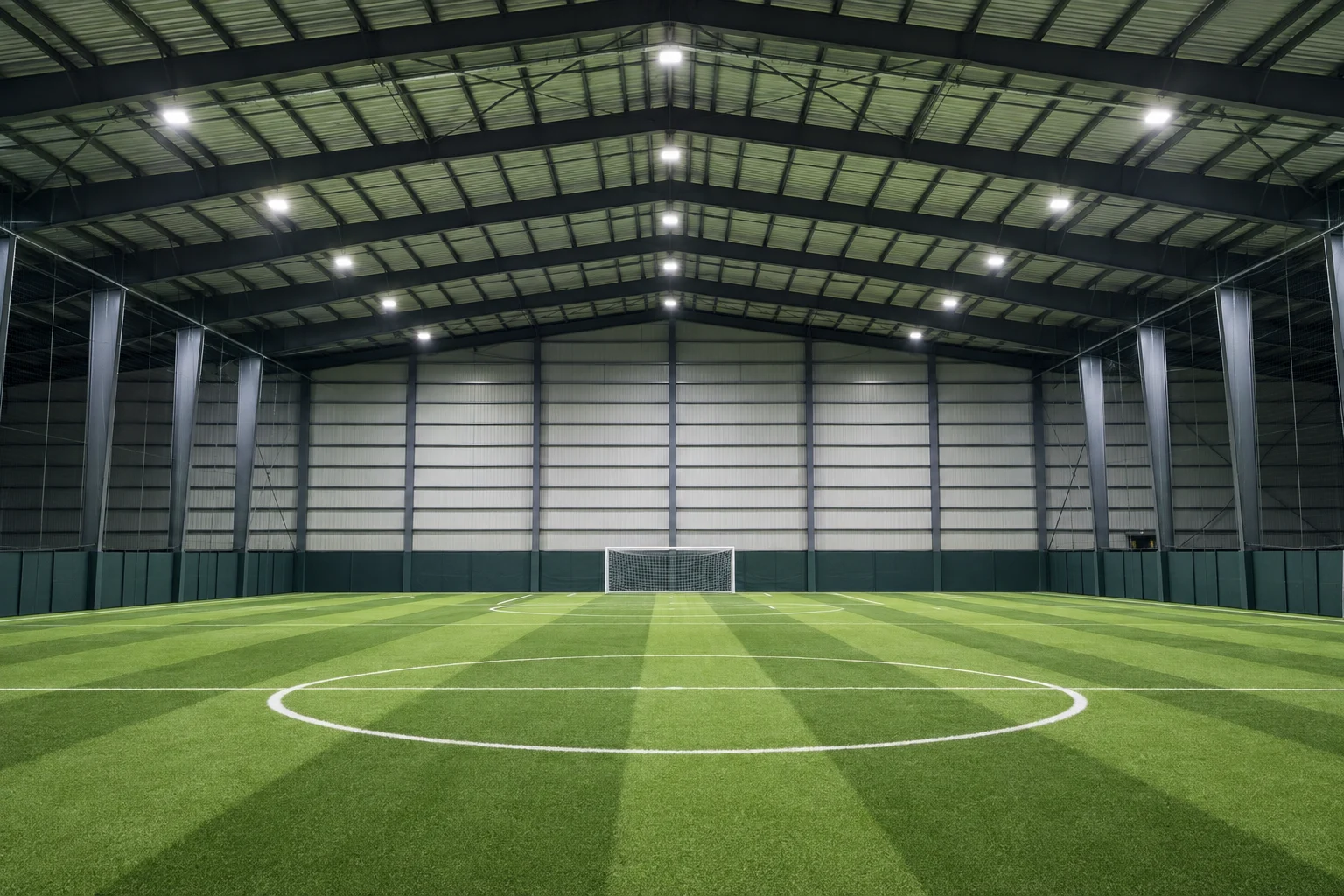
An artificial-turf indoor soccer field is not just a roll of grass. The performance comes from the interaction of the slab or base, leveling layer, shock pad where specified, turf backing, seams, adhesive, infill if required, line system and maintenance plan.
Ask the supplier to state the intended use, installation method, seam treatment, required subfloor tolerance, cleaning instructions, replacement procedure and any tested performance information. FIFA’s futsal-surface guidance publishes test methods and requirements for providers seeking futsal-surface certification, which is a useful reminder to specify measurable surface performance rather than judge a product only by color or pile height. Do not describe a field as certified unless the product and project documentation proves it.
For artificial turf, decide whether the system is sand-filled, rubber-filled, non-infill or another approved construction. The correct quantity depends on the selected product and installation specification; do not carry generic kilograms-per-square-metre figures into a new project without a supplier calculation. Plan the line layout, seam direction, turf expansion, edge restraint and access for brushing or repair before installation.
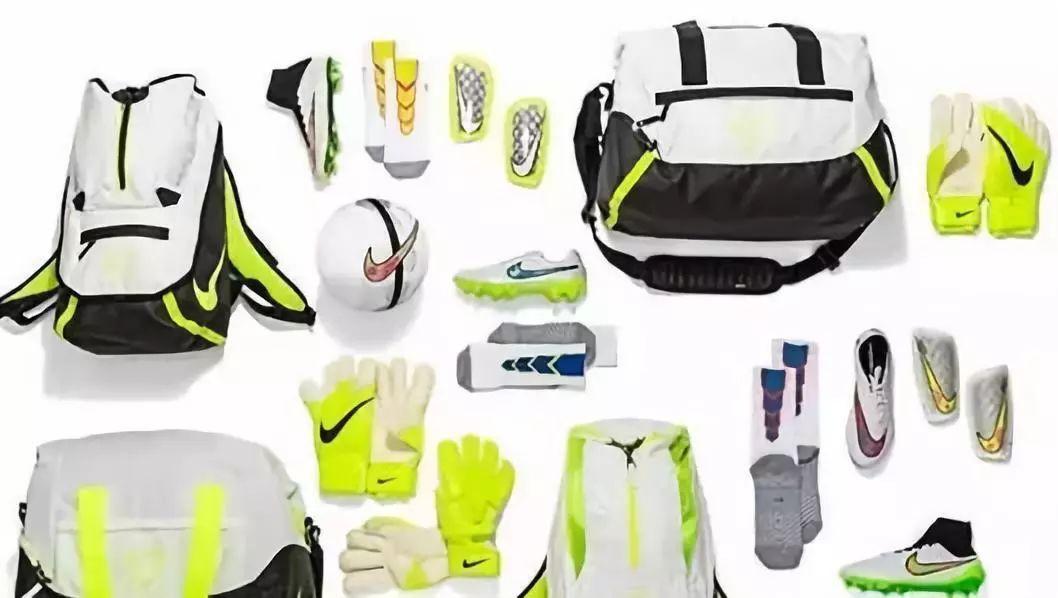
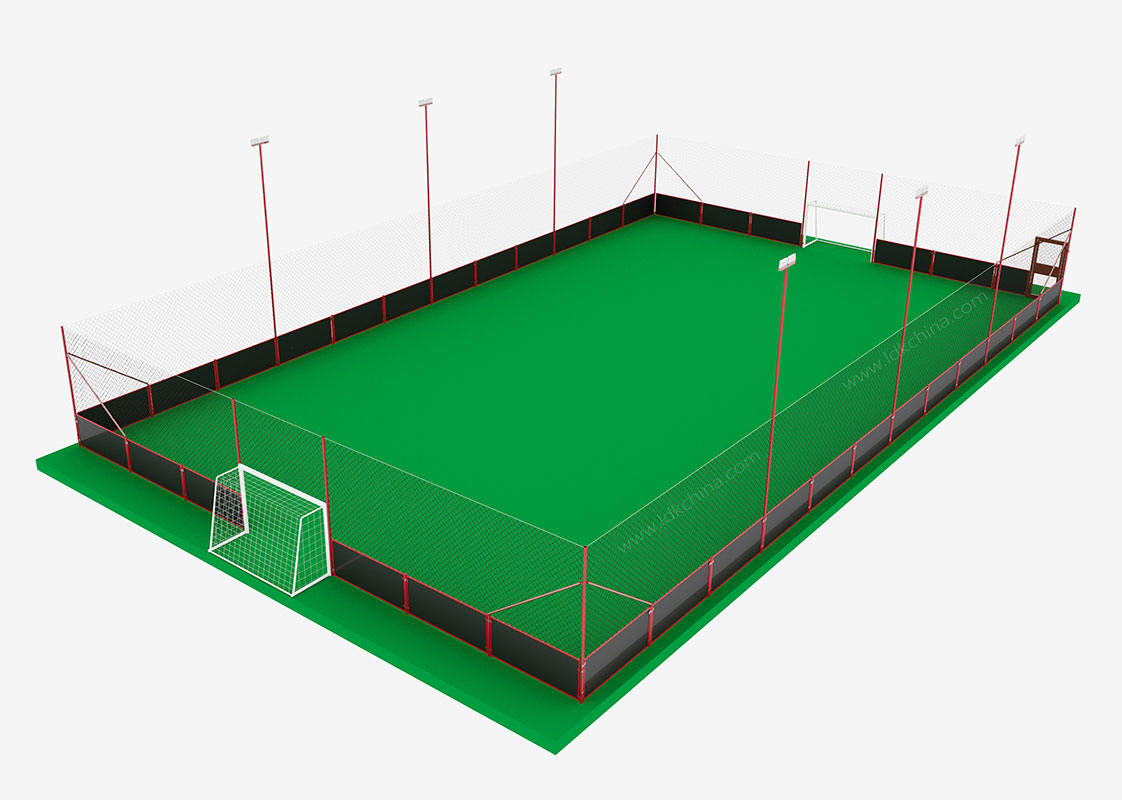
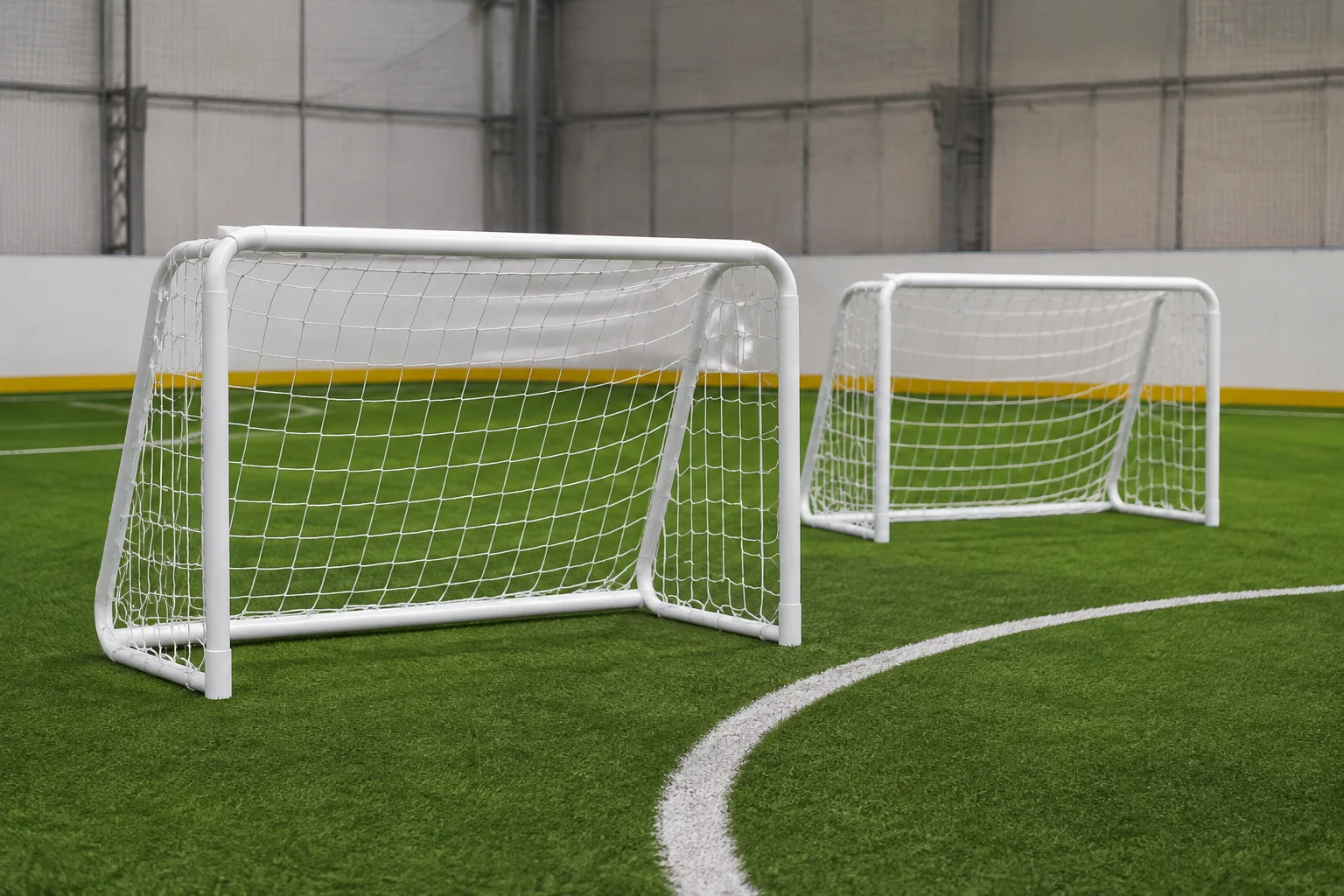
Supporting equipment makes the space playable and safe:
LDK Sports can help coordinate football goals, football-cage components, fencing and related sports equipment after the layout and installation requirements are fixed. The equipment schedule should identify model, quantity, dimensions, anchoring, finish, spare parts and inspection interval rather than simply saying “supporting equipment.”
Confirm the format, building survey, pitch count, circulation, equipment schedule, services, permits and acceptance tests. Freeze the drawing only after the owner, designer, contractor and equipment supplier have checked interfaces.
Clear the area, protect retained services, repair or replace unsuitable substrate, level the base and verify compaction or slab condition as applicable. Coordinate drainage, moisture control and electrical or mechanical rough-ins before covering the work.
Install the approved leveling layer, shock pad or sports floor, then place the turf according to the manufacturer’s method. Control seams, adhesive curing, edge restraints, line accuracy and transitions at doors or gates. Keep heavy traffic off the finished surface until the installation team releases it.
Install boards, goals, netting, fencing, gates, lighting and signs. Pad impact risks, lock access gates and confirm that every component can be inspected and removed without damaging the playing surface.
Clean the field, check line visibility and measure the finished layout. Inspect turf seams, loose edges, transitions, goals, anchors, netting, boards, lighting, ventilation, exits and first-aid access. Record defects, assign owners and obtain written sign-off before opening.
The cost of building an indoor soccer pitch depends on the building shell, format, number of fields, floor condition, turf or sports-floor specification, shock pad, boards, netting, goals, lighting, ventilation, fire work, permits, labor, delivery and maintenance equipment. A meaningful budget should show each package separately; a single “cost per square metre” number can hide major building or compliance work.
Request comparable quotations with the same drawings and scope. Ask what is excluded: slab repairs, electrical upgrades, HVAC, fire protection, drainage, design fees, permits, freight, installation, testing, spare parts and tax. Schedule the long-lead items early, especially structural work, ventilation equipment, custom boards, goals and imported turf systems. Keep a commissioning period for curing, cleaning, lighting adjustment, snagging and staff training.
At handover, collect the as-built layout, product data sheets, warranties, cleaning instructions, spare materials, inspection records and emergency procedures. Train staff to inspect goals and anchors, gates, netting, boards, seams, turf edges, lights and exits before each operating day.
After opening, keep a maintenance log. Schedule routine cleaning, turf brushing or other surface care required by the supplier, infill checks where applicable, seam and edge repairs, lighting checks, ventilation-filter service, goal inspection and periodic review of safety signage. Stop play when a goal, anchor, net, board, gate or surface defect creates a foreseeable hazard.
Choose the format and survey the building. The pitch dimensions, surface, goals, boards, clearances, ventilation and safety systems all depend on that decision.
No. Artificial turf may suit small-sided soccer or a football cage, while futsal commonly requires a court-like sports surface. Select the system for the rules, users, building, maintenance plan and verified performance requirements.
Use the same high-level workflow, but not the same unverified specification. The playing format, surface, markings, goals, clearances and governing rules must be checked separately.
Create a trade-by-trade scope covering the building, base, surface, equipment, services, permits, installation, commissioning and aftercare. Obtain comparable local quotations instead of relying on a generic online rate.
Learning how to create an indoor soccer pitch is mainly an exercise in coordinating decisions. Define the format, survey the building, design the base and surface as a system, install safe equipment and services, then test and maintain the facility. The original workflow remains sound when each step is tied to a documented scope, local approvals and an acceptance checklist.