Sports Equipment Manufacturer

Learn what is cage football, compare futsal and open-pitch football, verify cage football near me listings, and check key rules before choosing a pitch.
If you are asking “what is cage football?”, the short answer is: it is football played in an enclosed or bounded small-sided space, where the enclosure changes how the ball and players interact with the edges of the playing area. The name describes a format, not one worldwide rulebook. The exact pitch, player setup, ball treatment, match length and competition rules depend on the venue or competition.
That distinction matters. A cage football session may be a casual small-sided game, a venue-branded format, a training activity or part of a local competition. It can overlap with terms such as cage soccer, cageball, panna or a futsal cage, but the label alone does not tell you which rules apply.
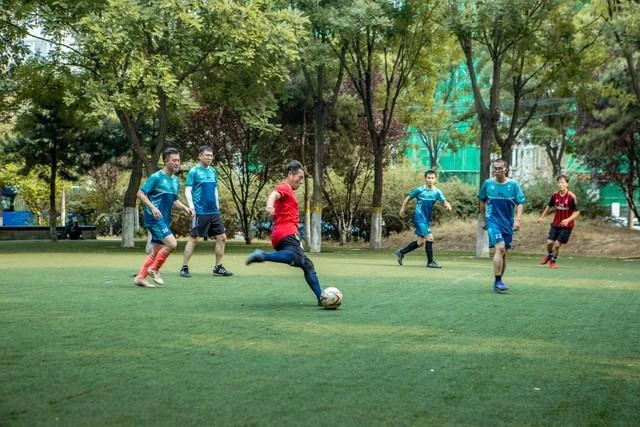
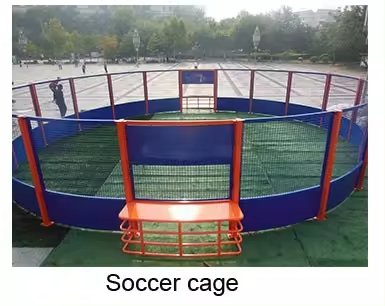
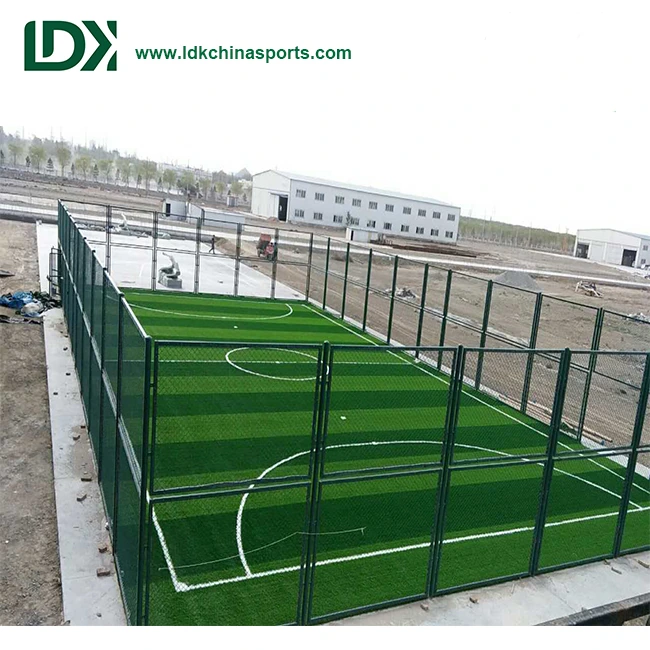
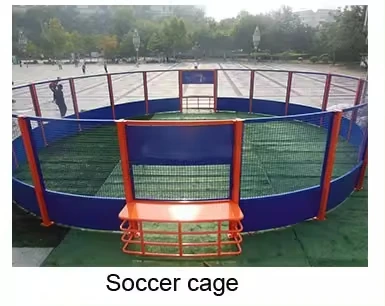
Cage football usually means football played inside a fenced, netted or otherwise bounded area. The enclosure may surround the pitch with boards, mesh, netting or another edge treatment. Its practical purpose is to keep the game within a compact playing area and reduce some ordinary out-of-bounds interruptions.
It is best understood as a format boundary rather than a fixed specification. There is no single cage-football size or universal player count that can be inferred from the name. A venue might use a compact court for a social game, while a competition may publish its own surface, equipment and restart rules.
The safest definition is therefore: cage football is small-sided football in an enclosed or bounded area, with local rules controlling the details.
The enclosure can make the game feel more continuous because the ball may remain near the playing area instead of repeatedly leaving it. In a compact setting, players may also have less time to receive, turn and pass. Those are useful tendencies to plan for, not guaranteed outcomes.
| What can change | A useful adaptation | What it does not prove |
|---|---|---|
| The ball may stay near the playing area more often. | Scan before receiving and use the nearest safe passing option. | It does not prove that every cage keeps the ball in play. |
| Decisions may feel quicker in a smaller space. | Support the ball early and communicate before pressure arrives. | It does not guarantee better fitness, skill or health results. |
| Side boundaries may become part of the local game. | Ask whether the side can be used, and how restarts work. | The enclosure does not automatically make a venue safe or compliant. |
The old version of this article was right to focus on compact play and social use, but those ideas should remain qualified. A cage can shape the playing environment; it cannot by itself guarantee intensity, safety or improvement.
These terms describe related but different questions. Cage football emphasizes the enclosed setting. Futsal is a recognized small-sided format with its own playing conventions and rules. Open-pitch football is played without the same surrounding enclosure, so the ball and restart pattern may differ.
| Format | Enclosure | Typical ball behavior | Rule source | Best fit | What to confirm locally |
|---|---|---|---|---|---|
| Cage football | Enclosed or bounded area | The ball may stay near the playing area; side treatment varies | Venue or competition brief, with relevant football-law references | Compact casual play, training or a local format when the enclosure is part of the brief | Side-ball treatment, restarts, player setup and surface |
| Futsal | Usually a marked court rather than a surrounding cage | Ball and touchline behavior follow the applicable futsal rules | Applicable futsal rules and competition regulations | A session or competition specifically organized as futsal | Ball, court, substitutions, restarts and competition format |
| Open-pitch football | Open perimeter | The ball commonly leaves through touchlines or goal lines | Applicable Laws of the Game and competition rules | A conventional open field and its associated playing pattern | Pitch markings, surface, equipment and local regulations |
The reviewed public examples show that people use overlapping labels when discussing cage soccer, futsal cages and other compact formats. That user language is useful for understanding search intent, but it is not an authority for a universal definition. Before joining a game, ask the organizer what format is being played and which document controls the details.
The best fit depends on the decision you are making. If you want a compact game where the enclosure is part of the experience, a cage format may be the relevant option. If the organizer advertises futsal, use the futsal rules and equipment brief. If the priority is conventional touchline and goal-line play, compare an open pitch instead. The comparison is a starting point for questions, not a substitute for the venue’s current rules.
For a casual session, the most important detail may be whether the organizer expects the side to be playable. For a club or school, the important detail may be the planning brief, access and maintenance responsibility. For a competition, the current regulations matter more than the marketing label. Asking the same format question at the start prevents a casual example, a futsal court and an installed pitch from being treated as interchangeable.
There is no single generic answer to every cage-football rules question. Separate two layers:
The Laws of the Game pages from the International Football Association Board and The FA are useful official reference points, but neither page is a universal cage-football rulebook.
The legacy page included a named P.K.O. format with specific numbers. Those details may describe that local or historical format, but they should not be repeated as generic cage-football rules. Before kickoff, ask:
Treat the format as unresolved until the organizer explains it. Do not infer a rule from a photo, the word “cage” or a different venue’s rules. That one question often prevents the most common misunderstanding between casual cage football and a formal competition.
For a “cage football near me” search, start with local venue pages, sports directories, community listings and booking platforms. Search results are useful for discovering candidates, but listings and availability change. Verify the details directly before traveling or booking.
Search wording can also create false matches. A page may use “football cage” for a training enclosure, a permanent venue, a temporary event or a product category rather than a bookable game. Read the venue’s own description and look for a current booking route, not just a photograph or an old social post. If the page does not explain the surface, enclosure, player setup or restart rules, use it as a lead and ask for the missing details. This simple check keeps a broad search phrase from becoming an unsupported claim about what is available nearby.
Use this quick checklist:
Ask the venue what it calls the format, how the ball is treated at the side and which local rules apply. Confirm enclosure, surface, player setup, booking window and current availability directly. If the answers conflict, treat the listing as unresolved rather than presenting it as a standard cage-football venue.
Once the format and site requirements are clear, LDK Sports Equipment can be a category reference for related football-cage equipment.
If you are considering a cage football pitch for a club, school, venue or community project, decide the format before choosing equipment. This is a planning checklist, not an engineering or compliance assessment.
If the pitch is ready for purchase or installation but the brief is incomplete, pause the decision and ask the responsible site or procurement owner to resolve the missing information. This article does not certify compliance, safety or engineering suitability.
For a project brief, LDK Sports Equipment can be an inquiry reference for related football-field equipment after the format and site requirements are defined.
The legacy article’s three tactical ideas remain useful when presented as questions rather than universal best practices:
| Situation | Practical idea | Limitation |
|---|---|---|
| The side gives a player a passing angle. | Can a teammate move wide early enough to create a safe outlet? | The side may be out of play or governed by a local restart rule. |
| The middle is crowded. | Can the next pass move an opponent before the ball arrives? | A central combination is not always the best option. |
| Possession changes quickly. | Can the nearest player support the first pass or delay the counterattack? | The useful response depends on numbers, space and the session rules. |
These are illustrative observations for tight-space football, not tested tactics or guaranteed outcomes. Keep the question simple: what does this venue’s enclosure and local rule set allow?
Cage football usually means small-sided football in an enclosed or bounded area, but the exact setup and rules vary by venue or competition; see What is cage football?.
Not automatically: the formats can overlap in compact settings, but their labels, equipment and rule sources can differ; see Cage football vs futsal vs open-pitch football.
Possibly, but use local search results only as leads and confirm the current format, availability and booking details with the venue; see How to find a cage football pitch near you.
Scan early, support the ball and make the next pass before pressure arrives, while treating tactics as format-specific rather than universal; see Simple tactical ideas.
Yes, it can be a planning project, but purchase or installation should wait until users, footprint, enclosure, surface, access, maintenance and local rules are documented; see What to check before choosing or specifying a cage pitch.
It may, but side-ball treatment is venue-specific, so ask the organizer for the current restart rule before playing; see What are the rules of cage football?.
Cage football is best defined as small-sided football in an enclosed or bounded area, with local rules controlling the details. The format can encourage quicker decisions and keep the ball near the playing area, but those are tendencies—not guarantees about health, safety, performance or player development.
Before a game, confirm the local rules. Before a purchase or installation, confirm the planning brief. Once the format and site requirements are clear, a restrained category or inquiry reference can be added for related football equipment context.
If the format and site requirements are clear, LDK Sports Equipment can serve as an inquiry channel for related football equipment context.
Legacy URL retained for continuity: https://www.ldksportsequipment.com/what-is-cage-football.html