Sports Equipment Manufacturer

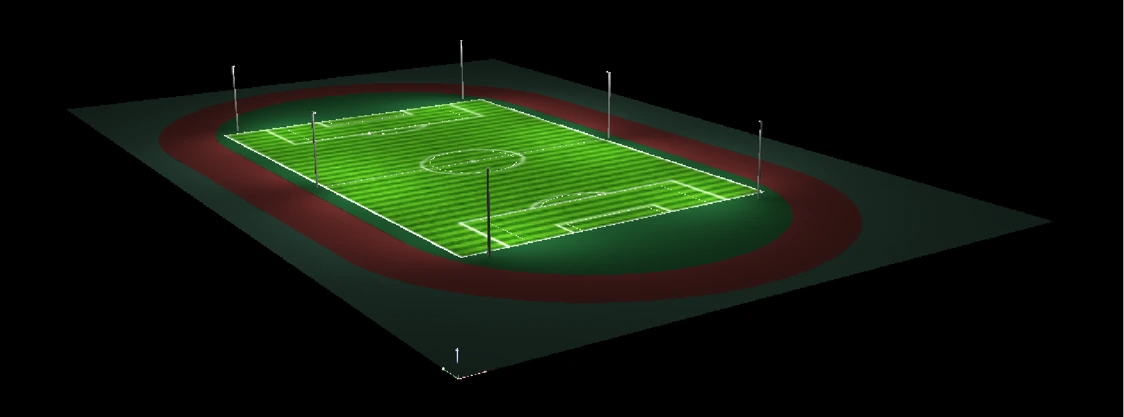
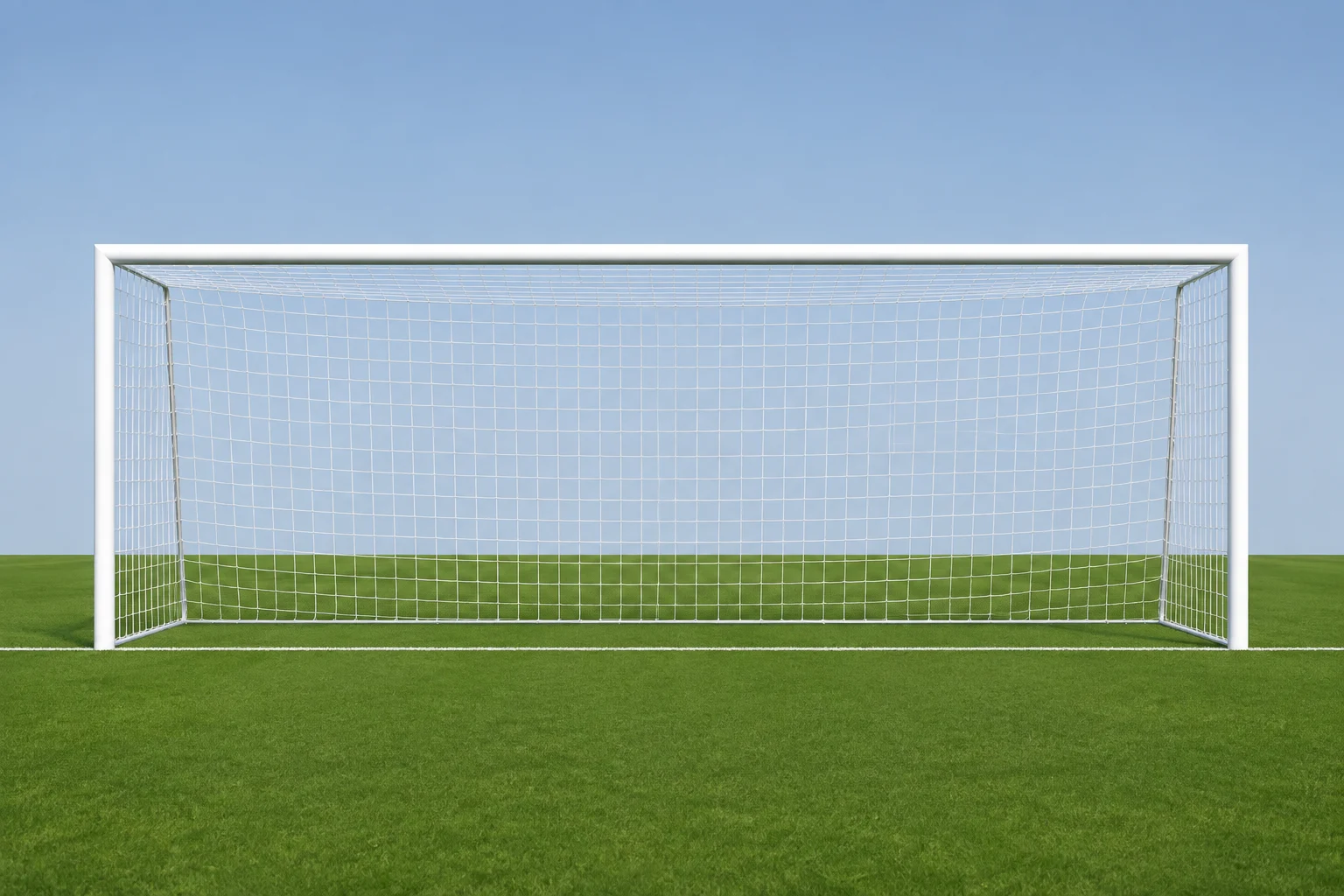
Is there a standard size for a football pitch~The length of the football field is 90-120 meters, the width is 45-90 meters, and the goal is 2.44 meters high and 7.32 meters wide. The football is made of leather or other suitable materials, with a circumference of no more than 70 centimeters and no less than 68 centimeters.
Is there a standard size for a football pitch? There is no single universal rectangle used for every football match.
If you search for standard football pitch dimensions, you will find more than one answer. The Laws of the Game allow a senior pitch to fall within a defined range, while international competitions use a narrower range. FIFA also publishes a 105 m × 68 m field-of-play recommendation that is widely used as a professional reference.
That distinction matters if you are planning a new pitch or ordering football equipment. The marked field, the goal and penalty-area dimensions, the surrounding safety space, and the competition rules all need to be checked separately.
The word “pitch” can also create confusion in supplier conversations. Some people use it to mean only the rectangle inside the boundary lines. Others use it to mean the complete prepared area, including the turf, runoff, fencing and equipment. Put the definition on the project drawing before asking for prices. It makes later comparisons much more reliable.
No. There is a standard framework, not one mandatory size for every pitch.
For senior football, IFAB Law 1 permits a rectangular field with a touchline of 90–120 m and a goal line of 45–90 m. For international matches, the permitted range is narrower: 100–110 m long and 64–75 m wide. A competition organiser may select a particular size within the applicable rules.
So “standard size” can mean three different things:
Treating those as the same thing is the source of many inaccurate dimension lists online.
The following table separates the rule range from the professional reference instead of presenting every number as one universal standard.
| Use case | Length | Width | What the number means |
|---|---|---|---|
| Senior matches | 90–120 m | 45–90 m | IFAB range for the field of play |
| International matches | 100–110 m | 64–75 m | Narrower IFAB range for international matches |
| Professional planning reference | 105 m | 68 m | FIFA recommendation for the field of play, not a universal legal minimum |
FIFA’s stadium guidance recommends 105 m × 68 m for the field of play. That makes it a useful starting point for a professional facility brief, but it does not erase the permitted ranges above.
Before you freeze a drawing, confirm which rulebook applies. A school, training centre, community venue and international stadium may have different operating requirements even when they all use a rectangular football pitch.
The selected size also affects every downstream item. Changing the field length can move the halfway line and alter the location of penalty areas, while changing the usable site boundary can affect fencing, access gates and ball-stop positions. A quotation based only on a headline length and width is therefore incomplete. It should identify whether the dimensions refer to the field of play, the turf installation, or the complete site.
Pitch length and width are only the first layer. The markings and equipment positions must also match the intended format.
| Feature | Dimension or rule | Planning note |
|---|---|---|
| Boundary lines | No more than 12 cm wide | The touchlines and goal lines form the boundary of the field of play. |
| Centre circle | Radius 9.15 m | Measure from the centre mark on the halfway line. |
| Goal area | 5.5 m from the inside of each goalpost | Set out from the goal line and the inside edge of the posts. |
| Penalty area | 16.5 m from the inside of each goalpost | Check the complete rectangle, not only its front line. |
| Penalty mark | 11 m from the goal line | The distance is measured from the relevant goal line. |
| Penalty arc | Radius 9.15 m | Centre it on the penalty mark outside the penalty area. |
| Corner arc | Radius 1 m | Apply it at all four corners. |
| Senior goal | 7.32 m wide × 2.44 m high | Confirm whether the goal is measured between the posts and below the crossbar. |
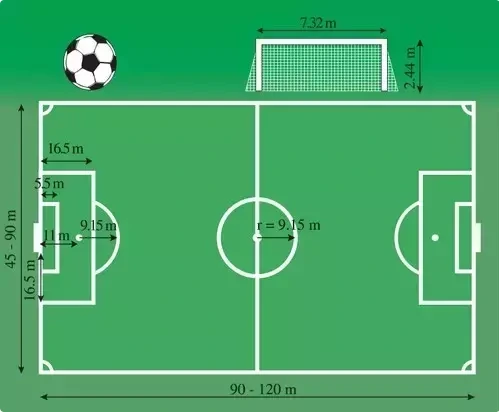
These are Law 1 dimensions for the standard senior field context. They should not automatically be copied into a youth, futsal or small-sided layout. The IFAB field-of-play law also covers the goal structure, corner flags and other field equipment details.
When setting out the markings, use the same reference edge throughout the survey. For example, the penalty-area measurements are taken from the inside of the goalposts, while a goal opening is specified between the posts and below the crossbar. Mixing outside-post, inside-post and centreline measurements can create a drawing that appears close to the target but does not match the rulebook. Record the reference edge beside every critical dimension.
The field surface deserves the same careful wording. IFAB allows natural or artificial surfaces subject to the competition rules. That does not mean every artificial surface is automatically accepted for every event, nor does it prove a particular turf system will deliver a specific playing result. Surface approval, drainage design, maintenance and installation remain separate project decisions.
One of the most important planning corrections is to stop treating the touchlines as the property boundary. The field of play is the marked rectangle. A usable venue also needs appropriate level space outside it, plus room for access, fencing, ball-stop systems, maintenance and spectators where applicable.
FIFA’s stadium guidance discusses the field of play together with the surrounding pitch area. The exact allowance depends on the venue, the competition and the safety brief, so a 105 m × 68 m field should not be interpreted as a complete construction footprint.
Use three separate measurements in your site plan:
This separation prevents a common procurement error: ordering goals or fencing for the marked rectangle before checking whether the site can safely accommodate the complete facility.
It also changes how a site survey should be recorded. Take the proposed field dimensions from the approved drawing, then note the distance from each line to the nearest fixed obstacle. Record the access route for goal delivery and maintenance equipment, the location of drainage channels, and any areas that cannot remain level. These notes do not replace a local safety review, but they give the equipment supplier the context needed to avoid an unsuitable quotation.
Small-sided football does not have one worldwide dimension that can be substituted for the senior Laws of the Game. A 5-a-side or 7-a-side pitch may be set by an association, league, school system, venue operator or tournament organiser. Age group, playing format, goal size, surface and local competition rules can all change the specification.
The previous article included example dimensions for 7-a-side and 5-a-side layouts. Those examples can help explain why smaller formats need their own planning brief, but they should not be published as universal rules without a named governing-body source and a current edition date.
| Format | What can be stated safely | What to verify before construction |
|---|---|---|
| 11-a-side | Use the applicable senior or international range and competition rules. | Field dimensions, markings, goal, runoff and match approval. |
| 7-a-side | Use the organiser’s current small-sided or youth specification. | Field range, goal size, penalty-area design and age group. |
| 5-a-side | Use the venue or competition specification rather than a generic online chart. | Court boundary, goals, netting, surface, safety space and operating rules. |
| Youth formats | Expect variation by age group and governing body. | The exact local handbook, season and competition category. |
If a supplier’s catalogue gives a convenient small-sided range, treat it as a quotation starting point, not proof of competition compliance. Ask the buyer or organiser to confirm the governing specification before production.
For a multi-format venue, do not force every format into one compromise layout without checking the operating plan. A centre that hosts 5-a-side sessions, youth matches and occasional 11-a-side training may need movable goals, different line colours or a controlled marking schedule. The best equipment choice depends on how often the layout changes, who installs it, where it is stored and how the surface will be protected between uses.
Use this sequence to convert a search answer into an equipment-ready brief:
The key is to measure the field and the facility as related but separate objects. A goal supplier can quote accurately only when the goal format, opening, anchoring method and surrounding constraints are known.
Keep a revision number on the drawing. If the competition changes the approved size, the goal schedule and line-marking plan should be updated together. This simple document-control step helps prevent an earlier dimension from being copied into a later purchase order, particularly when several suppliers are quoting on the same project.
| Component | What to measure or verify | Owner or evidence |
|---|---|---|
| Goals and nets | Opening, post profile, net depth, anchoring and storage method | Approved equipment schedule and organiser rules |
| Line-marking system | Marking layout, line width, surface compatibility and maintenance method | Field drawing and surface specification |
| Corner flags | Flag positions, pole height and safe fixing | Law or competition requirements |
| Fencing and ball-stop | Boundary, access gates, ball containment and clearance | Site plan and safety review |
| Surface | Natural/artificial choice, drainage brief and maintenance responsibility | Venue specification and installer brief |
| Lighting and access | Lighting plan, service access and emergency routes | Architect, venue operator or local approval |
LDK Sports Equipment’s football product categories include football goals, football cages, training fields and related equipment, which can serve as a starting point for an equipment shortlist.
When making an enquiry, share the approved field drawing and intended format so the requested equipment can be discussed against the project brief.
Do not use a product photograph as evidence that a pitch complies with a competition rule. Ask for the actual dimensions, materials, anchoring method, certification documents where required, and installation instructions for the selected model.
For imported equipment, add packaging, customs, delivery access and local installation responsibilities to the same checklist. Those are commercial and logistical questions rather than Laws of the Game requirements, but they can still affect whether the ordered equipment fits the finished facility. Separate rule compliance from supplier capability, and ask for evidence for each one.
Treat each current LDK product page as a product reference, and request the model’s dimensions, materials, anchoring and installation details before purchase.
No. Senior and international Laws of the Game provide ranges, while a competition chooses a particular pitch within its applicable requirements. See the senior-versus-international table above.
There is no single universal 11-a-side size. The senior range is 90–120 m by 45–90 m, and the international range is 100–110 m by 64–75 m under IFAB Law 1.
No. FIFA recommends 105 m × 68 m as a field-of-play reference in its stadium guidance. It is not a universal legal minimum for every football pitch.
They vary by competition, age group and venue. Use the current local specification instead of treating one commercial or legacy dimension chart as a universal standard.
The marked field is not the complete facility footprint. The required surrounding area depends on the venue, competition and safety plan, so confirm the applicable guidance before setting the property or fencing line.
Check the competition or organiser’s current rules first, then compare them with IFAB Laws of the Game, FIFA planning guidance where relevant, the local authority requirements and the equipment supplier’s installation specification.
The best answer to “is there a standard size for a football pitch?” is: there is a standard rule framework, but not one universal rectangle. Start with the correct senior or international range, use 105 m × 68 m as a clearly labeled FIFA planning reference when appropriate, and then add markings, goals, surrounding space and local approval requirements.
For a reliable quotation, prepare one complete brief: format, rule owner, field dimensions, surrounding-area plan, surface, equipment schedule and delivery requirements. That process preserves the useful dimension information from the old article while preventing unsupported small-sided figures from being mistaken for universal standards.
For a quotation discussion, include the required quantity, destination market and delivery constraints alongside the field drawing.
A clear technical brief keeps the equipment discussion separate from the competition authority’s decision about field approval.