Sports Equipment Manufacturer

Compare affordable basketball court flooring by base, surface, drainage, competition level and quote scope. Review indoor and outdoor options before requesting bids.
Choosing affordable basketball court flooring starts with the base and project scope. If a sound, suitable concrete or asphalt base already exists, retaining it may avoid the cost of rebuilding that part of the court. The playing surface still needs to fit the location and intended use. Compare the base, surface, markings, edges, drainage and installation together rather than choosing from a material label or a surface-only price.
For a casual outdoor half court, an existing sound concrete or asphalt base may reduce the scope of new work. If the base is uneven, drains poorly or needs repair, a low surface-only quote may leave important costs out. Indoor competition courts have different requirements: FIBA’s venue guidance distinguishes between competition levels and the flooring systems permitted for each, so confirm the applicable rules before choosing a material.

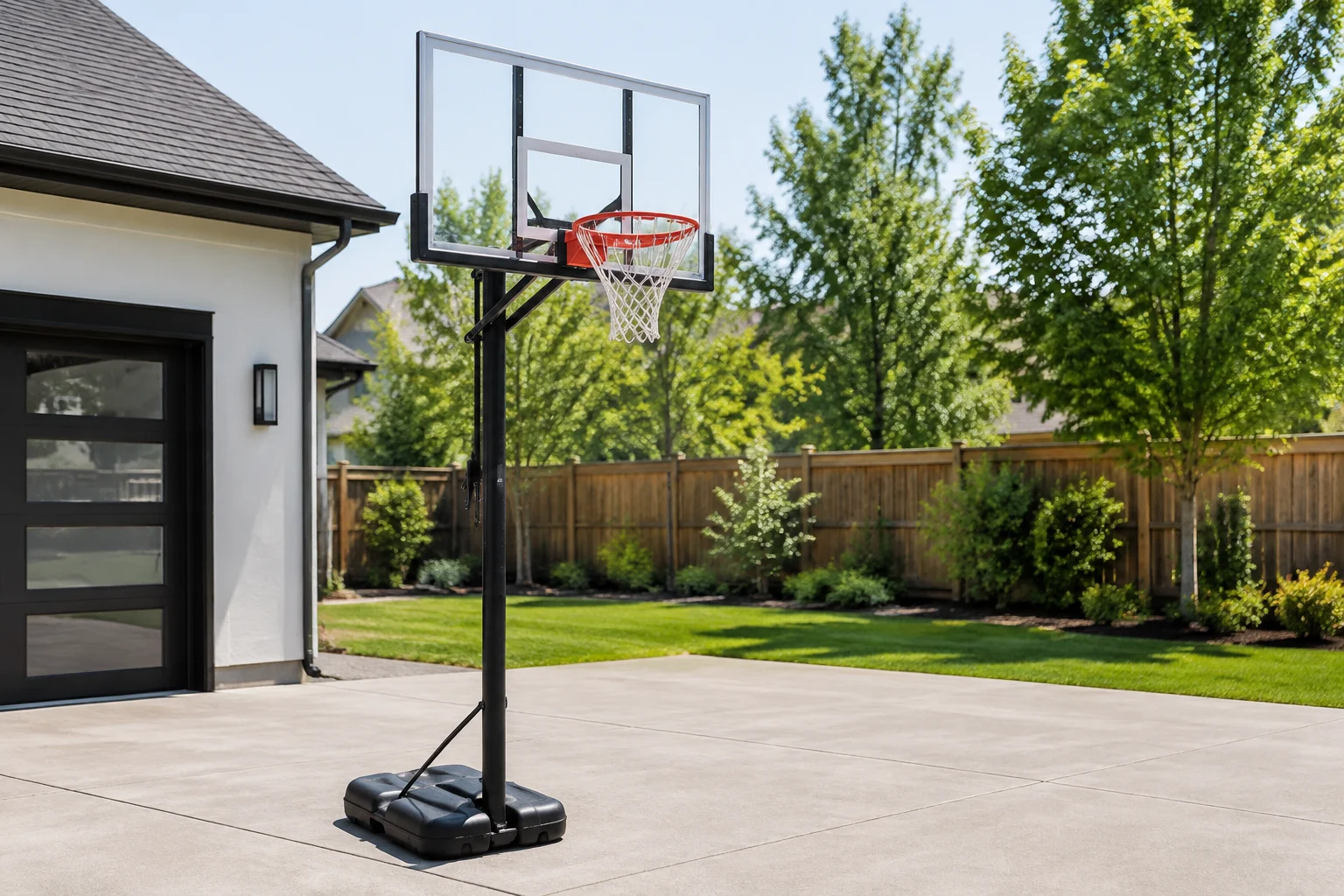
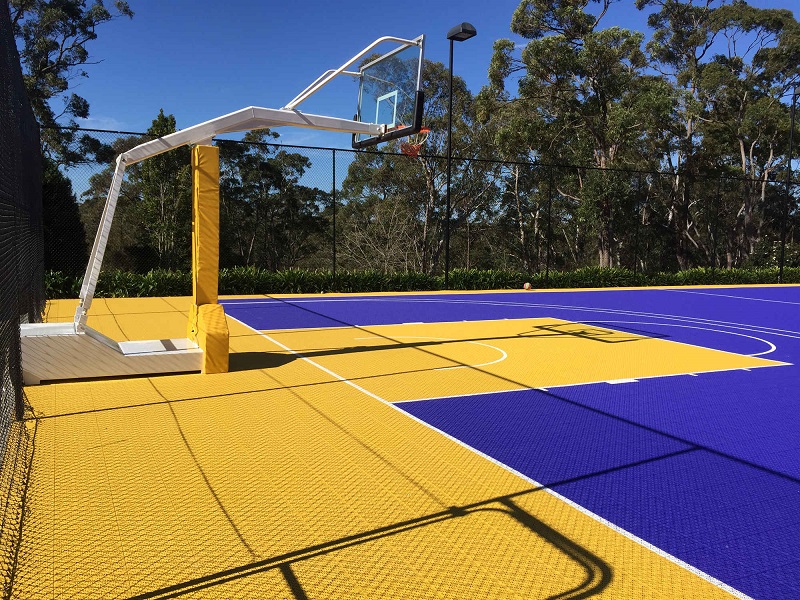
Outdoor basketball court surface example. Confirm the pictured system and installation conditions for your project.
A court surface is only one part of the finished project. Ask suppliers to state what the quote includes and excludes in each of these areas:
| Scope item | What to clarify |
|---|---|
| Existing base and preparation | Is the slab or asphalt retained, repaired, levelled or replaced? Who inspects it and records its condition? |
| Playing surface | What exact system, layer build-up, product model and intended environment are quoted? |
| Court markings | Are line layout, color and application included? Which sport and court layout are covered? |
| Edges and transitions | How are exposed edges, thresholds and transitions to surrounding areas finished? |
| Drainage and water management | For outdoor courts, how is surface water handled, and what base conditions does the system require? |
| Installation and delivery | Are labor, equipment, transport, access, taxes and disposal included? |
| Care and replacement | What routine care does the manufacturer specify, and how are damaged or worn components serviced? |
Requesting these details makes different proposals easier to compare. It also helps identify whether one supplier is pricing a surface only while another includes preparation and installation.
There is no verified price list that ranks these materials for every site. For an existing court, check whether the concrete or asphalt base can be retained and compare the cost of repairing it with the cost of a new base. For a new court, price the base and playing surface as one system. FIBA’s guide describes asphalt as the most durable but most expensive of the listed outdoor sub-bases; foam concrete is less expensive and less robust, while paving slabs can move. Those are relative descriptions in that guide, not installed surface prices for every location.
FIBA’s 3×3 Q&A says there is no mandatory playing surface for 3×3, and notes that games can take place on concrete, asphalt, existing courts or temporary courts. It emphasizes playability and player safety. That is useful context for general 3×3 planning, but it does not certify a particular product or make every surface suitable for every site.
Outdoor options include a finished hard base, a coating system over a prepared base, modular sports tiles and synthetic rubber. A coating quote should identify its layers, base preparation and line-marking scope. FIBA’s outdoor-court guide describes permeable polypropylene tiles 10–20 mm thick, usually over a 40–50 mm rubber or foam underlay; in most cases it says the underlay is needed to meet the elasticity properties for FIBA Level 1. The guide also describes synthetic rubber products in different forms and drainage configurations. These details explain why like-for-like system specifications matter more than a generic price label.

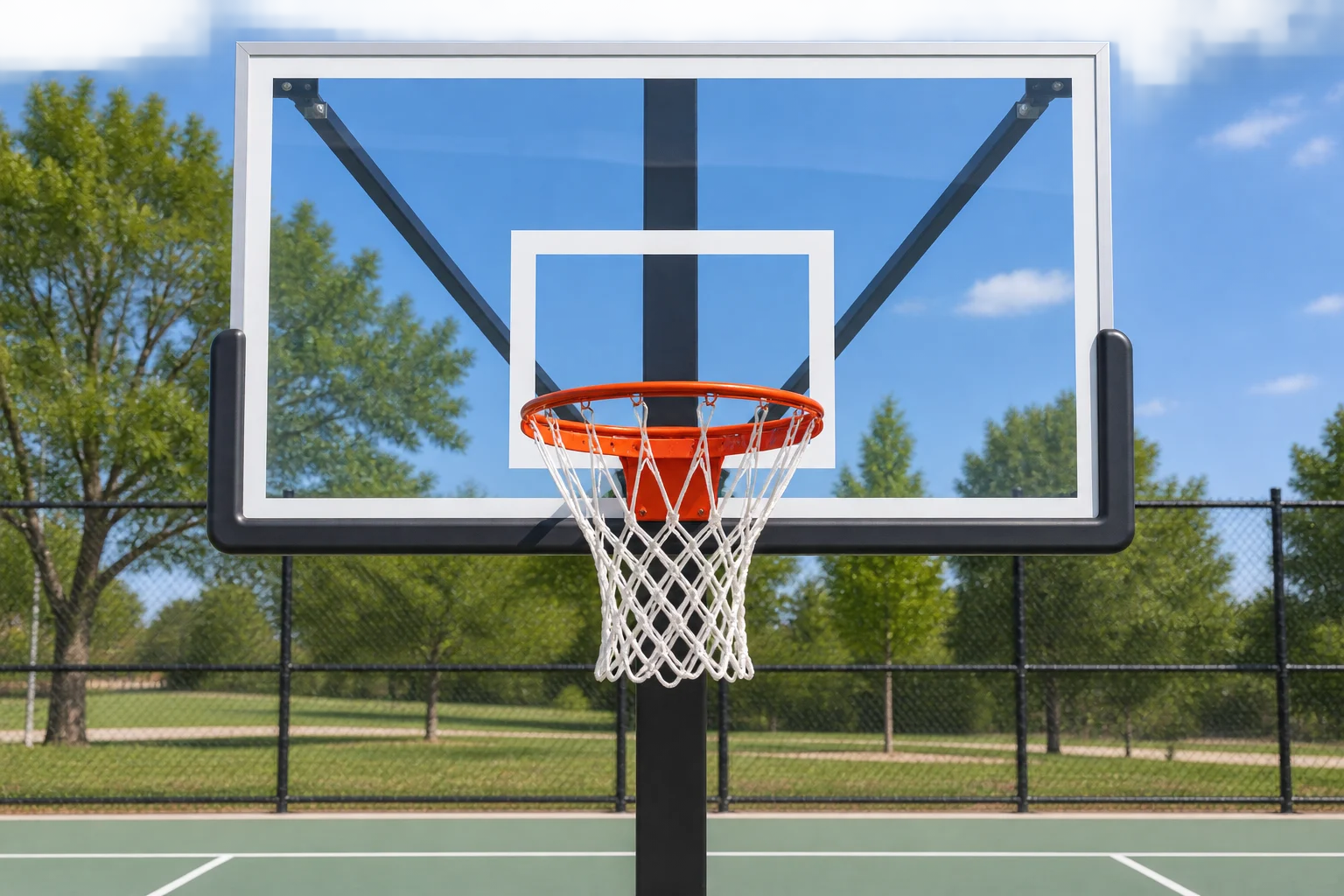
Basketball flooring project reference. Confirm that the product and setting match the proposed use.
If the existing hard base is suitable for the selected system, it may be possible to price only repairs and the playing surface. The FIBA guide describes asphalt as durable and solid but relatively impermeable, while paving slabs allow water between slabs and can move. Inspect cracks, joints, levels and drainage before deciding what work to include.
Acrylic and polyurethane-based coatings are applied over a prepared base. They can provide color zones and court markings, but the full layer build-up, substrate preparation, application conditions and line-marking scope belong in the quote. The project documents should also state how the surface is maintained and repaired.

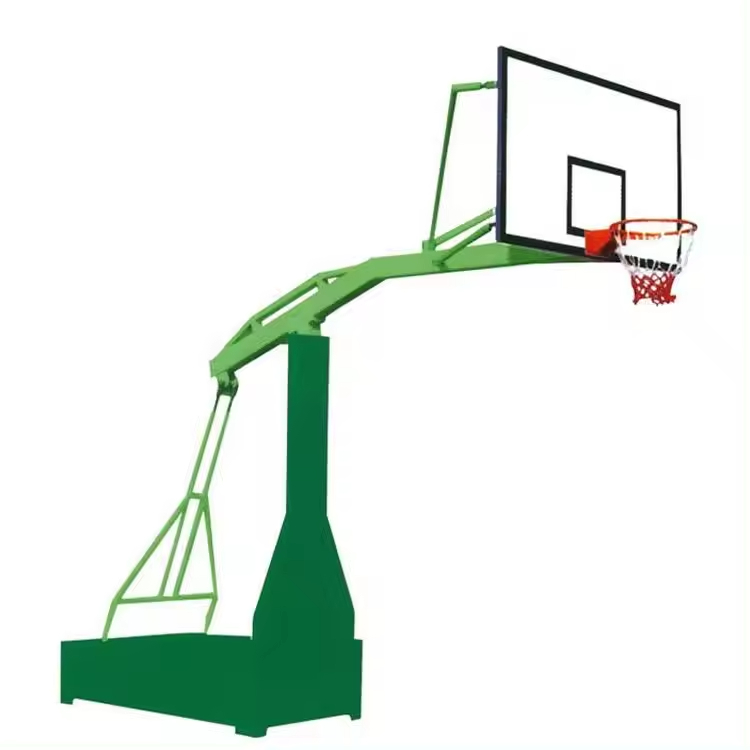
Outdoor court surfacing reference. Ask the supplier to identify the system shown and its approved base.
For outdoor modular tiles, the FIBA guide describes permeable PP tiles over a rubber or foam underlay and relates that system to drainage and playing elasticity. The guide gives an approximate 15-year service life depending on use and climate; it is not a lifespan guarantee for every product. Check the selected tile system’s base, edges, expansion details, drainage and repair instructions before comparing quotes.
See the outdoor basketball court flooring product for one example of an outdoor floor option. Confirm current product specifications, intended use and installation requirements with the supplier before making a selection.
Indoor facilities should be evaluated separately from outdoor courts. FIBA’s Venue Guide describes different flooring requirements by competition level: Level 1 competitions require approved wood or glass flooring, while Level 2 venues may also use synthetic systems such as polyurethane or PVC. Always verify the current rules for the event and venue in question; a general product description is not proof of approval for a specific competition.
For a school, club or recreational venue, ask how the quoted system fits the actual use, subfloor, room conditions, maintenance plan and applicable local requirements. For a competition venue, obtain the relevant approval documentation for the exact proposed construction and confirm its scope with the governing body.

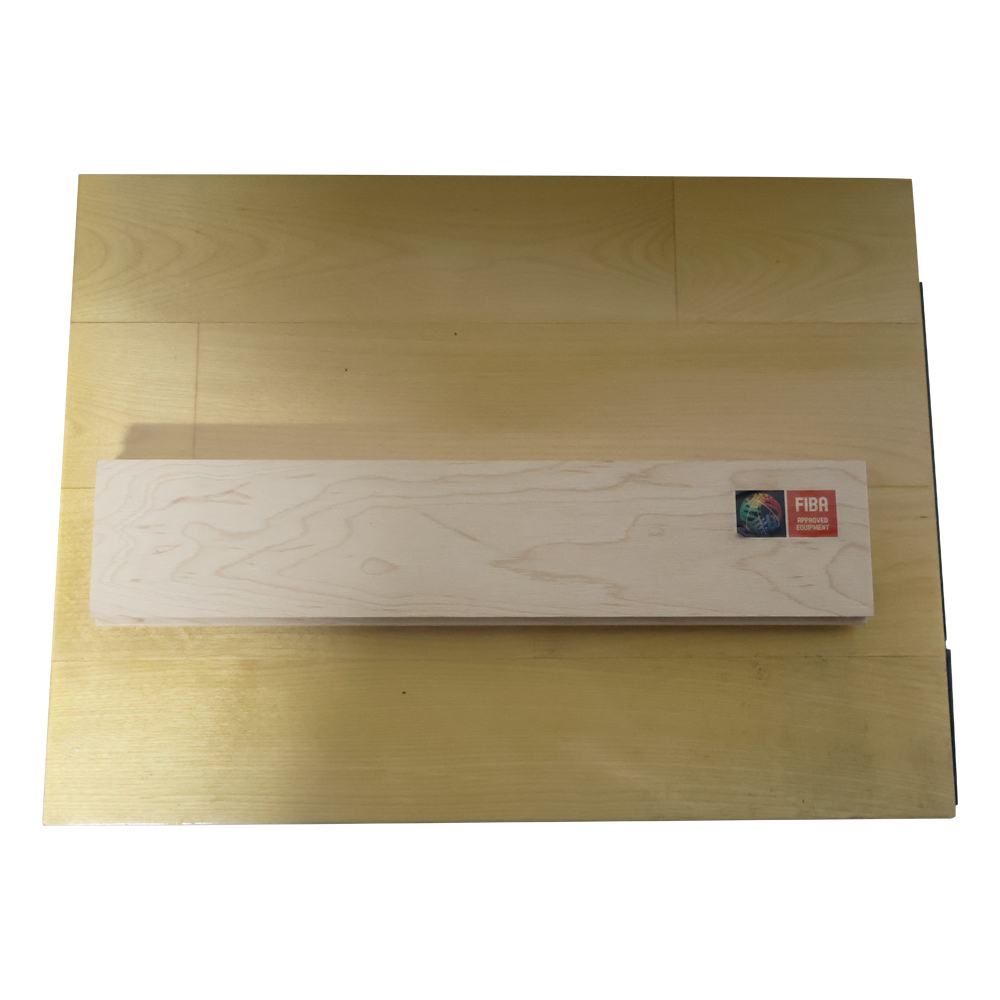
Indoor wooden basketball floor example. Verify construction, documentation and competition eligibility for the specific project.
LDK’s indoor wooden basketball flooring page describes one indoor option. Review the project specification and supporting documents before treating any certification wording as applicable to a particular court. For background on project budgeting, see the basketball court flooring cost guide.
A low initial quote is useful only when the scope is clear. Ask each supplier to provide the product/system identification, base assumptions, included preparation, installation responsibilities, care guidance, warranty terms and exclusions in writing. Then compare the cost and responsibilities over the period you plan to operate the court.
FIBA’s outdoor guide describes synthetic rubber in sheet and roll forms, including permeable and impermeable options; it notes that damaged sections can be cut out and replaced. Its lifespan figures are system-specific estimates, so use the product’s own written maintenance and warranty terms when comparing long-term cost.
Send each supplier the same short project brief:
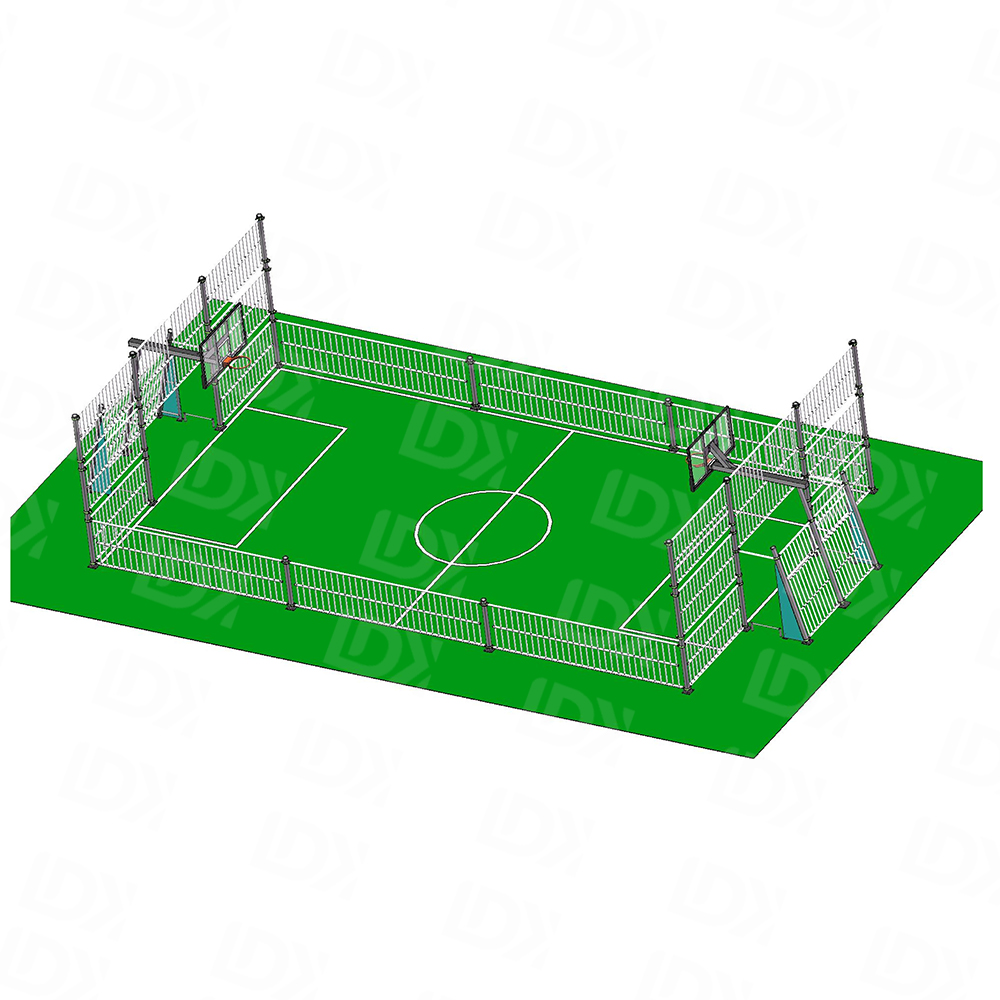
For an outdoor multi-use example, see the custom caged basketball and football court. Share your site details through the LDK inquiry page to request a project-specific discussion.

Outdoor multi-use court example. Confirm the surface, base and equipment scope for the project being quoted.
The right option depends on indoor or outdoor exposure, use level, existing base, applicable competition rules and maintenance capacity. Compare the complete proposed system and its supporting documents rather than choosing from a material name alone.
If an existing concrete or asphalt base is sound and suitable, retaining it may reduce the amount of new construction. For other sites, compare the base work and surface together; there is no single material that is least-cost in every location and project.
Start by checking whether the existing base can be retained under the chosen system’s installation requirements. Request itemized quotes that include preparation, surfacing, markings, edges, drainage, delivery and installation so that an apparently low surface-only price does not hide missing work.
Options depend on the site and intended use. A specified coating or modular sports-floor system may be installed over a suitable prepared base, but the manufacturer’s substrate and drainage requirements must be followed. Ask the supplier to identify the full system and provide installation documentation.
Do not assume they can. Check the exact tile manufacturer’s installation instructions and confirm whether a stable prepared base is required. Have drainage, ground movement and perimeter conditions reviewed before selecting a surface.