Sports Equipment Manufacturer

Compare outdoor basketball surface materials, base types, drainage, installation and maintenance to scope a court system and request comparable quotes.
Outdoor basketball courts can use a hard finished base, a coating over concrete or asphalt, permeable polypropylene tiles, or synthetic rubber. The practical choice depends on drainage, site exposure, intended use and the complete base-to-surface build-up. For example, FIBA’s outdoor-court guide describes one permeable PP system as 10–20 mm tiles over a 40–50 mm rubber or foam underlay; the underlay is usually needed for the elasticity properties required at FIBA Level 1. Those figures describe the guide’s system context, not every tile product.
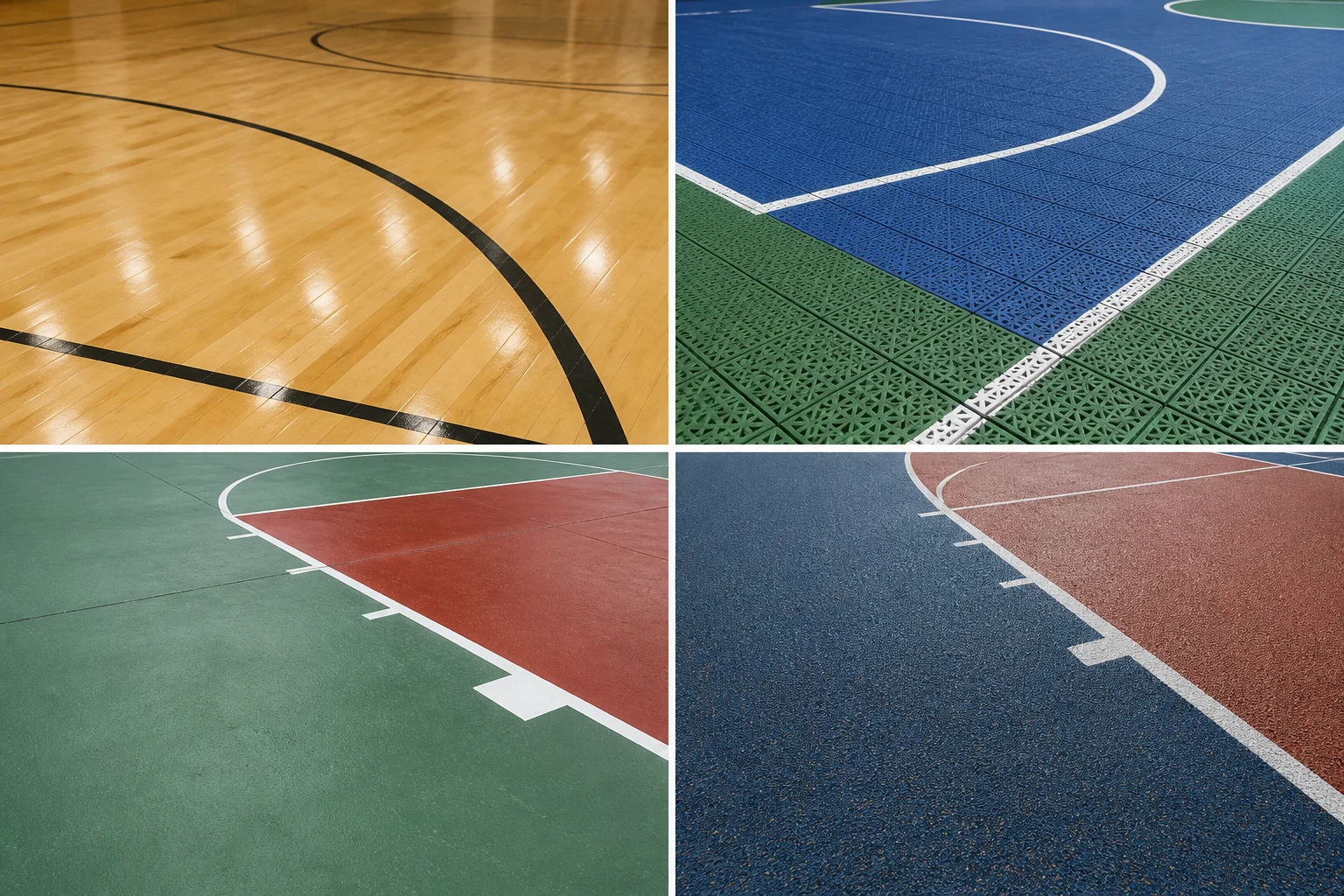
Basketball court surface categories.
| Option | What it provides | Main trade-offs to evaluate |
|---|---|---|
| Concrete or asphalt finish | A hard court surface when finished and detailed for play | Surface condition, joints, drainage and whether the site needs an added sports surface |
| Acrylic or polyurethane coating | A colored, marked playing surface applied over a prepared base | The system’s layers, base compatibility, crack treatment, water management and renewal process |
| Modular polypropylene tiles | Interlocking surface tiles; FIBA describes permeable PP tiles over a rubber or foam underlay in its outdoor-court guide | Tile and underlay configuration, base, edges, transitions, water path and level of play |
| Synthetic rubber | Sheet or other synthetic-rubber playing surfaces; FIBA describes permeable and impermeable configurations | Product form, seams, drainage details, surface finish, repair and replacement |
For a home court, start with the space, current base, maintenance capacity and whether water needs to pass through the surface. A school or community project should also check the intended use and any applicable FIBA equipment approval; FIBA says its approved 3×3 outdoor surfaces are tested for outdoor conditions and that Level 2 approval is recommended for school and community facilities. For competition, confirm the exact required approval level and system documents before specifying a product. These are decision checks, not a universal ranking of materials.
Concrete and asphalt may be a finished playing surface or may support a separate coating or sports-floor system. First identify what already exists: slab, asphalt, paving or another base. Record visible cracks, movement, joints, low points and drainage paths before asking for a surface quote.
FIBA’s outdoor-court guide compares asphalt, paving slabs and foam concrete as sub-base choices. It describes asphalt as solid and durable but less permeable, more expensive in that context and dependent on site access; paving slabs allow water between slabs but can move; and foam concrete is semi-permeable and less robust than asphalt. These are the guide’s comparative descriptions. Site access, drainage design and the surface system still determine the project choice.
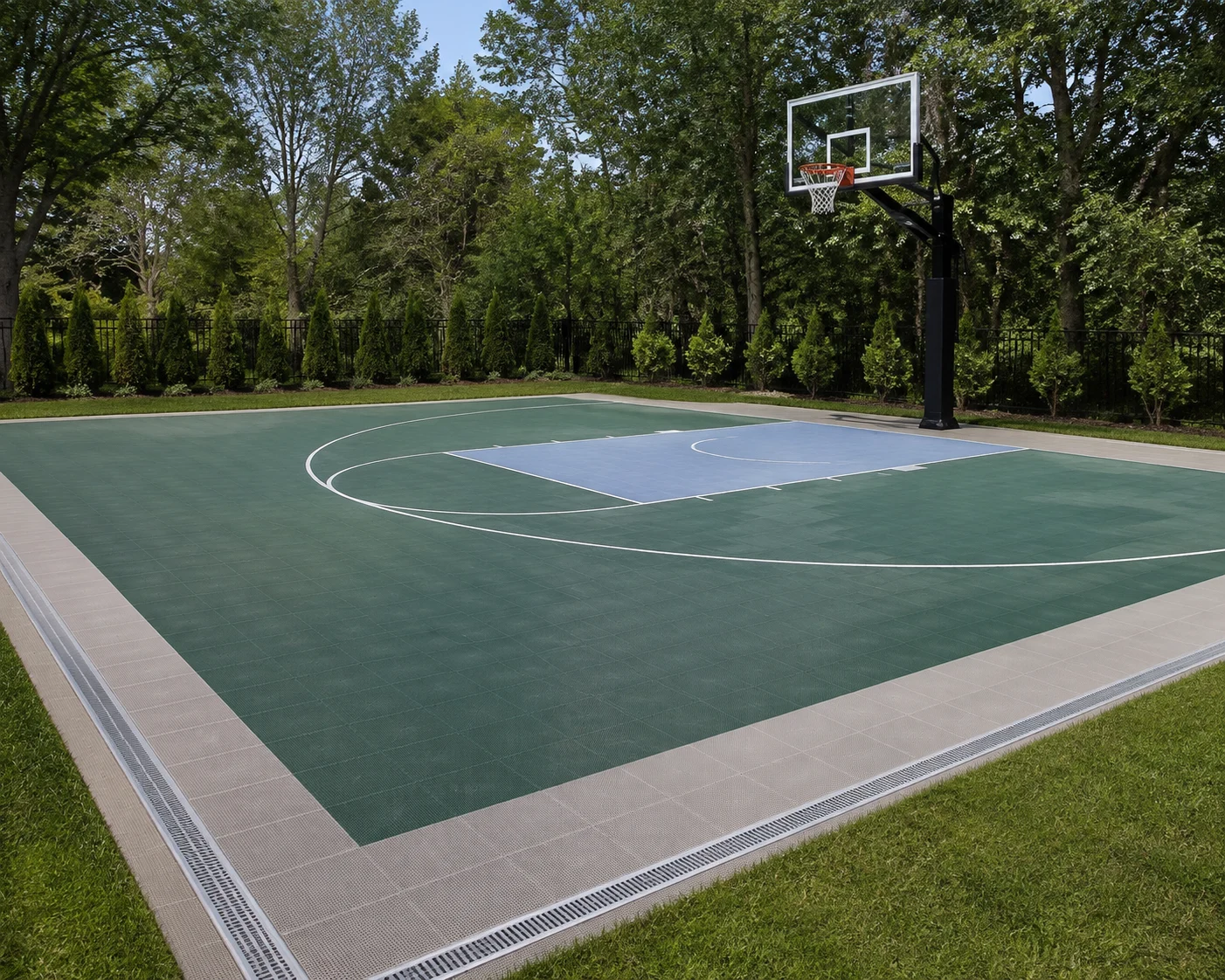
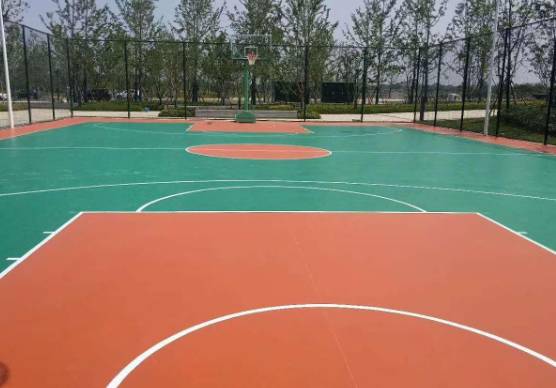
Outdoor court surface and edge example.
For any resurfacing project, have the installer document how the selected system addresses the base’s condition, water flow, edges and repairs.
Acrylic and polyurethane coatings are applied as systems over a prepared base and can provide the court’s color zones and line-marked finish. Their exact construction and playing characteristics depend on the specified product and layers. Compare the full system: substrate limits, preparation, any elastic layer, top coat, line marking, curing, maintenance and repair method.
Ask how the coating system treats existing joints and cracks and connects to the site’s drainage. A coating is the top of a court build-up; its performance depends on the prepared base and specified layers.
FIBA’s outdoor-court guide describes permeable polypropylene tiles 10–20 mm thick, usually installed over a 40–50 mm rubber or foam underlay designed to let water drain. The guide says this underlay is mandatory in most cases when the system is to meet the elasticity properties required for FIBA Level 1 competition. The guide gives an approximate 15-year service life depending on use and climate; this is a planning figure for the described system, not a lifespan guarantee for every product.
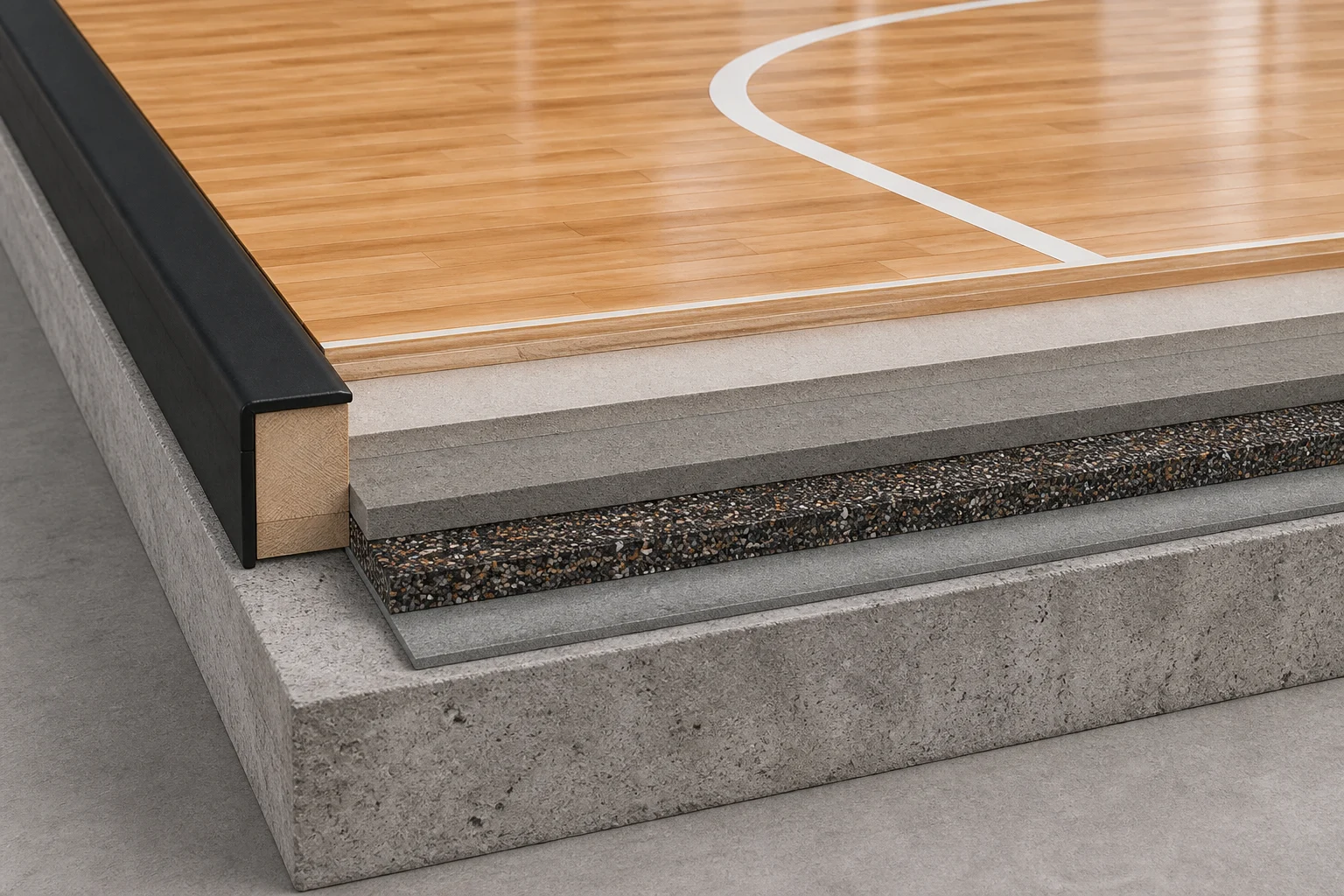
Basketball court surface and drainage context.
Compare the tile system’s base requirements, edge restraint, thermal-movement allowance, transition detail, cleaning instructions and replacement method. The court plan should show where water drains after passing through or around the surface.
LDK’s outdoor plastic basketball flooring page provides one product example. Use the current product documentation to check its configuration and intended installation conditions.
FIBA’s outdoor-court guide describes synthetic rubber systems at 8–13 mm and prefabricated rolls around 6 mm, with permeable and impermeable options. It notes that an impermeable product needs a slight slope for drainage, and that damaged sections can be cut out and replaced with the same material. The guide gives up to 20 years as a service-life figure for this category; actual product terms and site conditions differ.
Compare the product’s seams, surface finish, base compatibility, drainage detail, repair method and warranty with the proposed use.
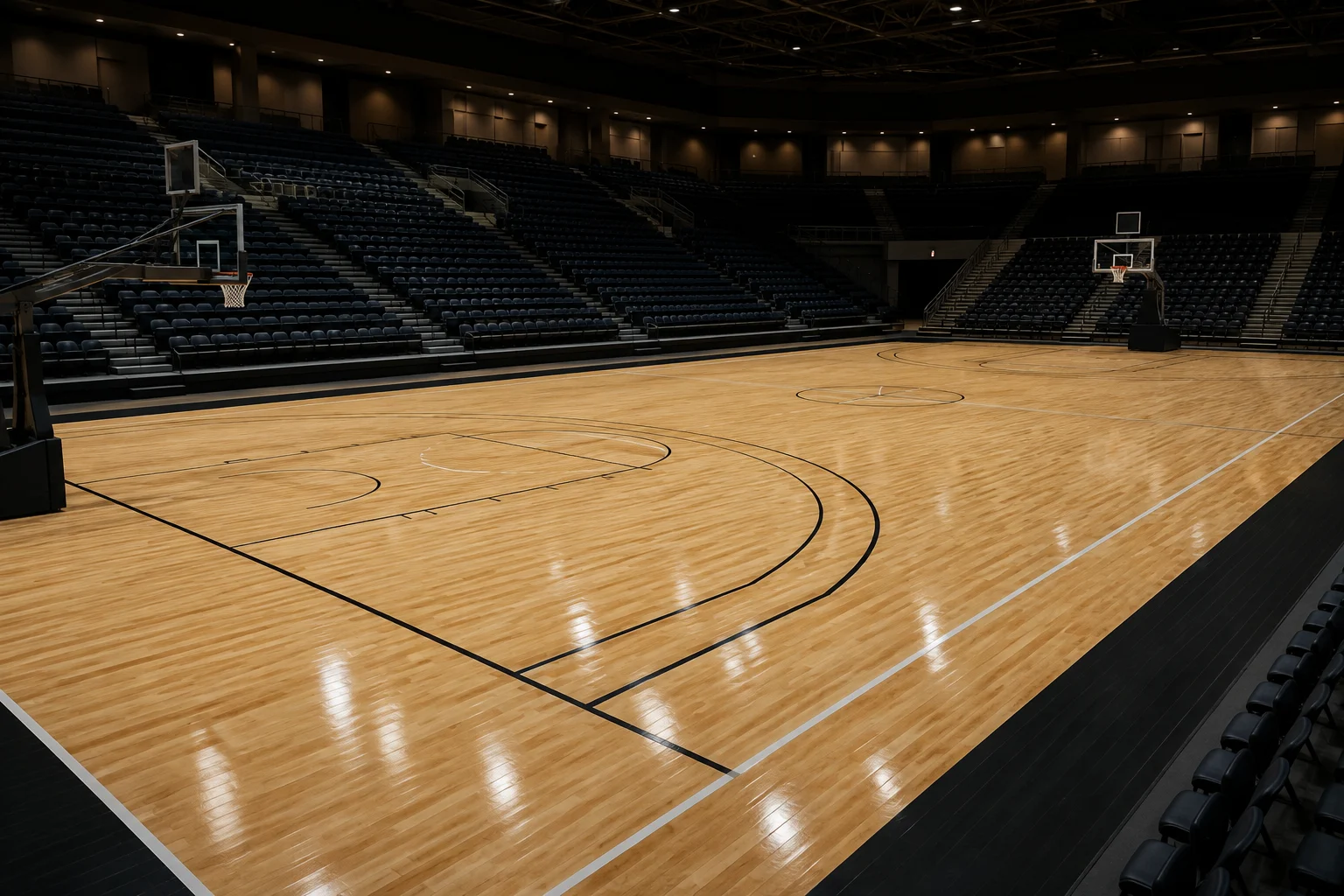
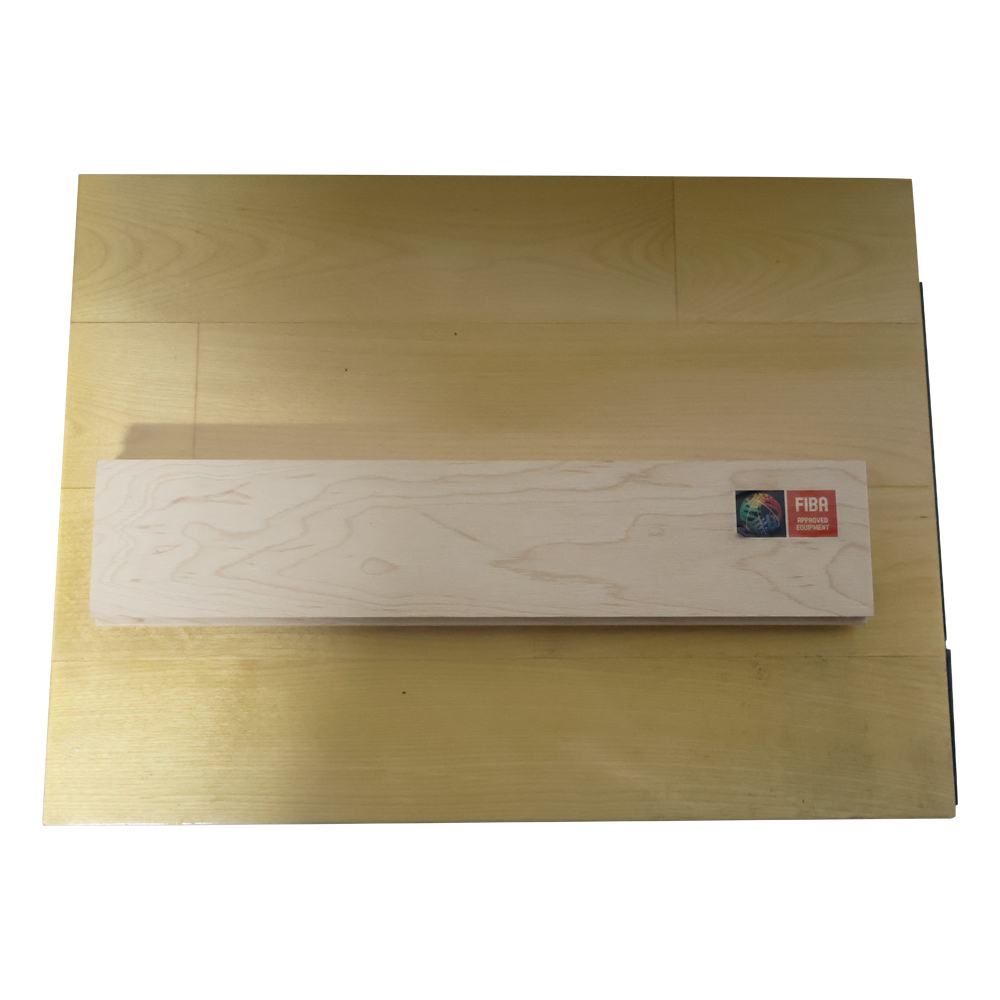
Indoor basketball floor example.
Indoor sports wood is designed as a floor system for an indoor venue. It should not be assumed to suit an exposed outdoor court. FIBA’s venue guidance treats indoor competition floors and outdoor surfaces in separate venue-design contexts; confirm the rules and system documents for the intended use.
For an indoor example, see the LDK wooden basketball floor. The right comparison is between documented systems built for the actual indoor or outdoor environment.
Give each supplier the same information and ask the quote to show:
This makes it easier to distinguish a surface-only offer from a complete court-system proposal.
An outdoor court may use a concrete or asphalt base and finished surface, a coating over a prepared base, modular polypropylene tiles or a rubber system. Some projects use a separate base and top surface, so ask what layers are included.
A permeable surface allows water to pass through the surface system into an underlying layer or drainage path. The court plan should show where that water goes and how the base connects to site drainage.
Indoor sports wood is designed for indoor environments. For an exposed outdoor court, compare systems intended for outdoor use and verify the product documentation and warranty for the site conditions.
For project-specific surfacing questions, contact LDK.