Sports Equipment Manufacturer

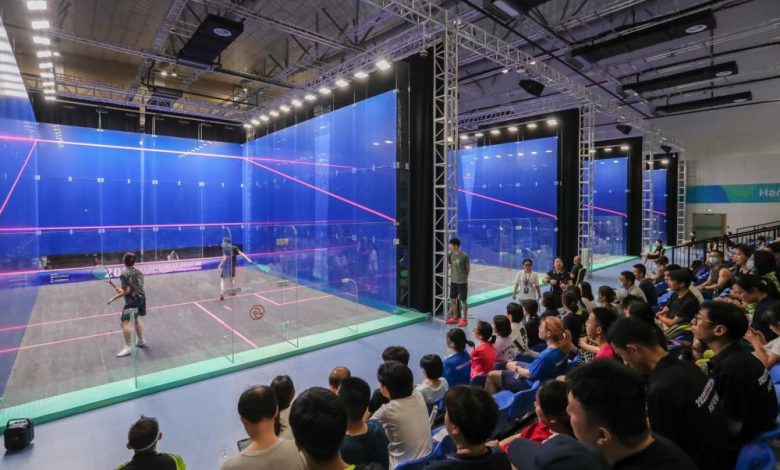
Standard singles and doubles squash court dimensions, wall markings and room-clearance notes in millimeters and feet, with references to World Squash rules.
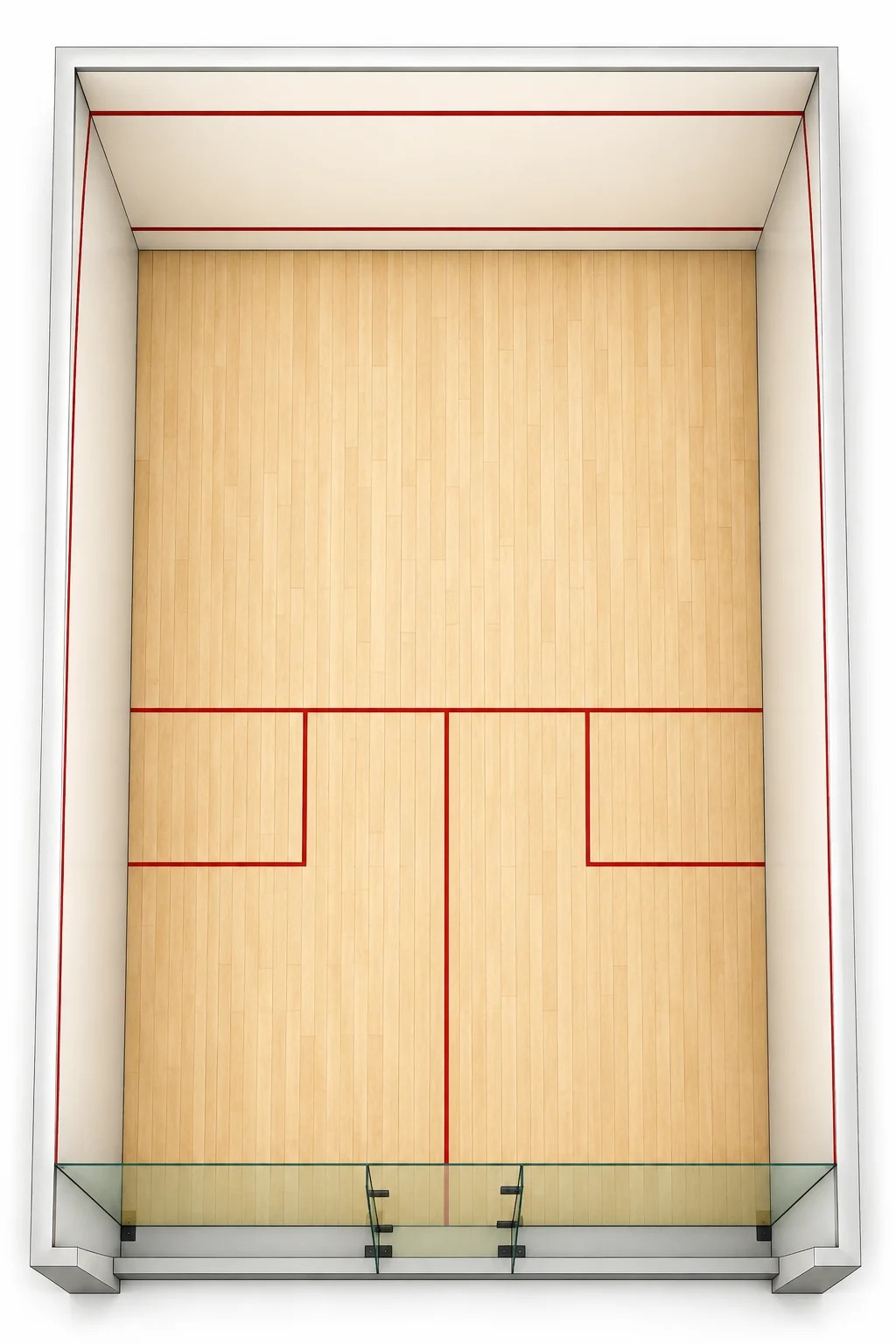
Squash court dimensions for a standard singles playing area are 9,750 mm long by 6,400 mm wide, measured between the playing surfaces. The World Squash Federation’s 2020 Singles Rules appendix also lists a 11,665 mm diagonal and key wall and floor markings. A project plan should label the playing rectangle separately from the court structure and surrounding building space.
The current 2025 Rules of Singles Squash direct readers to the WSF’s current court specification for technical details. If you are planning a new build or a competition venue, confirm the specification and approval requirements that apply to the project before finalizing drawings.

Squash court example.
| Measurement | Singles court (WSF 2020 appendix) | Approx. imperial equivalent |
|---|---|---|
| Length between playing surfaces | 9,750 mm | 32 ft 0 in |
| Width between playing surfaces | 6,400 mm | 21 ft 0 in |
| Diagonal | 11,665 mm | 38 ft 3 in |
| Front-wall line, floor to lower edge | 4,570 mm | 15 ft 0 in |
| Back-wall line, floor to lower edge | 2,130 mm | 7 ft 0 in |
| Front-wall service line, floor to lower edge | 1,780 mm | 5 ft 10 in |
| Tin, floor to upper edge | 480 mm | 1 ft 7 in |
| Short line, back wall to nearest edge | 4,260 mm | 14 ft 0 in |
| Internal service-box dimensions | 1,600 mm | 5 ft 3 in |
| Court-line width | 50 mm | 2 in |
| Minimum clear height above court | 5,640 mm | 18 ft 6 in |
The length, width and diagonal in the 2020 appendix are measured at a height of 1,000 mm above the floor. When comparing drawings or quotes, use the same measurement reference and check the line edges specified by the governing document.

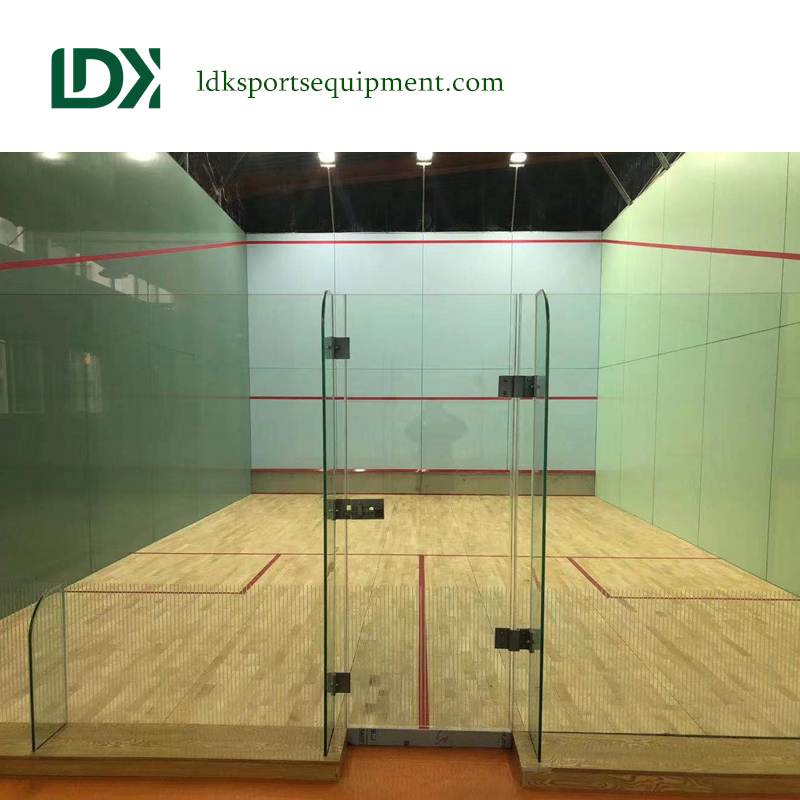
Glass squash court example.
The 9,750 × 6,400 mm rectangle describes the singles playing area between the playing surfaces. The 2010 World Squash Doubles Rules give the standard doubles playing area as 9,750 × 7,620 mm (32 ft × 25 ft); they note a wider 8,420 mm court for certain recognized events. These are separate layouts, so specify singles or doubles before a designer prepares the drawings.
A building plan must also account for court walls, structural support, access, doors, services and any circulation or spectator space required by the design and local rules.
Ask for the drawings to label the inside playing dimensions, outside court dimensions and surrounding room separately. The WSF 2020 rules appendix lists 5,640 mm (about 18 ft 6 in) as the minimum clear height above the singles court, measured to the lowest obstruction; apply the current specification and local requirements to the actual project.
“All-glass” describes a court construction or viewing format; it does not, by itself, change the standard singles playing-area dimensions. A standard singles layout still uses the applicable playing measurements. The structural framing, glass panels, supports, viewing space and installation details are separate design dimensions.
The WSF 2025 rules direct users to its current court specification for technical requirements. The glass panels, supports, viewing space and installation remain separate design dimensions.
For project examples, see LDK’s custom squash court page and glass squash court information.
Before approving a layout, compare the drawings against a project checklist:
This helps prevent a quote for the playing rectangle from being mistaken for a complete room layout or construction package.
The WSF 2020 Singles Rules appendix lists the standard singles-court length as 9,750 mm (about 32 ft) between playing surfaces.
The term describes a construction or viewing format. It does not itself change the standard singles playing-area dimensions.
The 2020 singles rules appendix lists 5,640 mm (about 18 ft 6 in) as minimum clear height above the playing area. The rules specify playing-area dimensions, not one universal total room footprint: the enclosure, door, access, services and any viewing or circulation space extend beyond the playing rectangle.