Sports Equipment Manufacturer

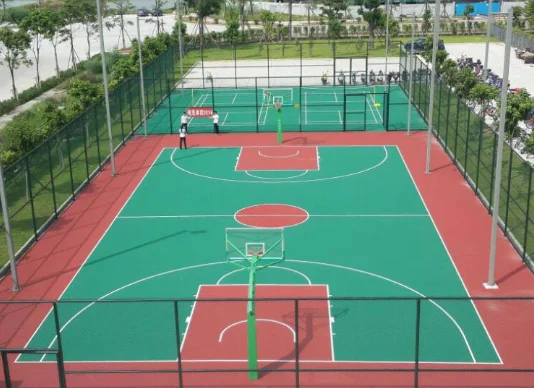
How much is it to build a basketball court~1. The cost of the Kings' Golden No.1 stadium is around $556.6 million, and the stadium can accommodate 19000 people to watch the game at the same time.2. The total cost of renovating the Warriors Oracle Arena reached $180 million, with a capacity of 19200 people.
If you are asking how much it costs to build a basketball court, the most accurate answer is: it depends on what the quote includes. A surface refresh over an existing base is a different project from a new outdoor court, an indoor court inside an existing shell, or a new gym building. Site work, drainage, surfacing, hoops, lighting, fencing, permits, freight, labor, and maintenance can all change the final budget.
The safest way to plan is to define the court scope first, then compare itemized quotes. This guide keeps the useful material and equipment categories from the original article, removes unsupported universal price claims, and uses verified public project records as examples rather than pretending that one market range fits every location.
There is no single universal basketball court construction cost. A public replacement project, a resurfacing project, and an indoor facility can have completely different scopes.
Here are three documented U.S. examples to show why the scope matters:
| Documented project | Published amount | What it illustrates | What it does not prove |
|---|---|---|---|
| Olson Park basketball court replacement, Woodstock, Illinois | $43,102 contract | A public replacement project can include more than a surface-only refresh. | It is not a standard price for every new court. |
| Central Park resurfacing, La Palma, California | $84,323.80 contract for two tennis courts and three basketball courts; a separate $43,450 appropriation included a five-percent contingency for the described alternative | A multi-court resurfacing project can carry meaningful repair and contingency scope. | It cannot be divided into a universal per-court price. |
| Fayetteville, Arkansas multi-sport project | $541,241 contract plus $50,000 contingencies | A larger public project that includes basketball-court lighting can become a site and infrastructure project. | It is not the cost of one basketball court or lighting package alone. |
These figures are useful as scope examples, not as a quotation. The Woodstock resolution, La Palma award document, and Fayetteville resolution all describe specific public projects with their own location, scope, procurement method, and date.
Before asking a contractor or equipment supplier for a basketball-court quote, identify which of these four projects you mean:
Public procurement documents make this distinction visible. For example, Providence’s outdoor-court replacement RFP separates earth excavation, granular fill, processed aggregate, chain-link fencing, asphalt pavement, concrete walkways, and site work into different bid items. That is a useful model for structuring your own quote request: Providence RFP scope.
Court dimensions affect both material quantities and the size of the site or building. Do not measure only the painted playing area.
For an NBA reference, the official NBA court and equipment page documents NBA markings, a 15-foot free-throw-line distance, a 23-foot-9-inch three-point arc, a 6-foot by 3.5-foot backboard, and a ring whose upper edge is 10 feet above the floor. These are NBA specifications, not a universal requirement for every residential, school, or training court.
FIBA venue guidance uses a different planning frame. The FIBA Venue Guide describes a 28.0 m by 15.0 m inner playing area, a surrounding boundary area of at least 2.0 m, and a minimum entire court area of 32.0 m by 19.0 m. It also describes at least 7.0 m of unobstructed space above the field of play for its venue context.
| Planning reference | Published dimension | Budget implication |
|---|---|---|
| NBA reference | Court markings and equipment specifications | Use the official NBA page when an NBA-style brief is required. |
| FIBA inner playing area | 28.0 m × 15.0 m | The painted playing area is only part of the room or site. |
| FIBA minimum entire court area | 32.0 m × 19.0 m | Add run-off and circulation space before sizing the slab, room, or fence. |
| FIBA clear height reference | At least 7.0 m above the field of play | Check structure, lighting, ducts, scoreboards, cameras, and backstop movement. |
For a backyard or training court, you may choose a smaller layout. Put the intended use in the brief so the designer does not price a competition specification when you only need recreational play.
A useful basketball-court quote should separate the following line items instead of hiding them inside one total:
| Cost area | Questions to answer before requesting a price |
|---|---|
| Survey and design | Is the site surveyed? Who produces the layout, drainage design, lighting plan, and permit drawings? |
| Earthwork and base | Is excavation, grading, aggregate, compaction, concrete, asphalt, or a post-tensioned system included? |
| Drainage and moisture | Where does surface water go? Is the indoor slab tested for moisture before flooring is installed? |
| Surface system | Is the price for acrylic, synthetic, modular, PVC, wood, or another system? What preparation and coating layers are included? |
| Lines and colors | Are game lines, logos, color zones, curing time, and final coating included? |
| Hoops and backstops | Are the equipment, anchors, padding, installation, delivery, and engineering included? |
| Fencing and access | Are perimeter fencing, gates, ball-stop netting, accessible routes, and walkways included? |
| Lighting and electrical | Are fixtures, poles, wiring, controls, power upgrades, glare control, and commissioning included? |
| Building systems | For indoor work, are the shell, ceiling, HVAC, acoustics, fire/life safety, and support spaces included? |
| Closeout and maintenance | Who provides cleaning, care instructions, warranties, repairs, and a maintenance schedule? |
FIBA says basketball flooring needs a stable, perfectly level concrete floor; it also notes that moisture protection should be considered for the selected flooring system. In other words, a low flooring quote can be misleading if it assumes that the base is already flat, dry, stable, and ready. Read the FIBA flooring guidance alongside the flooring manufacturer’s installation requirements.
The original article usefully identified several surface families. Keep that comparison, but select the surface by use, climate, base condition, maintenance plan, and required performance—not by an unsupported global price.
| Surface category | Where it may fit | Questions that affect the quote |
|---|---|---|
| Acrylic or other outdoor coating systems | Outdoor courts over a suitable asphalt or concrete base; resurfacing projects | How many crack repairs, primer, cushion layers, color coats, and line coats are included? |
| Synthetic sports flooring | Indoor or outdoor projects where the selected system is approved for the use and climate | Is the slab level and dry? Does the system need a sealer, adhesive, or special subfloor? |
| Suspended modular tiles | Some outdoor recreational or temporary installations | How will the sub-base, edge restraint, drainage, expansion, and cleaning be handled? |
| PVC or resilient sheet systems | Indoor training or multipurpose spaces when specified for sport use | What subfloor preparation, welding, adhesive, protection, and maintenance are included? |
| Solid or engineered wood | Indoor courts where ball response, surface feel, and competition requirements justify it | What subfloor, moisture membrane, humidity control, coating, sanding, and refinishing schedule are required? |
FIBA’s venue guide notes that wood flooring selection involves durability, temperature, and humidity, and that water ingress or humidity can permanently damage wood and some synthetic systems. That makes moisture control and maintenance part of the initial budget, not optional afterthoughts.
Avoid statements such as “the best all-weather material” unless a specific standard and test support them. The right surface is the one that matches the base, climate, usage, maintenance capacity, and project brief.
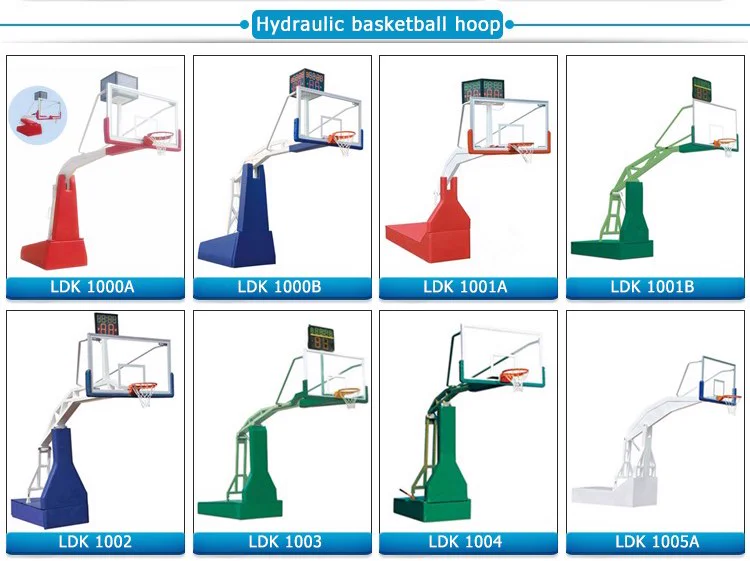
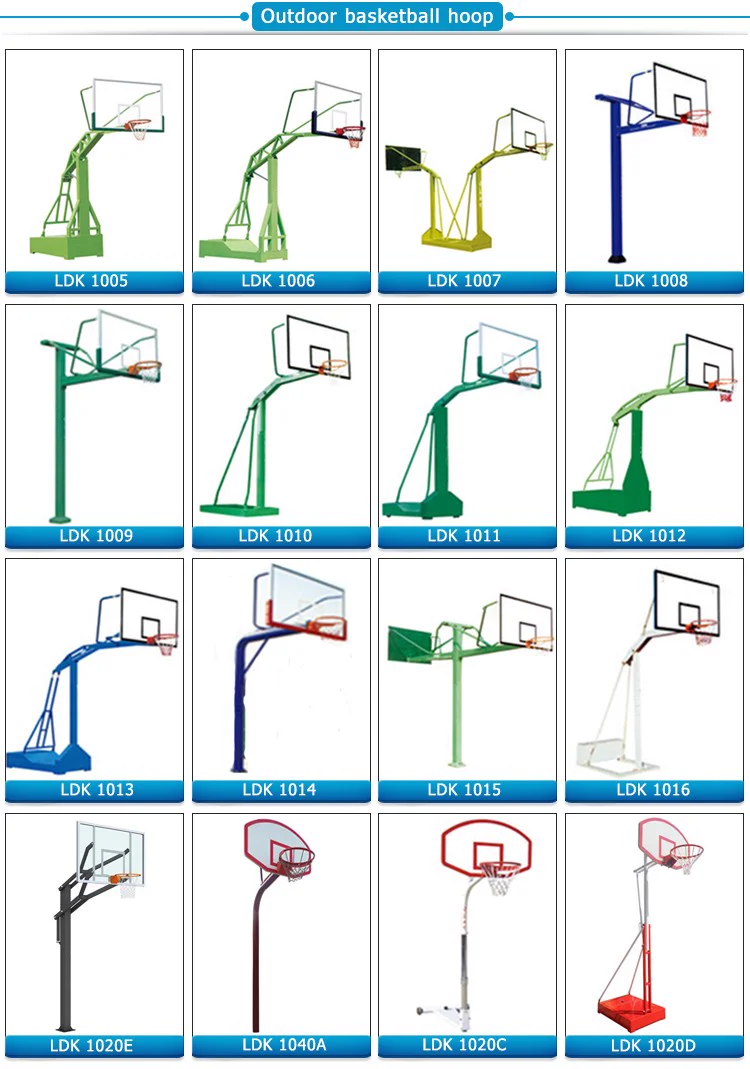
The LDK Sports Equipment range linked from the legacy article includes indoor, outdoor, adjustable, wall-mounted, ceiling-mounted, and other basketball-equipment categories; the final selection should follow the project brief and installer requirements.
Equipment can be a relatively small part of a backyard project or a major part of a school, club, or competition venue. Separate equipment supply from civil installation so the buyer knows what is included.
Common choices include:
The official NBA page is useful for a competition reference: it gives a 6-foot by 3.5-foot backboard, an 18-inch ring, and a 10-foot ring height. For other court types, specify the age group, governing rules, mounting method, and use level before selecting equipment.
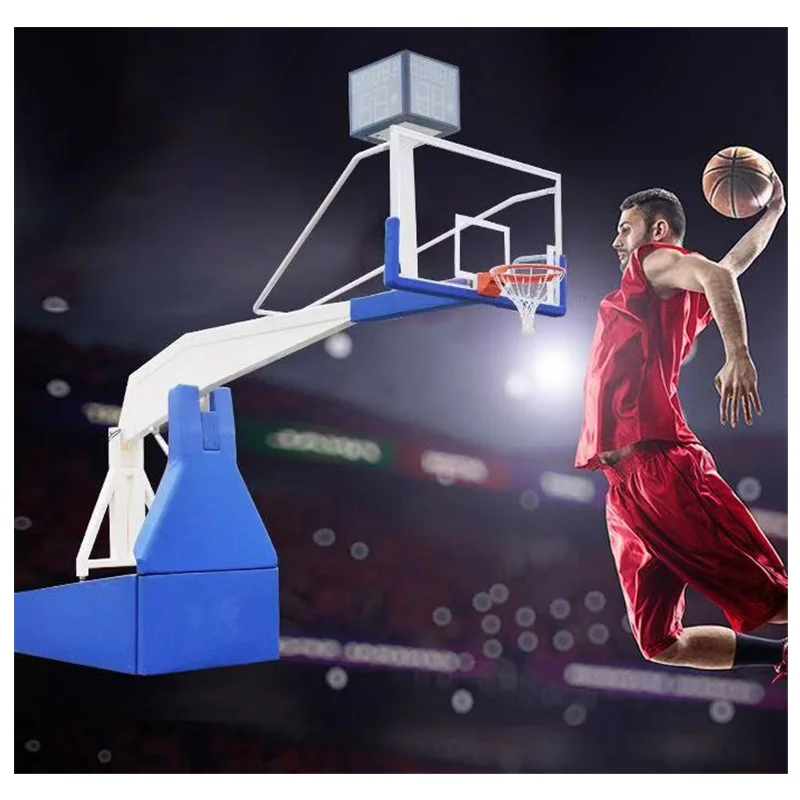
For the equipment portion of the brief, buyers can consider LDK Sports Equipment’s basketball-hoop and related equipment categories after the court scope is defined.
The legacy article stated that a competition venue should use at least 1,500 lux measured one metre above the court. That sentence is too broad without a competition class, measurement method, uniformity target, glare requirement, camera brief, and governing standard.
FIBA describes sports lighting as critical to venue design and notes that it can be difficult and costly to replace or augment later. Its guidance says the permanent system should be driven by the maximum requirements of the competitions the venue plans to host. The FIBA lighting section also distinguishes horizontal and vertical illuminance and broadcast-facing requirements.
For a formal design brief, point the lighting professional to ANSI/IES RP-6-24, Recommended Practice: Lighting Sports and Recreational Areas. The IES page identifies it as the 2025 recommended practice with indoor and outdoor applications and illuminance recommendations. The full standard is application-specific, so it should not be reduced to one universal lux number in a consumer quote.
Ask the electrical designer or contractor to state:
The phrase “indoor basketball court cost” can describe two very different purchases:
For an existing building, verify the clear height, floor flatness, moisture, structural capacity for hoops and lighting, HVAC, electrical service, acoustics, fire/life safety, doors, accessibility, and equipment storage. For a new building, add the shell, roof, foundations, insulation, utilities, permits, support rooms, spectator areas, and construction management.
FIBA’s 7 m clear-height reference is useful for venue planning, but it is not a substitute for a local building code or the requirements of your intended competition. A floor contractor may quote only the subfloor and finish. A general contractor may quote the building. Put both scopes in writing before comparing prices.
Public documents are valuable because they expose scope and contract context, but they are not a nationwide price list.
Use these examples to ask better questions: Is the project new or a replacement? How many courts are included? Does the amount include fencing, drainage, lighting, access paths, design, and contingency? Which parts are local labor and material assumptions?
Send every bidder the same short brief:
Ask for a line-item price and a schedule of allowances. Reject a quote that gives one attractive surface number but omits the base, drainage, equipment installation, lighting, access, or building work.
When requesting an equipment quote from LDK Sports Equipment, include the court type, mounting method, backboard, padding, delivery, and installation scope so the equipment proposal can be compared with the construction quote.
There is no reliable single number until you state whether the quote covers only the floor in an existing shell or a complete new building; compare those scopes in the indoor section above.
A full court generally needs more playing surface, clear space, equipment, lines, lighting, and protection, but the site and building scope can matter more than the painted area; define both the court and total footprint before requesting bids.
Possibly, but inspect level, stability, cracks, moisture, drainage, and structural capacity against the selected flooring and equipment requirements before treating the slab as a cost saving.
Use the intended play level and equipment brief; FIBA venue guidance describes at least 7 m of clear space above the field of play for its venue context, while local codes and equipment movement may require a different design.
If the court will be used at night, hosted as a public facility, or protected from stray balls and unauthorized access, list lighting, electrical work, fencing, gates, and maintenance separately instead of assuming they are included.
The quote should identify site work, base, drainage, surface, lines, hoops/backstops, fencing, lighting, access, permits, installation, closeout, warranty, exclusions, and contingency.
If you need to compare the equipment package with the rest of the court scope, use the LDK Sports Equipment inquiry path.
Include the required equipment categories and installation responsibilities in the inquiry so LDK Sports Equipment can respond to a clearly defined basketball-court brief.
The answer to “how much does it cost to build a basketball court?” is a scope, not a magic number. Start with dimensions and intended use, inspect the base, separate outdoor resurfacing from new construction, separate an indoor floor from a new building, and request itemized prices for site work, surfacing, equipment, lighting, access, and maintenance. Documented public projects can help you understand scope, but your final budget should come from a local, project-specific quote.