Sports Equipment Manufacturer

Basketball on concrete is not automatically bad for your knees. Learn what the research says, how to check court conditions, and choose outdoor shoes and balls.
No—playing basketball on concrete is not automatically bad for your knees. Concrete is a rigid outdoor surface, so repeated jumps, hard landings and sharp stops can feel less forgiving than play on a sports floor designed to flex. A small basketball study found no significant difference in immediate knee discomfort between a wooden court and a coated asphalt court, but it did not test bare concrete or measure injuries over time. For casual shooting, check that the court is dry and even; for intense sessions, build activity gradually and adjust if pain develops.
The best basketball-specific study available here is limited but useful context: 13 healthy adult men performed layups, jump shots and sprints on one wooden court and one asphalt court. Some foot-loading measures differed, while immediate ankle, knee and back discomfort ratings did not differ significantly. Because the comparison was coated asphalt rather than bare concrete and did not track long-term injuries, it cannot establish a concrete-specific knee injury risk. Use the result to avoid blanket claims, not to ignore pain or court conditions.
If discomfort persists or you are returning from an injury, ask a qualified health professional for individual guidance.

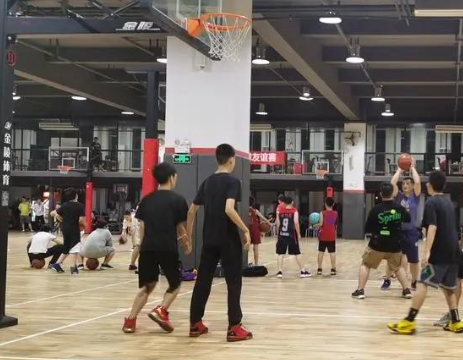
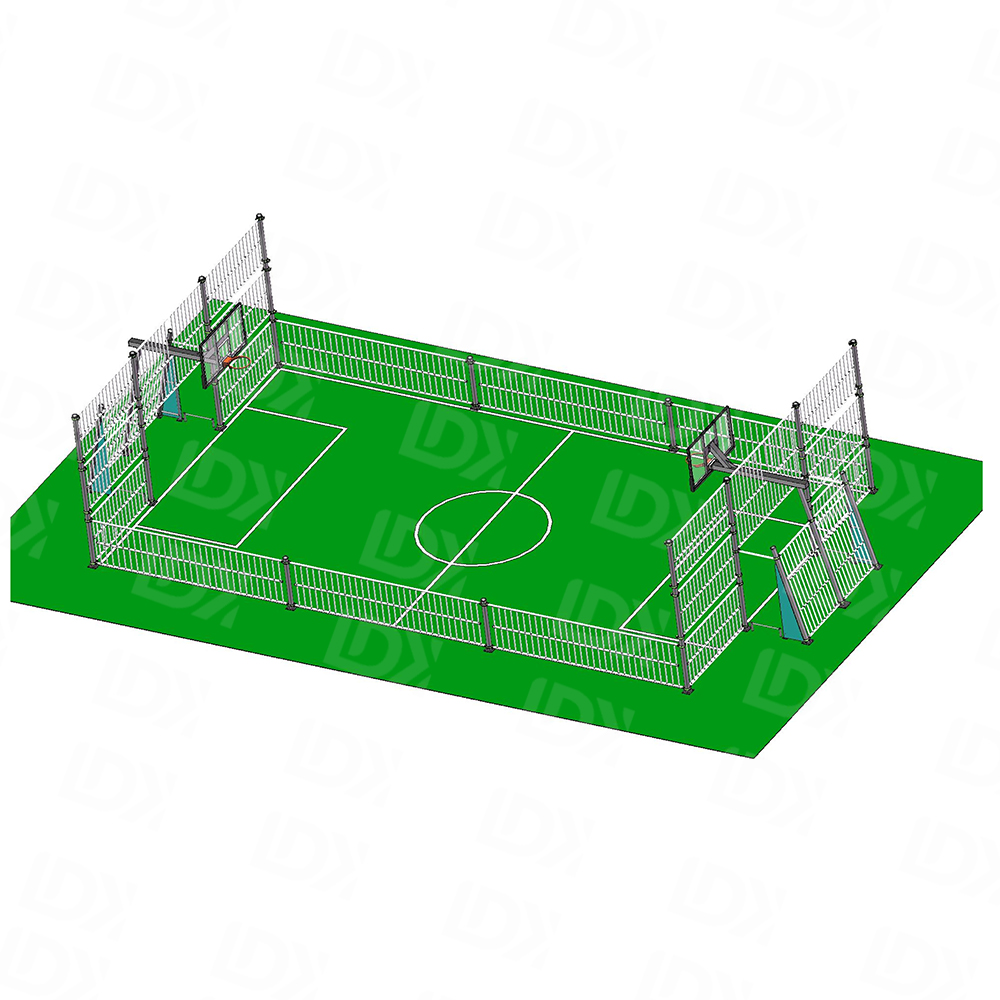
Outdoor basketball and multi-use court example.
FIBA’s outdoor-court guidance treats court condition and site maintenance as part of facility planning. Before a game or practice, look over the playing area for:
FIBA’s venue guide describes basketball court flooring as needing to be flat, firm and free from obstructions. A quick visual check and suitable upkeep help you spot problems with the actual surface instead of guessing from the word “concrete.”
Choose a model its manufacturer explicitly identifies for outdoor courts, then check fit and visible tread wear. Nike’s S.T. Flare is one concrete example: Nike describes it for concrete, tarmac and rubber courts and lists an XDR outsole with a full-length herringbone pattern. That gives you specific construction details to compare when shopping; it is not evidence that a shoe prevents injuries. Check the surface too, especially for water, loose grit or damage.
Choose a ball the manufacturer labels for outdoor play and follow its care instructions. For a concrete product example, Nike lists the Jordan Diamond as an outdoor ball made with 82% rubber and 18% synthetic leather. Treat that as one model’s specification, not a required formula for every outdoor ball.

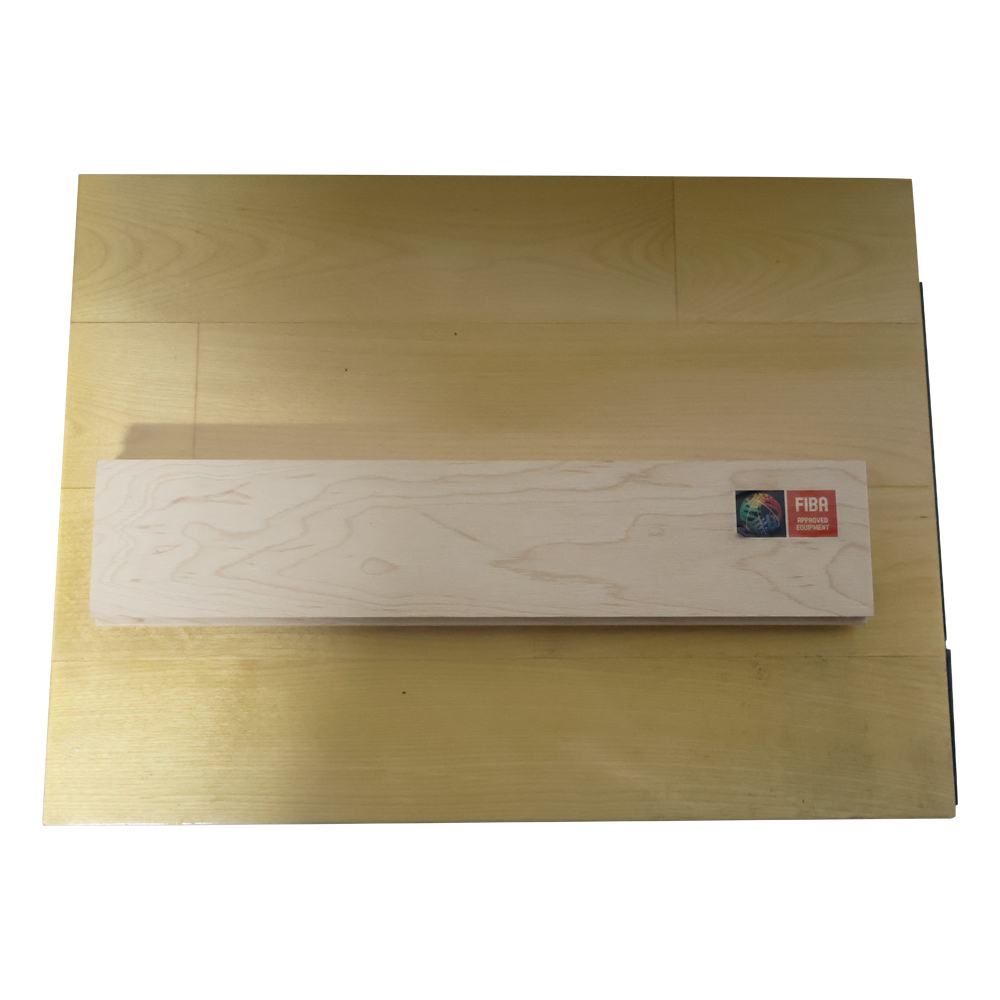
Indoor basketball flooring project reference.
A concrete slab is a base surface; an indoor sports floor is a specified floor system. FIBA’s venue guidance describes indoor basketball flooring and competition-level requirements separately from outdoor facility guidance. If you manage a court, compare the documented system, intended setting, base requirements and maintenance plan rather than assuming a coating or tile overlay will make every base suitable.
For an indoor example, see the indoor wooden basketball floor. For an outdoor multi-use court example, see LDK’s custom outdoor court.

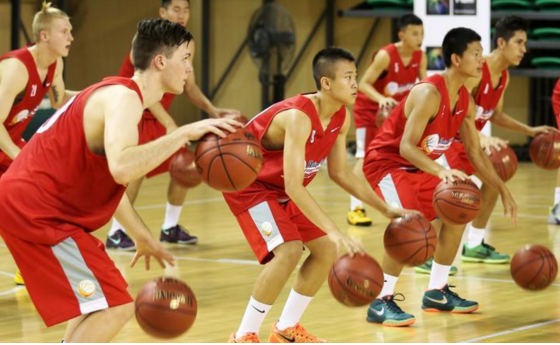
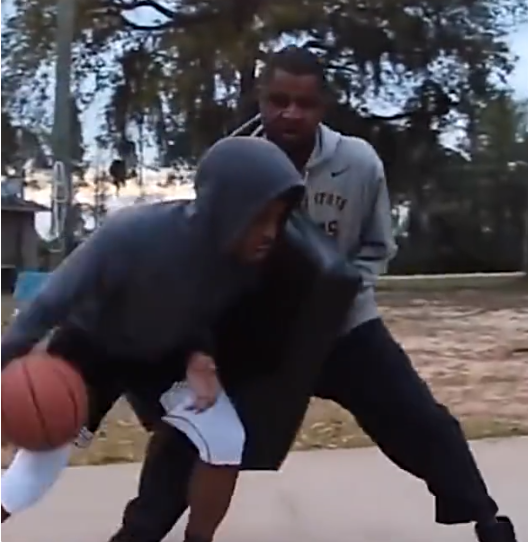
Basketball training photograph.
For a court owner, begin with the base and the site. Keep the playing area clear, address damaged or uneven areas, and maintain drainage so water does not remain on the surface. If you are considering a coating or modular system, ask the supplier to identify the exact system, acceptable substrates, base preparation and maintenance instructions. FIBA’s outdoor guide also discusses different surface and sub-base options; the correct choice depends on the project and site.

Outdoor court and equipment reference.
For project-specific indoor or outdoor flooring questions, contact LDK or use our inquiry form.
Outdoor play is not inherently bad. The court surface and its condition change the playing experience: check for water, loose debris, cracks, raised edges and enough clear space before a session.
Check that the pavers are stable, even and free of loose or raised pieces, and make sure there is clear space around the playing area. For a court installation, have the base and drainage assessed against the proposed surface system’s instructions.
The answer depends on the site, expected use, base, drainage and budget. A suitable existing base may be retained; a coating or modular surface may require preparation. Compare the full proposed system and its site requirements.