Sports Equipment Manufacturer

Learn why soccer fields are watered at halftime, what irrigation changes on grass, and how field type, drainage, and competition rules affect the decision.
Why do they water the soccer field at halftime? Crews are usually managing the playing surface. FIFA’s stadium guidance says it is common to water grass pitches before a game and at halftime: irrigation helps maintain the grass and pitch base and supports slick ball movement. The same guidance says the timing can be subject to competition regulations, so this does not mean every field must be watered at every break.
On natural grass, regular irrigation helps maintain the moisture needed by the turf. FIFA notes that many grass pitches use sand-rich bases for drainage, which makes irrigation part of the pitch system. Matchday watering can also support the surface and facilitate the ball’s movement across the grass.
Sports Turf Managers Association (STMA) guidance describes irrigation as a way to supplement rainfall, supply moisture for turfgrass growth, and modify turfgrass tissue temperature on hot days. Those are surface-management purposes; they do not establish a fixed change in ball speed or prove that watering prevents injuries.
| What watering can support | What it does not guarantee |
|---|---|
| Moisture management for a natural-grass pitch | The same ball speed or bounce in every venue |
| A surface the grounds team has assessed as suitable for watering | That every field should be watered at halftime |
| Turfgrass maintenance, including temperature management in hot conditions | That a wet surface is automatically safer or more playable |
The practical answer to “why do they water the soccer field at halftime?” is that crews may be adjusting the surface for the conditions and match plan. The broadcast does not show the pitch’s rootzone, recent weather, drainage response, or competition instructions.
Pre-match and halftime watering can serve the same broad surface-management goal, but the decision happens at different points. Before kickoff, the grounds team can assess the pitch before match traffic begins. At halftime, staff can consider how the surface has responded to the first half and whether a further adjustment fits the conditions.
FIFA describes watering before a game and at halftime as common practice for grass pitches, subject to individual competition regulations. That is a description of stadium practice, not a universal requirement. A pitch may be watered before kickoff, at halftime, at both points, or not at either point, depending on its condition and the applicable event rules.
| Timing | What the grounds team can assess |
|---|---|
| Before kickoff | Surface moisture, recent rain, weather, drainage, and the competition or venue plan |
| At halftime | Whether the first half changed the surface and whether more water is appropriate |
| No watering | Whether existing moisture, weather, drainage, or rules make another application unnecessary or unsuitable |
That is why the phrase “why do they put the sprinklers on at half time?” does not have one venue-independent answer. Seeing sprinklers tells viewers that water was applied; it does not reveal the inspection criteria or prove a team is trying to gain a tactical advantage.
“Soccer field” describes the sport, not one surface. IFAB Law 1 recognizes natural, artificial, and hybrid surface categories where permitted by the relevant competition rules. It does not prescribe a halftime watering schedule.
| Surface | What watering generally means | Important boundary |
|---|---|---|
| Natural grass | Irrigation can replace moisture lost through weather and support the turfgrass maintenance plan | Soil, rootzone, infiltration, drainage, and weather affect the decision |
| Hybrid grass | The playing surface includes natural grass reinforced with synthetic elements | Follow the installed system’s maintenance plan and competition rules |
| Artificial turf | A site may use water for purposes such as cooling, cleaning, or presentation | This is not the same as irrigating living grass; follow the product and venue instructions |
FIFA’s stadium guidance notes that some artificial pitches may use irrigation for cleaning and pitch presentation, and that water can be used to cool the surface in warmer climates. That does not mean an artificial surface should be watered whenever a natural-grass pitch is.
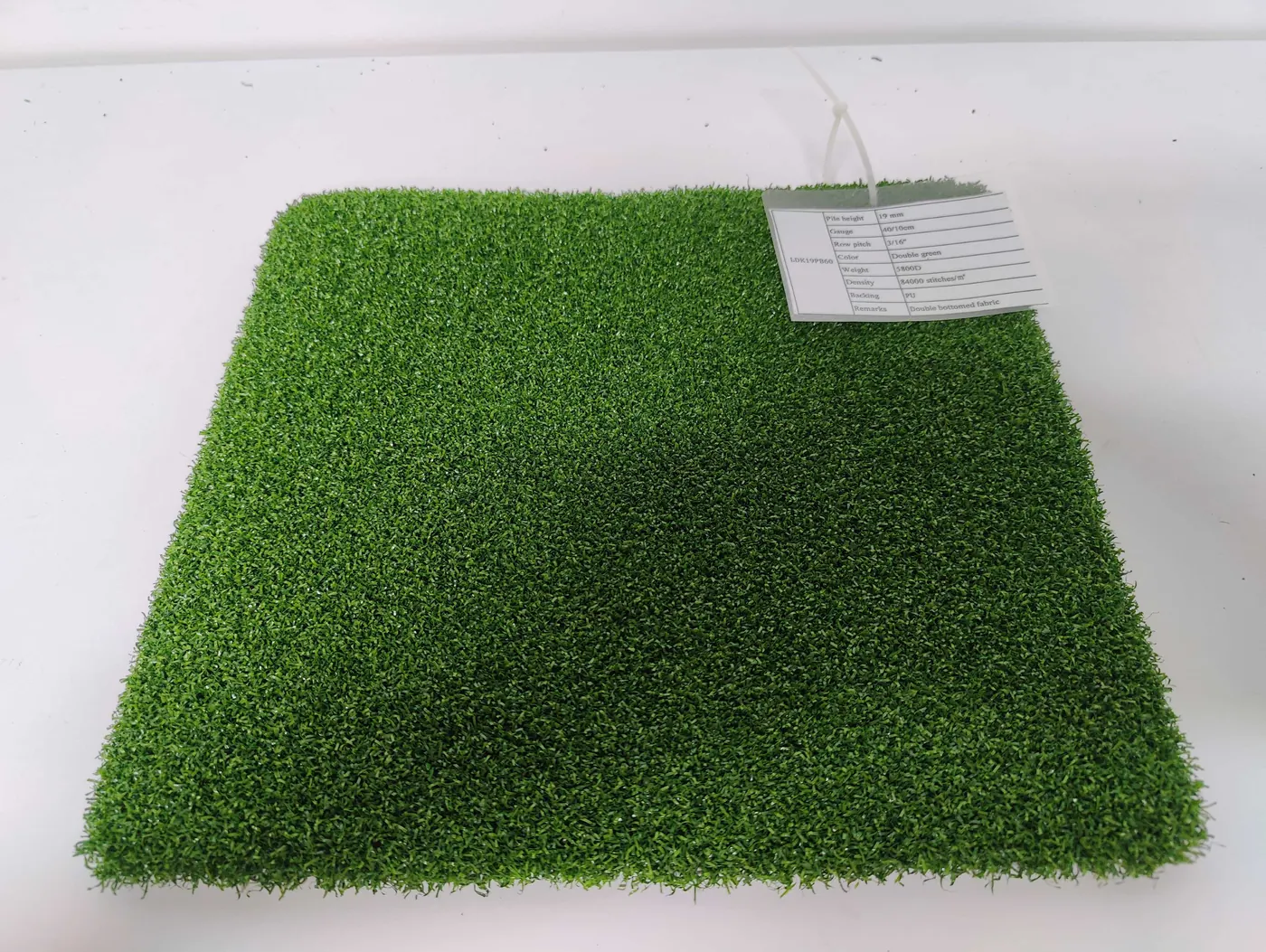
Illustrative artificial-grass product image; it does not establish a venue irrigation schedule or surface performance.
If you manage a facility, identify the installed surface and its maintenance instructions before copying a practice seen on television. Natural-grass irrigation, hybrid-pitch maintenance, and artificial-turf care are different operating questions.
Yes. Watering must fit the surface’s ability to absorb and drain water. STMA’s soccer-pitch guidance says irrigation should not be applied faster than the soil can infiltrate it. It also warns that overwatering can contribute to standing water, runoff, compaction, and turf-health problems.
That helps explain why soccer pitches do not all respond the same way to rain or sprinklers. Rootzone composition, compaction, drainage, turf cover, rainfall, and traffic affect where water goes. A short watering cycle on one pitch is not a reliable dosage or schedule for another.
| What you observe | What to check next |
|---|---|
| Water remains on the surface or runs off | Pause and review infiltration, drainage, recent rain, and the grounds plan |
| The playing surface looks unusually soft or has standing water | Check current moisture and whether the surface can accept more water |
| Watering is being planned for an artificial or hybrid surface | Confirm the installed system’s maintenance instructions |
| A venue has water-use requirements | Check the applicable site and local requirements before watering |
A wet field is not automatically a better field, and adding more water is not a universal fix. The grounds team needs to match the application to the pitch rather than infer a rule from one match.
Use a short, condition-based review rather than a copied halftime routine. STMA’s sports-facility guidance says irrigation planning should account for the rootzone, infiltration and percolation, plant type, weather, water source, and drainage. FIFA also treats pitch irrigation and drainage as parts of a connected system.
Before applying water, the responsible grounds staff can confirm:
This checklist is a planning aid, not a dosage recommendation. This article is general information, not a site-specific irrigation prescription. Matchday decisions should be made by the people responsible for the field and should follow the installed surface maintenance plan, applicable venue and competition guidance, and relevant local water-use requirements.
FIFA says watering grass pitches at halftime is common because irrigation supports the pitch system and slick ball movement. The practice is subject to competition regulations and is not required for every pitch or match.
A grounds team may apply water as a matchday surface adjustment. The visible sprinkler cycle does not reveal the pitch’s moisture, drainage, weather, or the competition instructions behind that decision.
Pre-match irrigation can be part of managing a natural-grass pitch and its playing surface. The amount and timing depend on the surface and conditions; the same routine should not be assumed for every field.
Water alone does not determine whether a pitch becomes muddy. Drainage, rootzone composition, compaction, turf cover, rainfall, and field use affect how water moves through the surface. STMA warns that overwatering can contribute to standing water and compaction.
FIFA says some artificial pitches may use irrigation for cleaning and presentation, and in warmer climates water can be used to cool the surface. That is a site-specific artificial-turf maintenance role, not natural-grass irrigation.
Soccer pitches are often watered before kickoff or at halftime to manage the grass and surface and support ball movement. FIFA describes the practice as common but subject to competition regulations. Surface type, moisture, drainage, weather, and venue guidance determine whether watering makes sense for a particular field.
If you are planning a soccer facility and need information about equipment options, contact LDK. Matchday watering decisions should remain with the grounds team and follow the installed surface’s maintenance guidance.