Sports Equipment Manufacturer

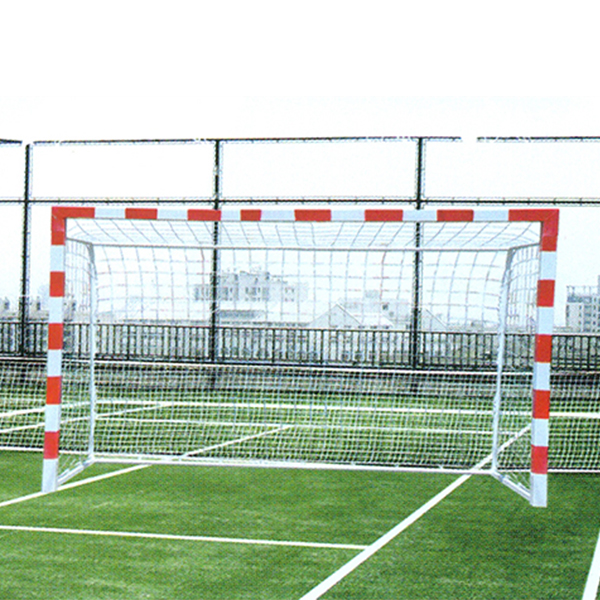
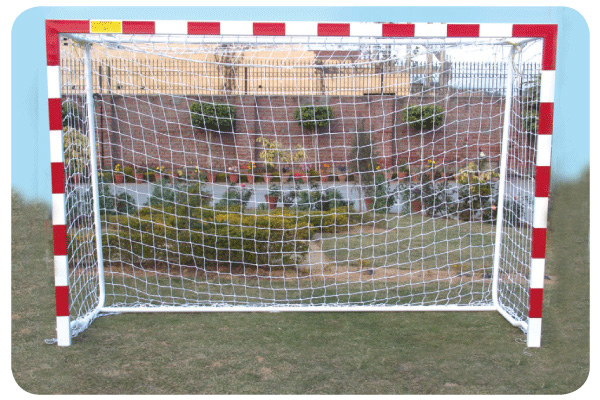
What size is the right football goal for children!Children can usually play some small football matches, such as 7-a-side, 5-a-side, 4-person, 3-a-side, etc.
Choosing a football goal for a child is not simply a matter of buying the smallest frame available. The right size depends on the child’s age, the format they play, whether the goal is for a match or training, and the space and surface available at home. A useful starting point is the child’s local age-group format; then check the goal’s inside dimensions, fixing system, and intended use.
This guide keeps the practical training advice from the original article, but separates official match dimensions from home-practice choices. The age table below is a source-labeled example, not a worldwide rule.
[[MEDIA-1: source-labeled youth goal-size table visual; validate before publication]]
For a child playing organized football, start with the goal size specified by the local league or football association. Age is helpful for finding the right framework, but it is not enough on its own: a 10-year-old playing one small-sided format may use different equipment from a 10-year-old in another region.
For backyard practice, choose a stable goal that fits the available space and the drill. A young child does not need a senior-size goal simply because it is the “standard” adults use. A smaller training goal can be useful for passing, finishing into a target, or one-to-one games, provided it is clearly treated as training equipment rather than a match-equipment substitute.
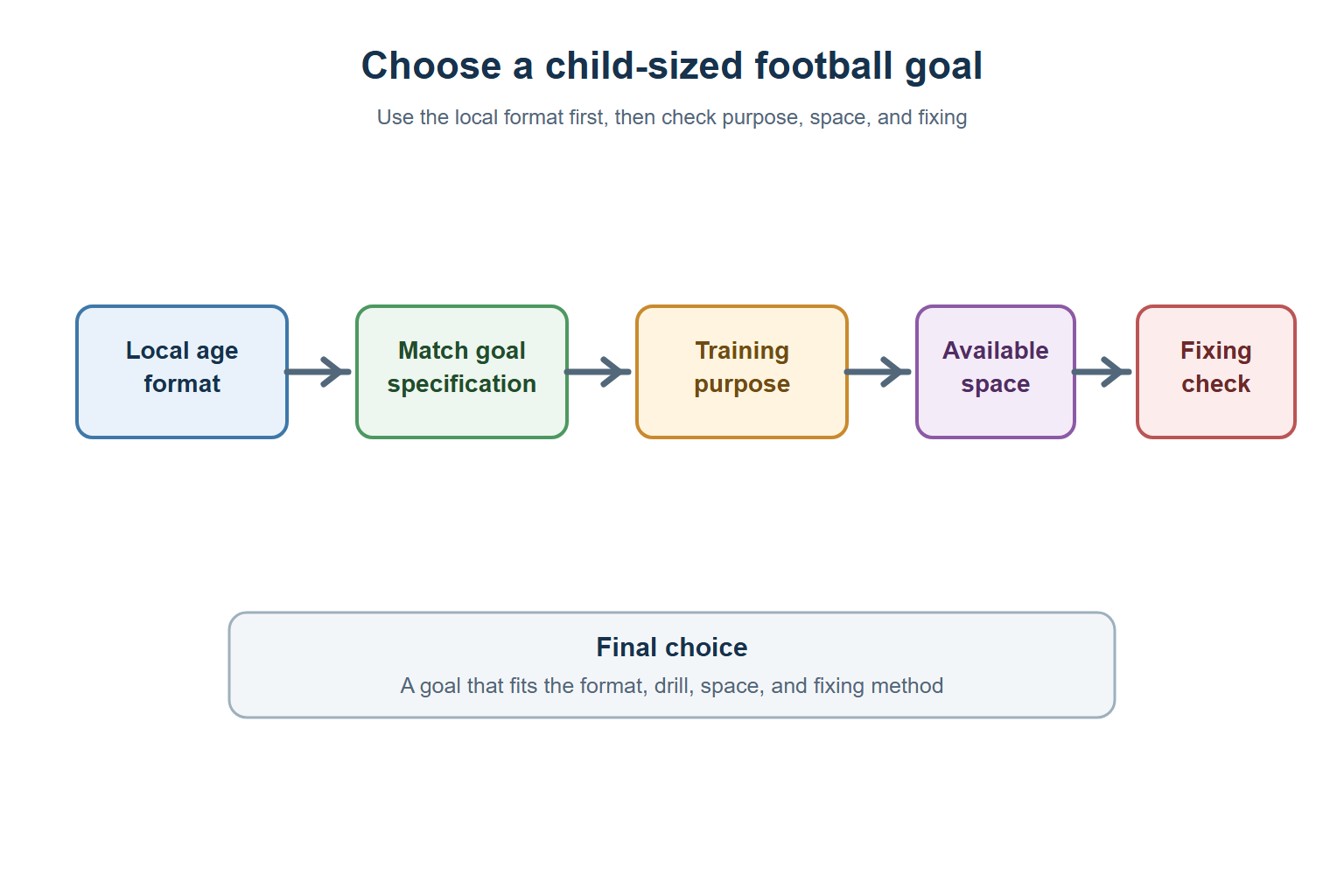
The quickest decision path is:
The same goal can therefore be the wrong choice for two different jobs. A club needs the current competition specification; a family choosing a garden goal needs a practical training target that fits the surface and can be stored safely. Keeping those decisions separate avoids both overbuying a senior goal and treating a lightweight practice frame as official match equipment.
For the senior association-football reference, IFAB Law 1 specifies a goal that is 7.32 metres wide between the inside edges of the posts and 2.44 metres high from the ground to the lower edge of the crossbar. The posts and crossbar must have matching dimensions, and their width and depth must not exceed 12 centimetres.
Those measurements are useful when someone asks for a full-size or 11-a-side goal. They should not be copied into a children’s buying decision without checking the local youth format. A senior goal can also be impractical in a garden or training area: it requires more space, a suitable surface, and a fixing arrangement that can keep the structure stable.
The net is another part of the goal, not an optional decoration. For a home goal, use the supplier’s installation instructions and verify the actual frame and net support rather than assuming that a larger frame is automatically safer or better.
Youth dimensions vary because children play different formats with fewer players and smaller playing areas. U.S. Soccer’s small-sided standards explanation describes this age-group approach; it does not replace the rules of a local association.
The following table uses the goalpost guidance published by England Football. It is useful as a clearly labeled reference for readers who need a starting point, but it is an England framework rather than a universal global standard.
| Age group | Maximum permitted format | Ball size | Recommended goal size | Source/region | Scope note |
|---|---|---|---|---|---|
| U7 | 3v3 | Size 3 | 4 × 2.5 ft | England Football FutureFit / England | Published England age-group guidance; confirm local rules. |
| U8–U9 | 5v5 | Size 3 | 12 × 6 ft | England Football FutureFit / England | Published England age-group guidance; not a worldwide rule. |
| U10–U11 | 7v7 | Size 3 | 12 × 6 ft | England Football FutureFit / England | Published England age-group guidance; confirm the local competition. |
| U12–U13 | 9v9 | Size 4 | 16 × 7 ft | England Football FutureFit / England | Published England age-group guidance; frameworks can differ. |
| U14 | 11v11 | Size 5 | 21 × 7 ft | England Football FutureFit / England | Published England age-group guidance; not a universal requirement. |
| U15–U16 | 11v11 | Size 5 | 24 × 8 ft | England Football FutureFit / England | Published England age-group guidance; confirm current local rules. |
The table answers “what size goal?” more safely when its source and region remain visible. Do not merge figures from England, the United States, and another national association into a single chart and present the result as one official rule. If a club, school, or league has supplied a current equipment list, that document should take priority for match equipment.
Different national and local frameworks may use 4v4, 7v7, 9v9, or other formats. Treat any online example as a prompt to check the current local rules before using it to purchase match equipment.
There is no single universal match-goal answer that can be inferred from age three alone. For home practice, a small, stable training goal is usually easier to use than a full-size frame. Prioritize a clear playing area, simple ball-control games, and adult supervision. Choose the goal by the available space and the activity, then check whether the child’s club or programme has a published format before treating it as match equipment.
A 10-year-old may fall within a transition between local formats. Use the relevant age row in the local association’s table, then compare it with the available space if the goal is for a garden. For a training goal, the best choice may be smaller than the match goal when the drill is passing or close control; that does not make the training frame the correct match size.
The same principle applies at 11: confirm whether the child’s team plays 7v7, 9v9, or another local format before choosing a match goal. The England Football table can help illustrate the progression, but the club’s current rules decide the purchase. If the goal is only for home practice, choose the size that supports the intended drill and can be safely fixed in the available area.
The original article’s most useful retained training guidance uses smaller areas for targeted passing and close-control drills. That remains useful, but the equipment choice needs a clear boundary: a training goal is not automatically a match goal.
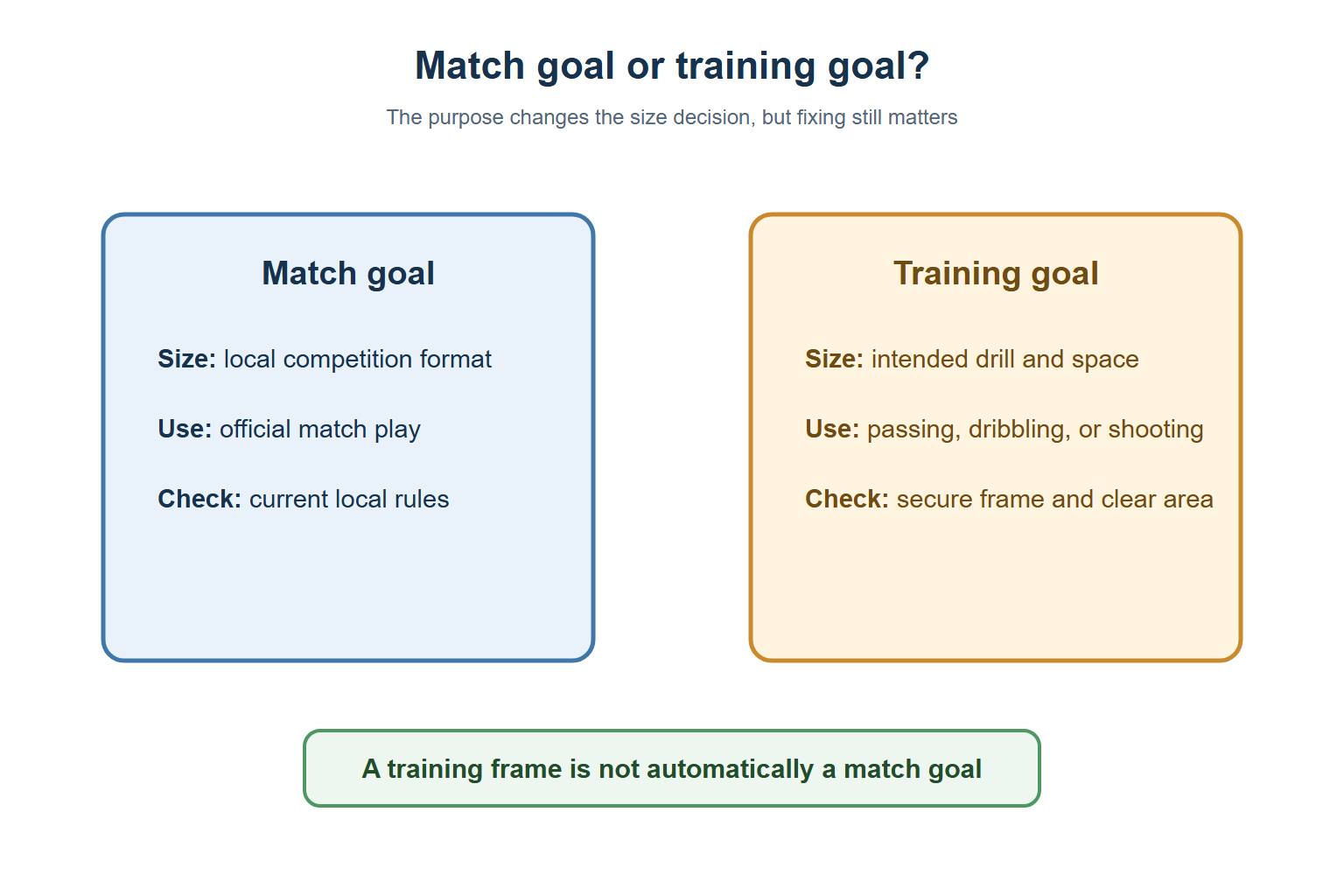
| Purpose | Size decision | Fixing expectation | What it does not prove |
|---|---|---|---|
| Match play | Follow the local format and current competition specification | Must be installed and secured for the playing surface | A product label alone does not prove league compliance |
| Passing or dribbling drill | Use a target that makes the intended technique demanding | Still secure it so it cannot move into players | A small target does not reproduce full-size shooting conditions |
| Home small-sided game | Choose a size that fits the space and number of players | Follow supplier instructions and inspect before use | A backyard setup is not evidence of an official format |
| Shooting practice | Use a goal that gives the player the target and dimensions the drill requires | Secure the frame and keep the run-off area clear | A smaller goal does not replace practice with the relevant match goal |
Small goals can make passing and close-control drills more focused. They should not be used to claim that a child has practised the same visual and spatial task as a full-size finish unless the dimensions actually match. This distinction preserves the original training insight while preventing a home-practice recommendation from being mistaken for a league rule.
For a category-level starting point, LDK Sports Equipment supplies football and soccer goals, including mini and portable goal categories; compare any product with the format, space, and training-purpose checks in this guide.
LDK Sports Equipment also supplies mini and portable goal categories for training contexts; apply the same format, dimensions, space, and fixing checks before choosing.
[[MEDIA-2: match-goal-versus-training-goal comparison visual; validate subject and dimensions before publication]]
Before buying a youth goal, work through this checklist:
The material alone is not a durability guarantee. A metal, aluminium, PVC, or composite frame still needs the right design, assembly, inspection, and storage. If a supplier makes a compliance or safety statement, ask for the relevant product documentation rather than converting a marketing label into a rule.
[[MEDIA-3: safe setup and anchoring checklist visual; validate subject and dimensions before publication]]
IFAB Law 1 says goals, including portable goals, must be firmly secured to the ground. That is an equipment and setup requirement, not a guarantee that any particular anchor or product is safe in every situation.
Before each session, check the fixing, posts, crossbar, net attachments, surface, and nearby space. Stop use when a frame is bent, cracked, unstable, or sharp. Follow the supplier’s installation and anchoring instructions, especially when the goal is moved between grass, artificial turf, hard ground, or an indoor surface.
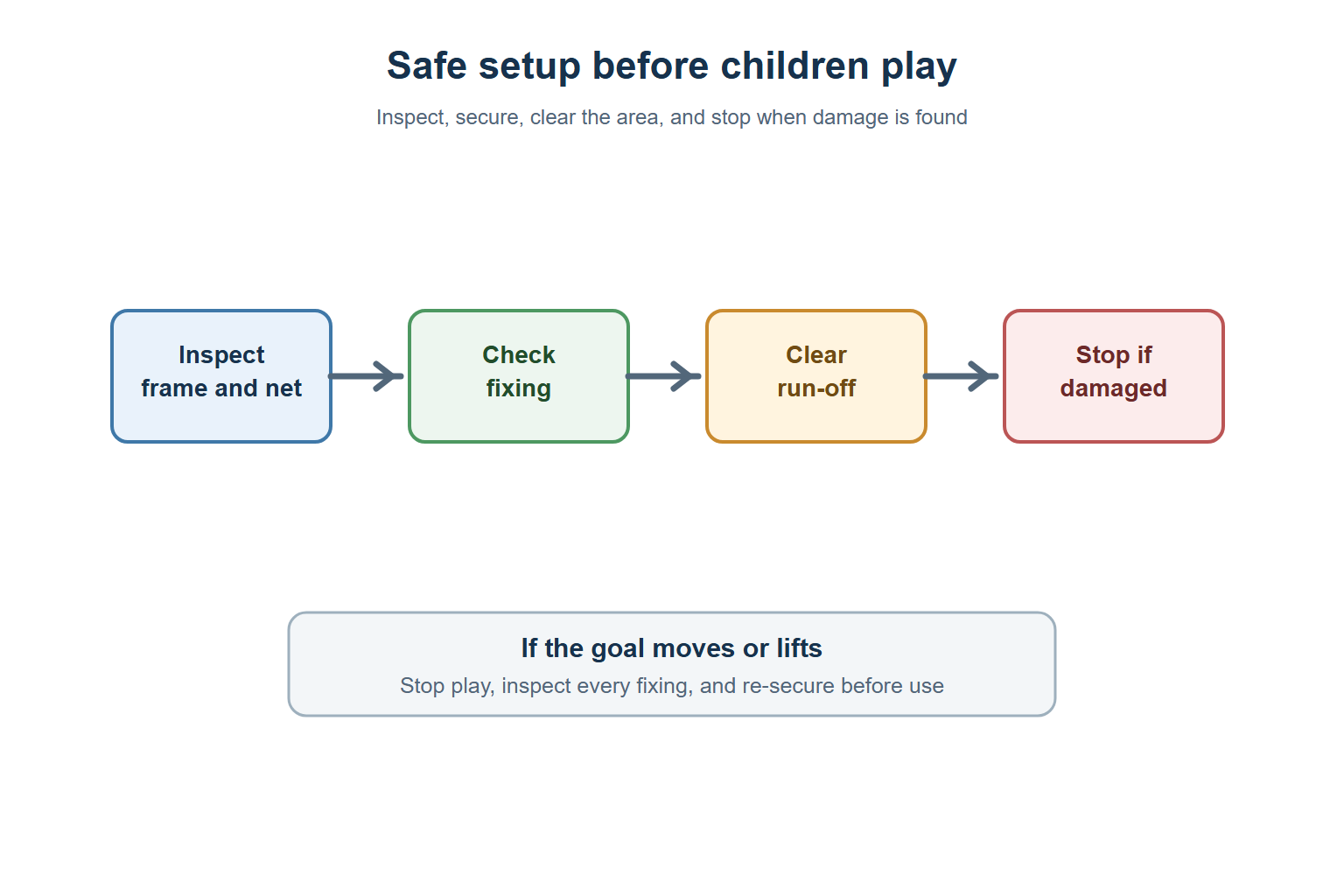
| Symptom | Likely cause | Verify | Fix / boundary |
|---|---|---|---|
| Goal moves, tips, or lifts | Missing, loose, or unsuitable fixing | Stop play; inspect every anchor/weight and the supplier instructions | Re-secure with the specified system; do not use until stable; ask the supplier if unclear |
| Net pulls the frame out of alignment | Loose or incorrect attachment, or overload | Check attachment points, frame joints, and net tension | Refit or replace the affected part; stop use if the frame is bent or damaged |
| Frame, post, or crossbar is bent, cracked, or sharp | Impact, corrosion, age, or transport damage | Inspect visually with play stopped | Remove it from service until repaired or replaced; do not hide structural damage with tape |
| Players run into nearby hazards | Placement ignored run-off, obstacles, or storage paths | Check the whole playing and access area | Move the goal or reduce the activity area; follow local and supplier instructions |
For a child’s football goal, start with the local age-group format for match play. For home training, choose a stable goal that fits the drill and available space, then verify its dimensions and fixing method before use.
Age is a useful starting point, but the child’s format, ability, space, and purpose should also guide the goal choice. For a very young child, use a stable training goal and confirm any club rule before buying match equipment.
Use the local age-group format for a match goal, while choosing a stable, space-appropriate training size for a garden. A home goal can support practice without being the official competition size.
Ask the child’s club or association which format applies, then match the goal’s inside dimensions to that specification. Age ranges overlap across frameworks, so one blended internet chart can mislead.
Use a goal that suits the specific solo drill, such as passing, dribbling, or shooting, and keep the frame fixed and the area clear. Change to the relevant match-size goal when the purpose is to practise match-distance finishing.
A different net can be a useful practice target, but it is a training variation rather than a replacement for a football goal with the relevant dimensions and fixing requirements.
The answer depends on the format: the senior IFAB reference is 7.32 metres between the inside edges of the posts, while youth formats use smaller dimensions in many frameworks. Check the applicable source and measure the inside width before purchase.