Sports Equipment Manufacturer

How long is a football training session? Learn youth football training session length guidelines and 100-minute practice structures in this complete guide.
In community football coaching and facility scheduling practice, an illustrative on-pitch training session typically occupies a 60 to 100 minute facility booking slot, calibrated by grassroots and amateur coaches according to player age, competitive tier, and practical pitch availability. (Crucially, official football governing bodies such as The FA and U.S. Soccer publish coaching curricula and game formats rather than statutory stopwatch duration caps or mandatory weekly training quotas; all duration figures and weekly frequencies presented in this guide represent illustrative community club conventions and municipal pitch hire windows rather than federation regulations.) Across grassroots youth development, community clubs commonly schedule 60 to 75 minute rental slots (with introductory U6 to U8 clinics often utilizing 45 to 60 minutes) to align with developing cognitive attention spans and physical stamina. For adult amateur, high school, and semi-professional squads, teams frequently book 90 to 100 minute pitch slots (roughly 1.5 hours) to accommodate dynamic activation, passing patterns, small-sided games (SSG), and tactical scrimmages. At the elite professional level, coaching staff generally schedule high-tempo tactical pitch work for 75 to 90 minutes (rarely exceeding 120 minutes of pitch time) to align with broader micro-periodization rather than marathon pitch sessions. While governing bodies provide developmental curriculum rather than statutory stopwatch caps, grassroots coaches frequently observe practical fatigue and reduced technical focus when sessions extend past these standard booking periods.
Whether you are a volunteer coach coordinating a 60-minute rented pitch slot, a semi-pro manager fine-tuning game-model tactics, or a parent evaluating youth practice loads, understanding how to balance practice length with physical recovery is essential for athletic development and sustained performance.
Physical, cognitive, and emotional development dictates how long players can productively train. Children are not miniature adults; their coordination, focus, and energy systems require calibrated training volumes.
Major football governing bodies structure youth player development around age-tailored match formats rather than mandatory stopwatch training caps. For example, England Football Learning provides official coaching education pathways and grassroots development resources that emphasize fun, high-touch ball familiarity, and age-appropriate game environments. Similarly, U.S. Soccer Coaching Education licenses grassroots coaching curricula centered on progressive small-sided game models – transitioning young players from 4v4 in early youth through 7v7 and 9v9 up to full 11v11 match play.
While national associations establish these developmental game standards and coaching licensing modules, individual clubs and leagues determine practical session lengths and weekly frequencies based on local facility booking increments (commonly 60- or 90-minute pitch rentals) and coach availability.
To safeguard developing players against physical burnout and repetitive stress injuries, clinical sports medicine guidelines from the American Medical Society for Sports Medicine (AMSSM) emphasize establishing individualized limits on weekly training volume, scheduling at least one to two rest days per week, and monitoring acute fatigue rather than pushing through continuous training cycles.
The following table summarizes common community club scheduling templates, facility rental windows, and match models across youth and adult tiers:
| Age Bracket | Illustrative Facility Booking Slot | Illustrative Weekly Training Schedule | Primary Developmental Focus | Competition Match Format |
|---|---|---|---|---|
| U6 – U8 (Early Foundation) | 45 – 60 minutes | 1 – 2 sessions | Ball familiarity, fundamental movement, 1v1 / 2v2 small games | 4v4 small-sided match format |
| U9 – U10 (Foundation) | 60 minutes | 2 sessions | Technical ball mastery, passing basics, small-sided formats | 7v7 small-sided match format |
| U11 – U12 (Intermediate Youth) | 60 – 75 minutes | 2 – 3 sessions | Positional spatial awareness, transition play, 9v9 match principles | 9v9 youth match format transition |
| U13 – U15 (Early Academy / Middle School) | 75 – 90 minutes | 3 sessions | Tactical game concepts, physical endurance, technical speed, 11v11 shape | 11v11 full match format standards |
| U16 – U18 (High School / U18 Academy) | 90 minutes | 3 – 4 sessions | High-tempo phase of play, match scenario simulation, team pressing | 11v11 competitive match play |
| Adult Amateur / Semi-Pro | 90 – 100 minutes | 2 – 3 sessions | Match preparation, tactical fitness (HIIT), set pieces, full-field scrimmage | 11v11 amateur league match standards |
| Elite Professional Academy / First Team | 75 – 90 minutes (Pitch) | 4 – 6 sessions + Gym | Micro-periodized tactical loading, match analysis, set-piece precision | 11v11 FIFA standard professional play |

To maximize player development while managing physical fatigue, experienced coaches structure training sessions into progressive phases. An illustrative 100-minute practice session model demonstrates how time is distributed across warm-up, skill development, tactical play, and scrimmage:
| Training Phase | Illustrative Allotted Time | Tactical & Technical Objectives | Physiological Energy System | Representative Field Layout & Equipment |
|---|---|---|---|---|
| Phase 1: Dynamic Warm-Up & Activation | 15 minutes | Joint mobility, neuromuscular activation, dynamic stretching, light rondo | Aerobic low-intensity warm-up | Cones, agility ladders, passing gates across 20x20m grid |
| Phase 2: Technical Drills & Passing Patterns | 25 minutes | Passing combinations, directional first touch, spatial awareness drills | Aerobic-anaerobic mixed energy | Passing arcs, marker cones, rebounders, target mini-goals |
| Phase 3: Small-Sided Games (SSG) & Intervals | 25 minutes | Conditioning under tactical pressure, decision speed, combination play | High-intensity interval tempo | 4v4 or 5v5 pitch formats, tactical small-sided game blocks, transition play |
| Phase 4: Match-Specific Scrimmage & Cool-Down | 35 minutes | Full-pitch / half-pitch scrimmage (25m), tactical debrief, static stretch (10m) | Aerobic recovery & cool-down | Full-sized pitch zone, team bibs, tactical whiteboards |
Every effective training session opens with structured dynamic preparation. Contemporary coaching curricula generally favor progressive dynamic movements, activation exercises, and light ball work over prolonged cold static stretching. Players execute multi-directional jogging, high knees, open/closed gates, lateral bounds, and dynamic hamstring sweeps. This prepares muscle groups, elevates core temperature, and enhances neural communication. Concluding with a low-intensity 4v2 or 5v2 rondo primes rapid cognitive decision-making.
Phase 2 focuses on high-repetition technical development in controlled environments. Drills isolate fundamental technical proficiencies: directional first touches, weight of pass, receiving on the half-turn, and combination sequences (give-and-go, third-man runs). Because physical fatigue remains low, neural receptivity is at its peak, making this the ideal window for technical skill acquisition.
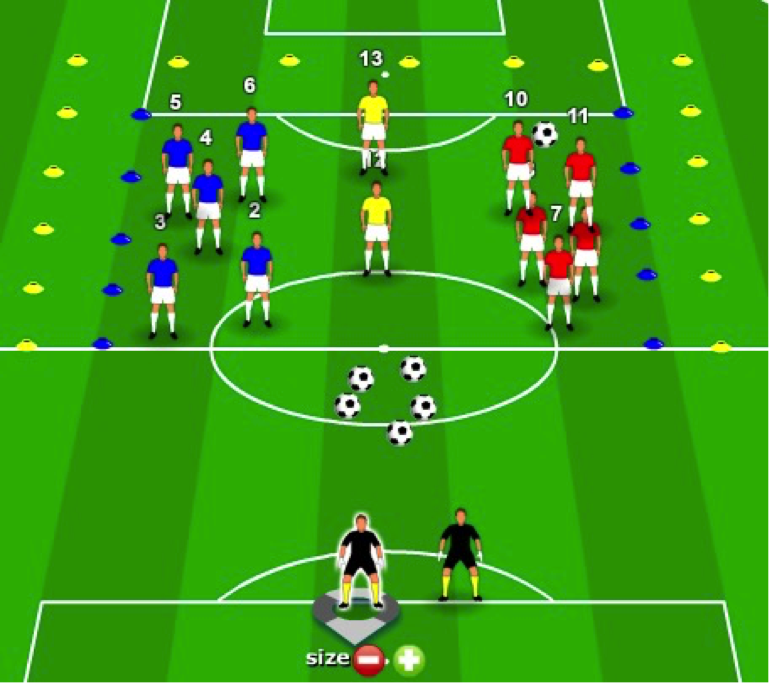
Phase 3 transitions technical skills into game-realistic pressure. By reducing player numbers (such as 3v3, 4v4, or 5v5 grids) on restricted pitch areas, coaches dramatically increase individual touches, shooting opportunities, 1v1 duels, and defensive recovery runs compared to full-sided play.
The final phase unites the session’s tactical themes into conditioned scrimmages or free match play (25 minutes), followed by structured cool-down (10 minutes). Conditioned rules (e.g., maximum three touches, mandatory switch of play before scoring) reinforce the evening’s pedagogical focus. The concluding 10 minutes allow heart rates to return toward baseline through gentle jogging, light mobility stretching, rehydration, and a constructive coach debrief.
A common misconception in grassroots coaching is the belief that “more is always better” – assuming that keeping players on the pitch for 2.5 or 3 hours demonstrates superior dedication. In sports coaching and exercise science, however, training beyond planned recovery limits yields diminishing developmental returns.
In coaching observation and sports physiology discussions, fatigue develops across distinct physical and neurological dimensions:
Exercise physiology research by Bangsbo and colleagues in the Journal of Sports Sciences indicates that prolonged high-intensity football activity induces progressive muscle glycogen depletion, reducing physical performance capacity toward the conclusion of extended play.
Importantly, Bangsbo’s research evaluates metabolic demands and muscle glycogen depletion mechanisms in football rather than prescribing a single stopwatch cutoff for individual training sessions. In coaching practice, when training sessions extend substantially beyond planned instructional objectives, coaches observe noticeable motor pattern decay. Players begin taking heavier touches, showing slower recovery runs, and exhibiting less controlled movement mechanics. Concluding demanding tactical drills while players still demonstrate sound technique helps ensure that athletes reinforce sharp motor habits rather than fatigued movement patterns.
While individual session lengths vary across clubs and age groups based on local timetable slots, sports science research provides valuable insight into how overall training workload relates to athlete resilience and injury vulnerability.
Specifically, sports medicine research by Dr. Tim Gabbett in the British Journal of Sports Medicine investigates the relationship between physical workloads and athlete injury vulnerability. Gabbett’s research on the Acute:Chronic Workload Ratio (ACWR) demonstrates that progressive, well-monitored conditioning builds athletic resilience, whereas unaccustomed spikes in acute training load significantly heighten injury risk.
Crucially, Gabbett’s research evaluates training load dynamics across cumulative weekly cycles rather than prescribing a universal stopwatch minute cutoff for individual practice sessions. In coaching practice, managing daily practice duration and drill intensity serves as an operational method to control weekly workload progression, helping coaching staff introduce physical demands gradually rather than through sudden, unmonitored volume spikes.
Small-sided games (SSG) offer a widely recognized coaching method for developing cardiovascular endurance while simultaneously training technical execution under defensive pressure.
A systematic review on the physiology of small-sided games in Sports Medicine indicates that small-sided games elicit cardiovascular and metabolic responses comparable to traditional interval training, with training intensity modulated by coach-controlled variables such as pitch dimensions, player numbers, and drill rules.
Crucially, the Sports Medicine review highlights that small-sided game physiological responses are mediated by these coach-controlled variables rather than an immutable drill duration.
To simulate authentic match demands during small-sided drills, coaches frequently organize play into repeated interval blocks that balance high-tempo activity with controlled active recovery:
By alternating focused small-sided exercise bouts with structured active recovery, coaches maintain high technical execution throughout the practice session while developing sport-specific endurance without inducing premature fatigue.
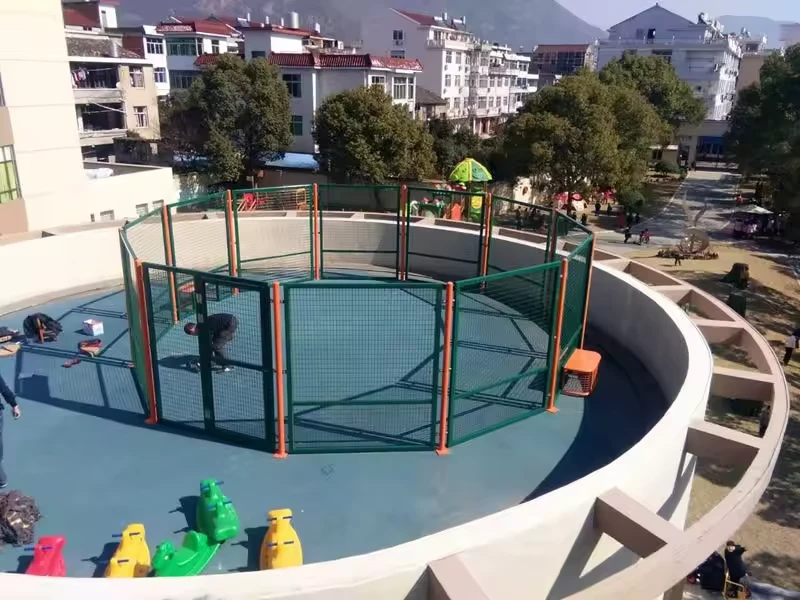
In dedicated training complexes and community spaces, specialized enclosed infrastructure – such as modular Panna cages and street soccer arenas (a facility equipment category cataloged by manufacturers such as LDK Sports Equipment) – serves as designated small-sided game training zones alongside standard grass or turf pitches.
A practical distinction exists between full squad team practices and individual skill training sessions.
| Training Format | Illustrative Duration Window | Pacing & Recovery Dynamics | Practice Environment & Focus | Sample Weekly Frequency |
|---|---|---|---|---|
| Full Team Training Session | 90 – 100 minutes (Sample squad slot) | Natural tactical pauses, rotations, coach demos | Team tactical shapes, pressing cues, collective scrimmages | 2 – 3 squad sessions (Sample club timetable) |
| Individual Skill Workout | 45 – 60 minutes (Sample solo workout) | Continuous ball contact; no team tactical breaks | Focused technical repetitions, first-touch mastery | 2 – 4 skill workouts (Illustrative schedule) |
In solo training, players commonly plan shorter, focused sessions – such as an illustrative 45-to-60-minute window of technical repetitions – because individual drills lack the natural tactical pauses and player rotations found in team scrimmages. Coaching practitioners recommend keeping solo skill drills concise to preserve focus and movement sharpness.
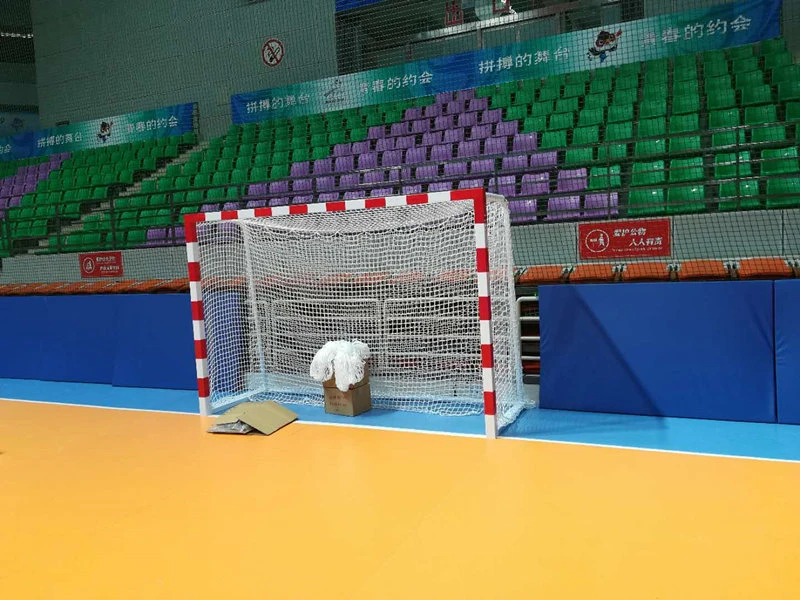
On rented community pitches, wasted minutes waiting in static lines or moving heavy goals reduce effective training time.
When clubs rent artificial turf or grass fields in strict 60-minute booking increments, operational efficiency is critical:
To maintain active ball-rolling time and minimize transition delays between practice phases, sports facilities and football clubs rely on versatile field infrastructure:
Adult amateur sessions typically run between 90 and 100 minutes. This provides adequate time for dynamic warm-up (15 min), passing patterns (25 min), high-intensity small-sided games (25 min), and an 11v11 scrimmage with cool-down (35 min) while allowing recreational squads to manage perceived exertion within common booking intervals.
In youth coaching practice, coaches commonly keep sessions for players under age 14 within 60 to 75 minutes (rarely exceeding 90 minutes), as extended training may lead to diminished attention spans and physical fatigue. Coaching education frameworks from organizations like The FA and U.S. Soccer emphasize engaging, high-touch practice environments over extended practice durations.
While governing bodies do not prescribe fixed interval ratios, coaching practitioners commonly utilize illustrative interval templates alternating high-tempo tactical bouts with equal or slightly longer active recovery periods (such as an illustrative 1:1 or 1:1.5 work-to-rest coaching convention) to maintain movement sharpness. Peer-reviewed sports science on small-sided games demonstrates cardiovascular and metabolic conditioning responses comparable to interval training, while coaches calibrate specific work-to-rest intervals based on squad fitness and drill objectives. High-performing sessions prioritize active ball-in-play time by keeping coaching feedback concise and eliminating static waiting lines.
Weekly training frequency depends on age, developmental stage, and competitive level. In community club scheduling templates, grassroots youth teams typically hold 1 to 2 practice sessions per week alongside a weekend game. Competitive youth academies and high school programs often schedule 3 to 4 sessions, whereas adult semi-professional squads commonly organize 2 to 3 weekly sessions based on pitch availability. Coaching guidelines recommend balancing weekly frequency with adequate rest days to support athlete recovery.
Neither is superior; they serve complementary roles. Team training develops collective game intelligence, tactical synchronization, and real-time decision-making under defensive pressure. Individual training (capped at 45 to 60 minutes) provides high-volume ball touches, isolated first-touch refinement, and position-specific technical repetition that team practices cannot replicate.
To prevent downtime, coaches commonly recommend having at least one ball per player, multiple colors of training bibs, flat marker cones to designate zones, agility poles, rebounders, and portable aluminum football goals to quickly divide the pitch into small-sided game grids.
Mastering football practice duration is a balance between physical stimulus and recovery. To summarize the core principles: