Sports Equipment Manufacturer

Learn the purpose of yoga mat use and the benefits of a yoga mat, including grip, cushioning, comfort, care, and when a mat is optional. Compare surfaces.
For anyone asking about the “purpose of yoga mat,” the short answer is simple: it gives you a defined, stable surface for practice. That surface can make grip, cushioning, comfort, and setup easier to manage, but a mat is not a medical device and it is not mandatory for every gentle session. The right choice depends on the movements you do, the floor beneath you, how much you sweat, and how easy the mat is to clean and store.
A yoga mat is a portable exercise surface designed to mark out a practice area under your hands, feet, knees, back, or other contact points. Its practical purpose is to give you a more consistent surface than an unprepared floor. In a yoga context, that can help you focus on alignment and movement instead of constantly adjusting your position or searching for a clean place to set up.
The mat itself does not make a pose safe, correct, or medically beneficial. It can support the environment in which you practice, while your technique, pace, flooring, and individual circumstances still matter. The National Institutes of Health describes modern yoga as combining physical poses, breathing techniques, and meditation; that context explains why a clear, repeatable practice area can be useful without turning the mat into a treatment or protection claim. (NIH context)
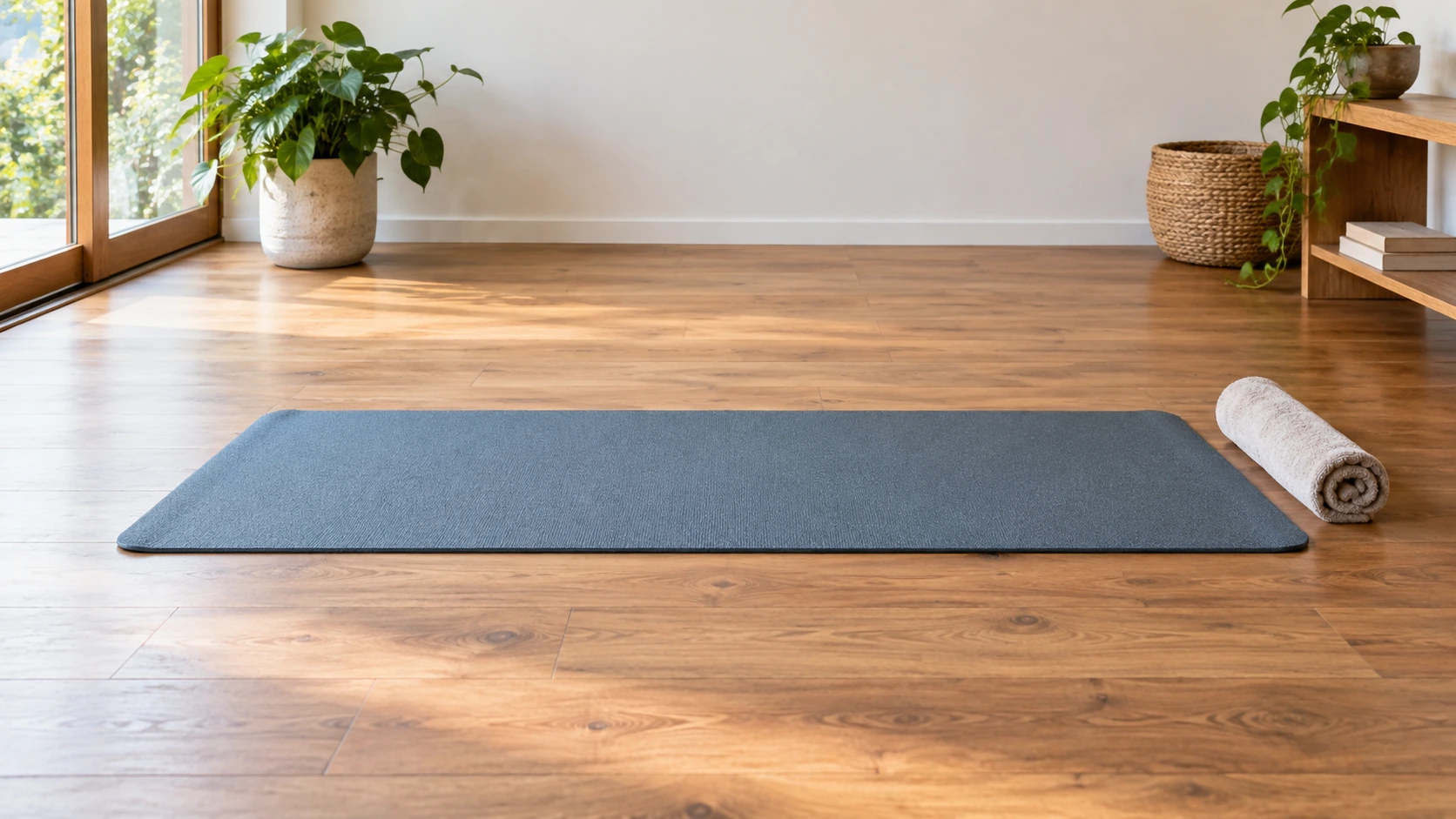
The benefits of a yoga mat are practical rather than guaranteed outcomes. A useful mat helps you evaluate the surface under the conditions in which you actually practice.
| Practical benefit | When it may help | Important limit |
|---|---|---|
| Defined practice area | Home, studio, or travel setups where you need a consistent place to work | It does not compensate for an unstable or dirty floor |
| Grip and traction | Weight-bearing poses or transitions where the surface feels too smooth | Sweat, texture, residue, and movement style can all change traction |
| Cushioning | Kneeling, seated, or floor-based movements where a hard floor feels uncomfortable | More padding can also change stability and contact feedback |
| Comfort and routine | Repeating a familiar setup can make practice easier to organize | Comfort is personal; there is no universal best thickness or material |
| Surface separation | A personal mat can separate your practice area from a shared floor | It still needs to be cleaned and dried according to its care instructions |
These are reasons people use a yoga mat, not promises that every mat will feel the same. A “non-slip” label also does not mean that a surface can never become slippery. If a mat feels slick, check the floor, moisture, cleaning residue, surface texture, and whether the product’s care instructions have been followed.
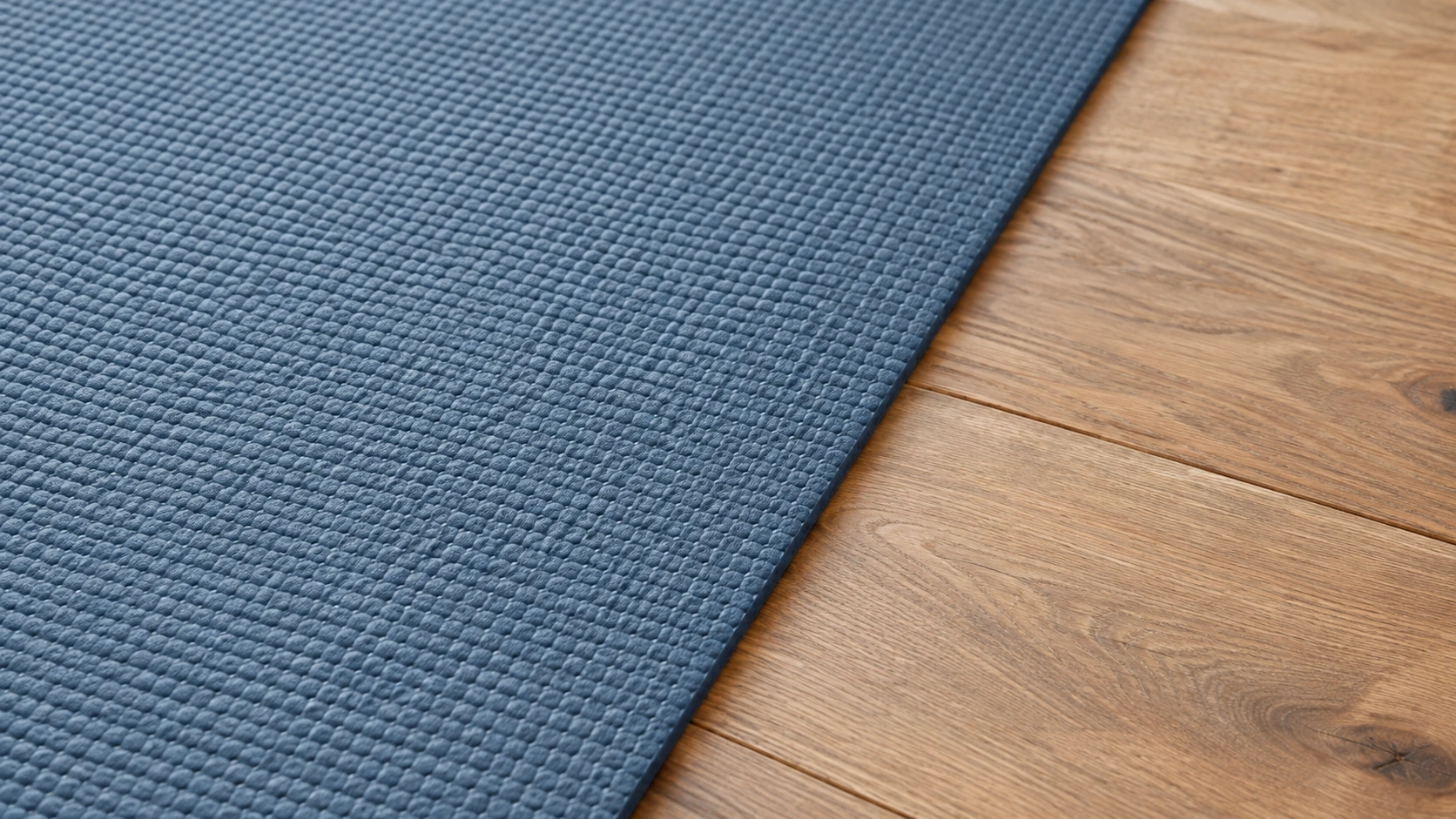
The effect of a yoga mat is easiest to judge by the task it makes simpler. It may reduce the need to reposition a small towel under your hands, give your knees a more predictable contact surface, or make it obvious where your practice begins and ends. Those are setup and comfort effects, not proof that the mat changes your flexibility, balance, strength, or health outcome. If a pose feels painful or unstable, adjust the pose or stop; do not use a thicker mat as a substitute for instruction or appropriate professional advice.
Material and finish also change the experience. Some surfaces feel grippy when dry but less secure when wet. Some feel soft and comfortable but make standing work feel less connected to the floor. A useful comparison therefore asks, “What happens during my practice?” rather than “Which label sounds strongest?”
No. For some gentle movements, a clean and stable floor may be enough. Practicing without a mat can also help a person understand how the floor feels under the hands and feet. That option becomes less convenient when the surface is cold, hard, dusty, shared, or too slippery for the movements being attempted.
A mat is more useful when you need a portable setup, a consistent boundary, moderate cushioning, or a surface that is easier to manage than the floor. The decision should follow the practice rather than a rule that everyone must use the same equipment. For dynamic sequences, sweaty sessions, kneeling work, or shared spaces, assess traction and cleanability before you begin. If you feel unstable or uncomfortable, stop and change the setup rather than trying to force the practice on an unsuitable surface.
These surfaces are not interchangeable. They may overlap in a home workout, but each one is designed around a different primary job.
| Surface | Main role | Where it can help | Limitation |
|---|---|---|---|
| Yoga mat | Portable, defined practice surface | Yoga poses, stretching, and floor-based work | Grip and cushioning vary by surface and care condition |
| Yoga towel | Sweat absorption, covering, or extra hygiene layer | Hot practice or covering a shared mat | A towel alone may bunch or slide unless the surface underneath is stable |
| Blanket | Localized padding or warmth | Resting poses or extra support under selected areas | It can fold, compress, or move during weight-bearing work |
| Rug | Existing floor covering | Gentle practice when it is flat, stable, and clean | A rug is not automatically a stable exercise surface |
| Exercise mat | General fitness and floor exercises | Workouts that need different cushioning or dimensions | It may feel too soft, too smooth, or too thick for a particular yoga style |
| Climbing mat | Impact-oriented padding for a different use case | Situations designed around climbing falls or landing | It is not a direct substitute for a portable yoga surface |
The old article’s useful comparison insight was that a towel can be an auxiliary layer rather than a universal replacement. Keep that distinction: choose the base surface for stability and movement, then add a towel or blanket only when it serves a specific purpose.
Start with the practice, not the product label. Use this checklist before you buy or replace a mat:
Before buying, write down one or two situations that matter most. Someone practicing slow, seated movements on a hard floor may prioritize cushioning and easy cleaning. Someone practicing standing transitions may prioritize a stable base and predictable traction. Someone traveling may accept a thinner, lighter surface if it still works for the movements they intend to do. This simple prioritization prevents a long feature list from becoming a vague search for the “best” mat.
If you practice in a shared studio, ask how the space handles cleaning and whether you need to bring a personal mat or towel. If you practice at home, inspect the floor first: a clean mat on an uneven or dusty base can still move. The mat is one part of the setup, not the entire setup.
For equipment context, the LDK Sports Equipment yoga-mat category is a first-party starting point for comparing options and sending an inquiry. If you are comparing equipment for a facility, studio, or home-gym project, keep the decision tied to your required dimensions, practice conditions, cleaning routine, and budget; do not treat a category page as proof that one specification is best for every user. See the LDK Sports Equipment first-party site for brand and navigation context.
For a personal mat, follow the manufacturer’s instructions before choosing a cleaner or soaking method. For shared athletic equipment, CDC guidance advises cleaning shared equipment after each use, allowing it to dry before use, and checking the manufacturer’s instructions so the cleaner does not damage the item. That is useful care guidance, but it does not mean a yoga mat eliminates bacteria or prevents illness.
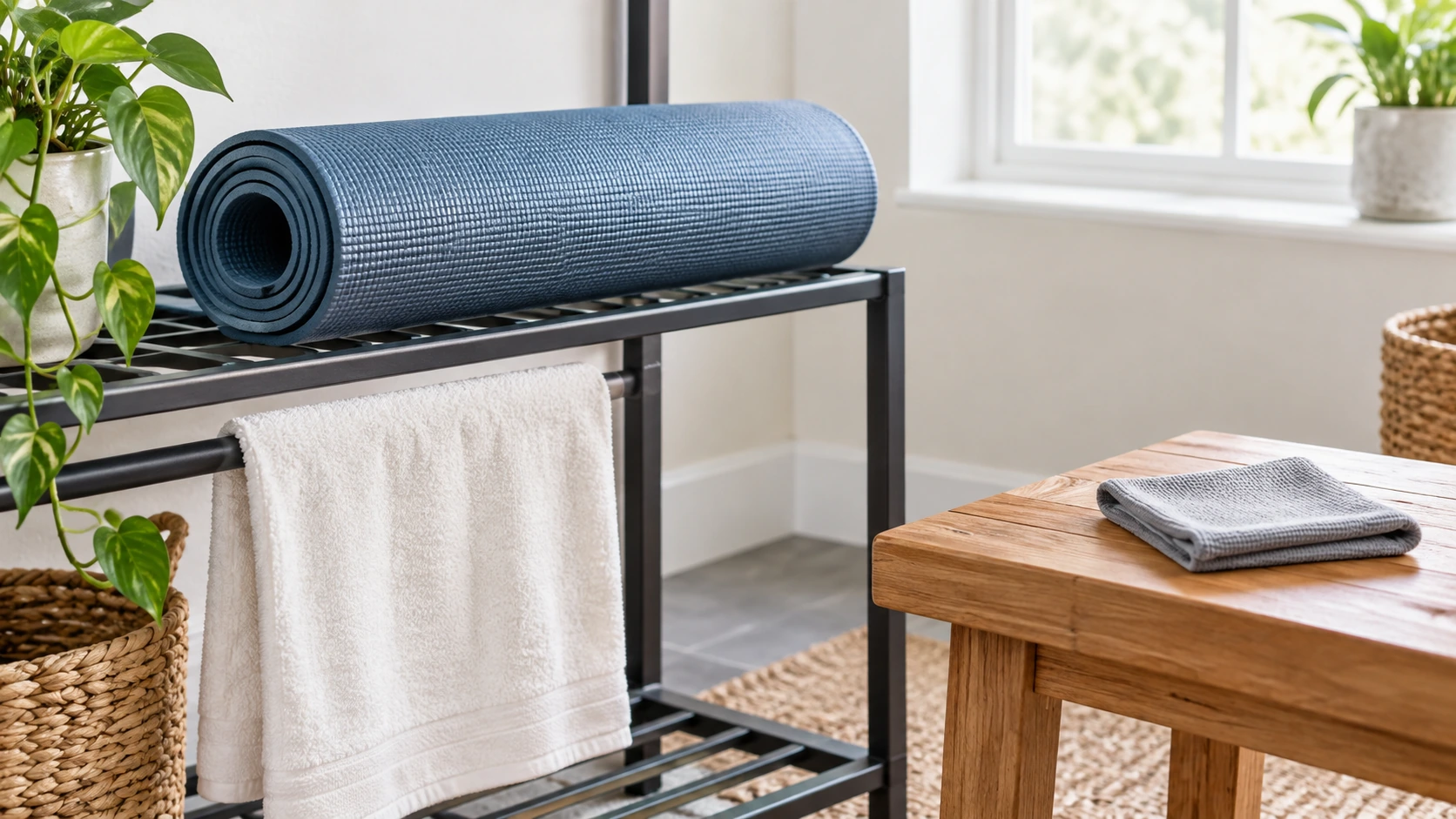
Use this simple care path:
| Symptom | Possible cause | Verify | Practical next step |
|---|---|---|---|
| Surface feels slippery | Moisture, residue, or a surface that does not match the practice | Check hands, floor, cleaner, and care instructions | Clean as directed, let the mat dry, and reassess before a demanding session |
| Mat moves on the floor | Dust, an unsuitable floor, or insufficient contact | Test the floor and mat separately | Use a stable clean floor or change the setup; do not assume the mat fixes an unstable base |
| Odor remains | Moisture trapped during storage or incomplete drying | Check whether the surface is fully dry | Improve ventilation and drying; follow the product instructions |
| Surface is cracking or damaged | Wear, heat, chemicals, or storage conditions | Inspect the contact surface | Stop using the damaged area and consult the manufacturer’s care or replacement guidance |
CDC: Athletic Facilities: MRSA Prevention and Control.
Do not mix cleaning advice from unrelated products simply because a recipe is popular online. A cleaner that is appropriate for one surface can damage another, leave residue, or change how the mat feels. Record the product instructions, use only the recommended method, and let the surface dry fully before rolling it for storage. When a shared mat cannot be cleaned adequately or its surface is damaged, choose another surface rather than treating an odor or crack as a minor cosmetic issue.
Not always. A clean, stable floor can work for some gentle practice, while a mat offers a more consistent defined surface; see the necessity section above.
Moisture, residue, texture, the floor underneath, and the movement itself can all affect traction; clean and dry the mat as directed before assuming it is defective.
No. Thickness can change cushioning and stability, so choose the balance that fits your floor and movement rather than a universal number.
A towel can absorb sweat or cover a surface, but it may bunch or slide; use it as an auxiliary layer unless the setup is stable for your practice.
Sometimes, if the surface is flat, clean, and stable for the movement; a blanket is better treated as localized padding than as a guaranteed substitute for a mat.
Follow the manufacturer’s instructions, clean shared equipment after use, and let it dry before use; see the CDC-backed care section for the scope and limits of that guidance.
The purpose of a yoga mat is to create a more consistent, portable practice surface. Its practical benefits may include grip, cushioning, comfort, and a defined personal area, but none of those should be written as a promise of injury prevention, bacterial elimination, medical treatment, or guaranteed safety. Decide by movement, floor, traction, cushioning, size, care, and storage.
The earlier article is preserved as a source snapshot at: https://www.ldksportsequipment.com/benefits-of-a-yoga-mat.html. If you need a direct equipment route, LDK Sports Equipment provides a first-party inquiry page where you can confirm your equipment requirements and care expectations. Use the LDK Sports Equipment site for that first-party navigation, without treating brand navigation as independent proof of quality or performance.